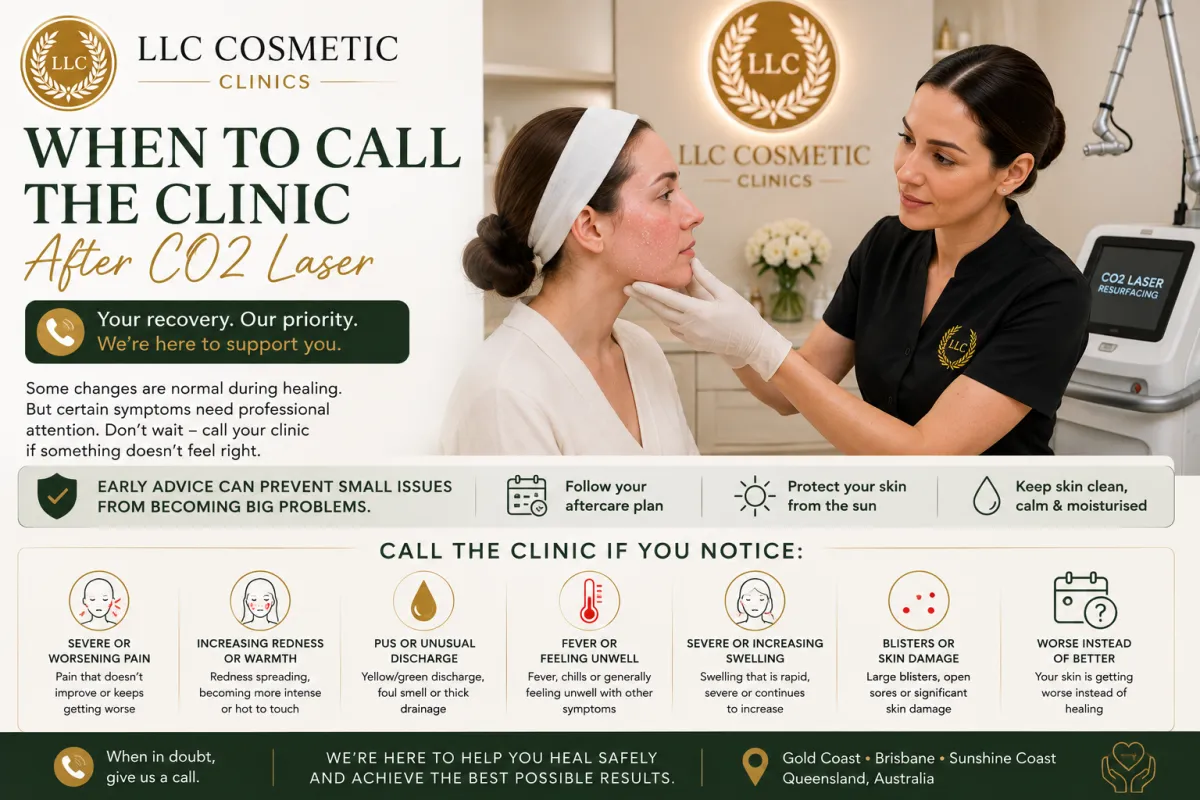
When to Call the Clinic After CO2 Laser
CO2 laser resurfacing can cause noticeable redness, swelling, sensitivity, peeling and changes in skin texture while the skin heals. Knowing what is expected—and what deserves a call to your clinic—can make recovery much less stressful.
Some post-treatment changes are a normal part of healing, but symptoms that are severe, worsening or unusual should not simply be ignored.
This guide explains when to call the clinic after CO2 laser treatment, what symptoms may require prompt attention, and why following your provider’s individual aftercare instructions matters.
CO2 Laser Recovery: What Can Be Normal?
CO2 laser treatment works by creating controlled injury in the skin to encourage resurfacing and skin renewal. Depending on the treatment intensity and whether the treatment is fractional or fully ablative, recovery can vary considerably.
After treatment, it can be normal to experience:
Redness
Warmth or a sunburn-like sensation
Swelling
Skin sensitivity
Tightness
Mild stinging or itching
Dryness and peeling
Crusting or small areas of oozing with more intensive treatments
Temporary changes in skin colour
Cleveland Clinic notes that healing after carbon dioxide laser resurfacing can take approximately 10 to 21 days, depending on the condition treated and the intensity of the laser settings.
The important point is that not every uncomfortable symptom means something has gone wrong. Your clinic should give you specific instructions about what to expect based on the treatment you received.
When to Call the Clinic After CO2 Laser
If you're wondering whether a symptom is worth reporting, it is generally better to contact your treating clinic rather than trying to diagnose the problem yourself.
1. Pain Is Severe or Getting Worse
Some discomfort can occur after CO2 laser treatment.
However, severe pain or pain that continues to increase rather than gradually settle deserves attention.
Call your clinic if your pain seems significantly greater than what you were told to expect or if your usual aftercare measures are no longer helping.
Severe or worsening pain can sometimes be associated with complications and should be assessed by an appropriate healthcare professional.
2. Redness Keeps Spreading or Becomes Increasingly Warm
Redness is expected after laser resurfacing.
The concern is when redness becomes progressively worse, spreads beyond the treated area, or is accompanied by increasing warmth, tenderness or swelling.
These can be signs that your skin needs professional assessment, particularly if the symptoms are getting worse rather than improving.
3. You Notice Pus or Unusual Discharge
Some moisture or clear drainage can occur during the early healing period after more intensive resurfacing.
However, thick yellow or green discharge, pus, an unpleasant smell or a noticeable change in drainage should be reported to your provider.
These symptoms can be associated with infection and shouldn't be ignored.
4. You Develop a Fever or Feel Unwell
Contact your healthcare provider if you develop a fever, chills or feel significantly unwell following treatment—particularly when these symptoms occur alongside worsening redness, swelling, pain or discharge.
A fever together with signs of an infected wound requires medical attention.
5. Swelling Becomes Severe or Continues to Increase
Swelling can be expected after CO2 laser treatment, particularly during the first few days.
However, rapidly increasing or unusually severe swelling should be discussed with your clinic.
Swelling around the eyes can also be particularly noticeable after facial resurfacing, so follow the specific instructions given by your treating provider.
6. You Develop Blisters or Significant Skin Damage
Depending on the treatment, some surface changes can occur during recovery.
But if you develop significant blistering, extensive areas of damaged skin or symptoms that seem substantially different from what your provider explained, contact the clinic.
Do not automatically pop, peel or remove blisters or crusts yourself. Damaging healing skin can increase the risk of infection and scarring.
7. The Skin Appears to Be Getting Worse Instead of Better
Recovery isn't always perfectly linear.
Your skin may look different from one day to the next, particularly during peeling and early healing. But if you notice a clear pattern of deterioration—such as increasing pain, spreading redness, worsening swelling or new discharge—contact your clinic.
A simple rule is: if your recovery is moving in the wrong direction, ask.
What About Itching, Peeling and Redness?
Not every change requires an urgent phone call.
During normal recovery, you may experience:
Redness: The skin can remain red or pink after resurfacing.
Peeling: Dryness and peeling can occur as the treated skin heals.
Tightness: The skin may feel tight or sensitive.
Mild itching: Some itching can occur during healing.
Sensitivity: Newly resurfaced skin can be particularly sensitive to skincare products and environmental exposure.
These symptoms can be part of the expected recovery process, but your provider's instructions should always take priority because CO2 treatment settings differ from person to person.
Don't Pick or Peel Healing Skin
One of the easiest mistakes to make during CO2 recovery is trying to speed up the peeling process.
Avoid picking at:
Flaking skin
Crusts
Scabs
Blisters
Areas that are healing
Your provider may recommend a specific cleansing and moisturising routine. Follow that routine rather than adding new products because you think they will accelerate healing.
Picking or irritating the treated area can interfere with healing and potentially increase the risk of complications.
When Is It an Emergency?
Some symptoms shouldn't wait for a routine clinic callback.
If you experience a serious medical emergency—such as difficulty breathing, severe facial swelling affecting breathing or vision, uncontrolled bleeding, fainting or another rapidly worsening symptom—seek urgent medical attention or emergency care rather than waiting for your cosmetic clinic to respond.
For symptoms that are concerning but not immediately life-threatening, contact the treating clinic or an appropriate healthcare professional for advice.
What Should You Tell the Clinic?
When you call or message your clinic, try to provide useful information about what has changed.
Tell them:
When your symptoms started
Whether they are improving or worsening
How severe the pain is
Whether swelling is increasing
Whether you have developed blisters
Whether there is discharge
Whether the colour or appearance of the treated skin has changed
What aftercare products you have used
Whether you have followed the recommended aftercare instructions
If appropriate, your clinic may ask you to send photographs so the treating team can better understand what you're experiencing.
Why Your Individual Aftercare Instructions Matter
CO2 laser isn't one identical treatment for everyone.
Treatment intensity, treatment area, fractional versus fully ablative approaches, your skin characteristics and the treatment goals can all influence recovery.
That's why online recovery timelines should be treated as general information rather than a personal medical assessment.
Your treating clinician knows which settings were used and what recovery they expect for your particular treatment.
How to Reduce Problems During CO2 Recovery
Following your clinic's aftercare instructions is one of the most important things you can do.
Depending on your treatment, your provider may recommend:
Gentle cleansing
Appropriate moisturising or barrier support
Avoiding irritating skincare ingredients during early healing
Avoiding picking or scratching
Limiting activities that cause excessive flushing
Protecting the skin from sunlight
Using sunscreen once your provider says it is appropriate
Attending recommended follow-up appointments
Sun protection is particularly important after laser resurfacing because newly treated skin is more vulnerable to UV exposure.
When to Call the Clinic After CO2 Laser: The Quick Checklist
Call your clinic if you experience:
Severe or worsening pain
Increasing or spreading redness
Significant warmth or tenderness
Severe or increasing swelling
Pus or unusual discharge
Foul-smelling drainage
Fever or chills
Significant blistering
Unexpected skin changes
Bleeding that doesn't settle
Recovery that appears to be getting worse rather than better
And remember: you don't need to wait until a symptom becomes severe before asking a question.
If something about your recovery doesn't look or feel right to you, contacting the clinic can help determine whether it is part of normal healing or needs assessment.
Final Thoughts
Knowing when to call the clinic after CO2 laser can help you feel more confident during the recovery period.
Redness, sensitivity, swelling and peeling can be expected after resurfacing, particularly with more intensive treatments. However, severe pain, worsening redness, significant swelling, pus, fever or other unusual changes should be discussed with your treating provider.
The safest approach is simple: follow your personalised aftercare instructions, don't pick at healing skin, protect your skin from unnecessary sun exposure, and contact your clinic when something seems outside the recovery pattern you were given.
At LLC Cosmetic, treatment planning should begin with an assessment of your skin, treatment goals and suitability. If you're considering CO2 laser resurfacing, a consultation can help you understand the expected recovery and what symptoms should prompt you to contact the clinic.
This article is for general educational purposes and does not replace personalised medical advice or the aftercare instructions provided by your treating clinician.