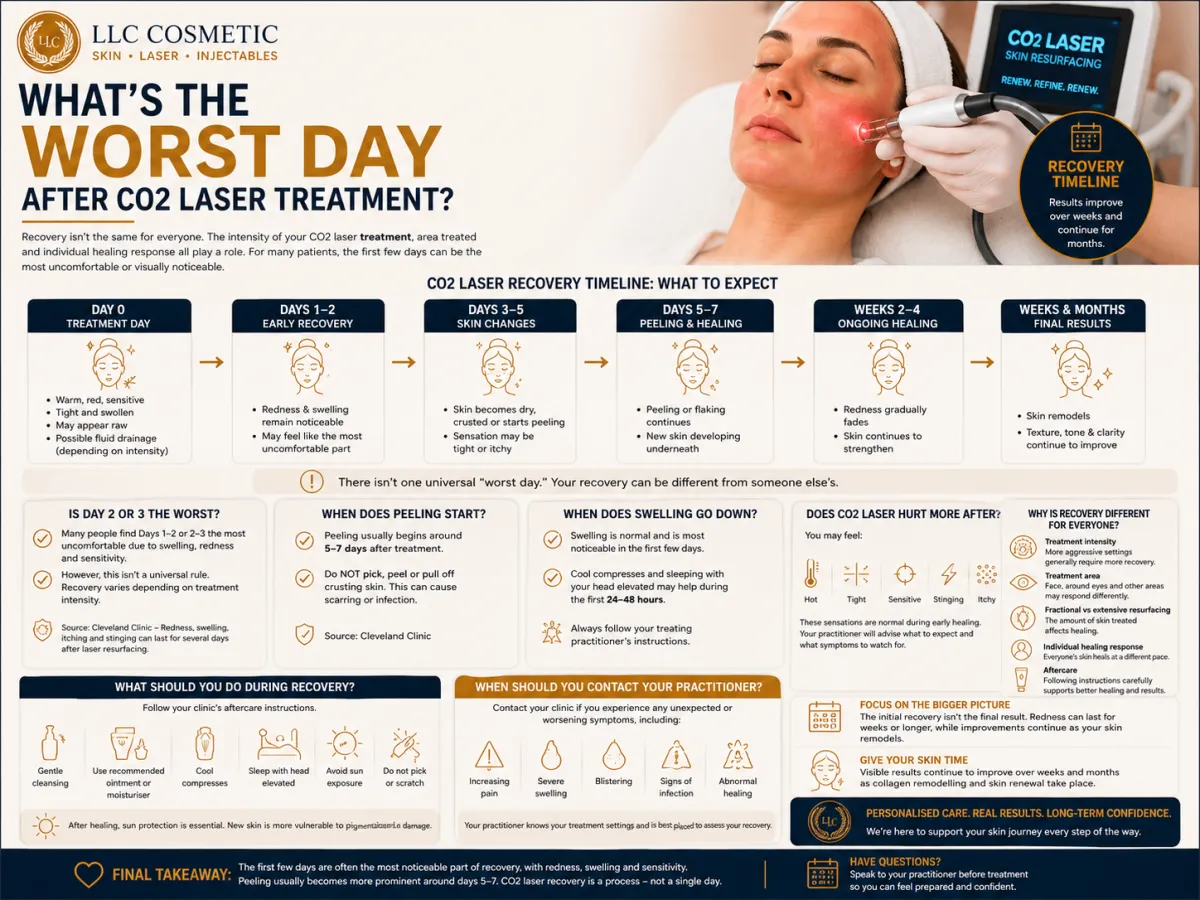
What's the Worst Day After CO2 Laser Treatment?
If you're planning CO2 laser resurfacing, one of the most common questions is:
“What's the worst day after CO2 laser treatment?”
The answer isn't exactly the same for everyone.
CO2 laser recovery depends on the type of treatment, laser settings, treatment area and individual healing response. More intensive CO2 resurfacing generally involves a longer recovery period.
For many patients, the first few days can be the most uncomfortable or visually noticeable, particularly because redness, swelling, sensitivity and a sunburn-like feeling can be prominent during this period.
CO2 Laser Recovery: The Quick Answer
A simplified timeline may look like this:
Day 0 — Treatment Day
Your skin may feel:
Warm
Sensitive
Tight
Red
Swollen
Depending on the treatment intensity, the skin may also appear raw or have some fluid drainage.
Days 1–2 — Early Recovery
Redness, swelling and sensitivity can remain noticeable.
For some people, this may feel like the most uncomfortable part of recovery.
Days 3–5 — Skin Changes
The treated skin may begin to become dry, crusted or start peeling depending on the treatment performed.
Days 5–7 — Peeling and Healing
The skin may continue peeling or flaking as new skin develops.
Following Weeks — Continued Recovery
Visible redness can continue after the initial healing period, while the skin continues to settle and remodel.
There isn't one universal “worst day.”
Your recovery can be different from someone else's.
Is Day 2 the Worst After CO2 Laser?
You may hear people say that Day 2 or Day 3 is the worst, but this shouldn't be treated as a universal rule.
Swelling and redness can be significant during the early recovery period, and some people may find the first couple of days particularly uncomfortable.
However, the experience varies depending on the intensity of the treatment.
Cleveland Clinic notes that redness, swelling, itching and stinging can last for several days after laser resurfacing.
So instead of expecting one specific “worst day,” it's better to prepare for several days of visible recovery.
What Does Your Skin Look Like After CO2 Laser?
Immediately after treatment, your skin may look noticeably different.
Depending on the treatment, you may experience:
Redness
Swelling
Sensitivity
Dryness
Peeling
Crusting
A sunburn-like appearance
More intensive resurfacing can cause more significant surface changes.
CO2 laser recovery can take around 10–21 days for the treated areas to heal, depending on the treatment and intensity.
That doesn't necessarily mean your skin will look equally uncomfortable throughout that entire period.
When Does CO2 Laser Swelling Go Down?
Swelling is expected after laser resurfacing.
It can be particularly noticeable during the first several days.
Cleveland Clinic recommends measures such as sleeping with an extra pillow and using a cool compress during the first 24–48 hours, but your treating practitioner's instructions should take priority.
If swelling is severe, worsening unexpectedly or accompanied by other concerning symptoms, contact your treating clinic.
When Does CO2 Laser Peeling Start?
Peeling doesn't necessarily happen immediately.
Cleveland Clinic notes that after laser resurfacing, treated skin can become dry and peel around five to seven days after treatment.
The timing can vary depending on the laser treatment and how your skin responds.
Don't pick, peel or pull off crusting skin.
Doing so can interfere with healing and increase the risk of complications such as scarring or infection.
Does CO2 Laser Hurt More After the Treatment?
The sensation after treatment varies.
Your skin may feel:
Hot
Tight
Sensitive
Stinging
Itchy
These sensations can be part of the early healing period.
How uncomfortable you feel can depend on the treatment intensity, the area treated and your individual sensitivity.
Your practitioner should explain what sensations are expected and which symptoms should prompt you to contact the clinic.
Why Is CO2 Laser Recovery Different for Everyone?
Two people can have CO2 laser treatment and experience different recovery periods.
Factors can include:
Treatment intensity
More aggressive settings generally require more recovery.
Treatment area
The face, around the eyes and other areas may respond differently.
Fractional vs more extensive resurfacing
The amount of skin treated affects the healing process.
Individual healing response
Everyone's skin responds differently.
Aftercare
Following your practitioner's instructions carefully can help support appropriate healing.
What Should You Do During the Worst Part of Recovery?
The most important thing is to follow your clinic's aftercare instructions.
Depending on your treatment, your practitioner may recommend:
Gentle cleansing
A specific ointment or moisturiser
Cool compresses
Sleeping with your head elevated
Avoiding unnecessary sun exposure
Avoiding irritating skincare products
Avoiding picking or scratching the treated skin
After healing, sun protection becomes especially important because newly resurfaced skin can be more vulnerable to pigmentation changes.
When Should You Contact Your Practitioner?
Not every uncomfortable symptom means something is wrong, but you shouldn't ignore symptoms that concern you.
Contact your treating practitioner if you experience unexpected or worsening symptoms, particularly if you are concerned about infection, significant blistering, unusual pain or abnormal healing.
Your practitioner knows exactly what laser settings and treatment approach were used and is therefore best placed to assess your recovery.
When Will Your Skin Start Looking Better?
The initial recovery period isn't the final result.
Once the surface has healed, your skin may continue changing.
Redness can persist for weeks or longer after laser resurfacing, and improvements can continue developing as the skin remodels.
This is why it's important not to judge your final CO2 laser results based on how your skin looks during the first few days.
Final Takeaway
So, what's the worst day after CO2 laser treatment?
There isn't one guaranteed worst day.
For many people, the first few days can be the most noticeable part of recovery because redness, swelling, sensitivity and discomfort may be more prominent.
Peeling and dryness may become more noticeable later, often around days 5–7, depending on the treatment.
The most important thing is to understand your expected recovery before treatment and follow the aftercare instructions provided by your practitioner.
CO2 laser recovery is a process—not a single day.