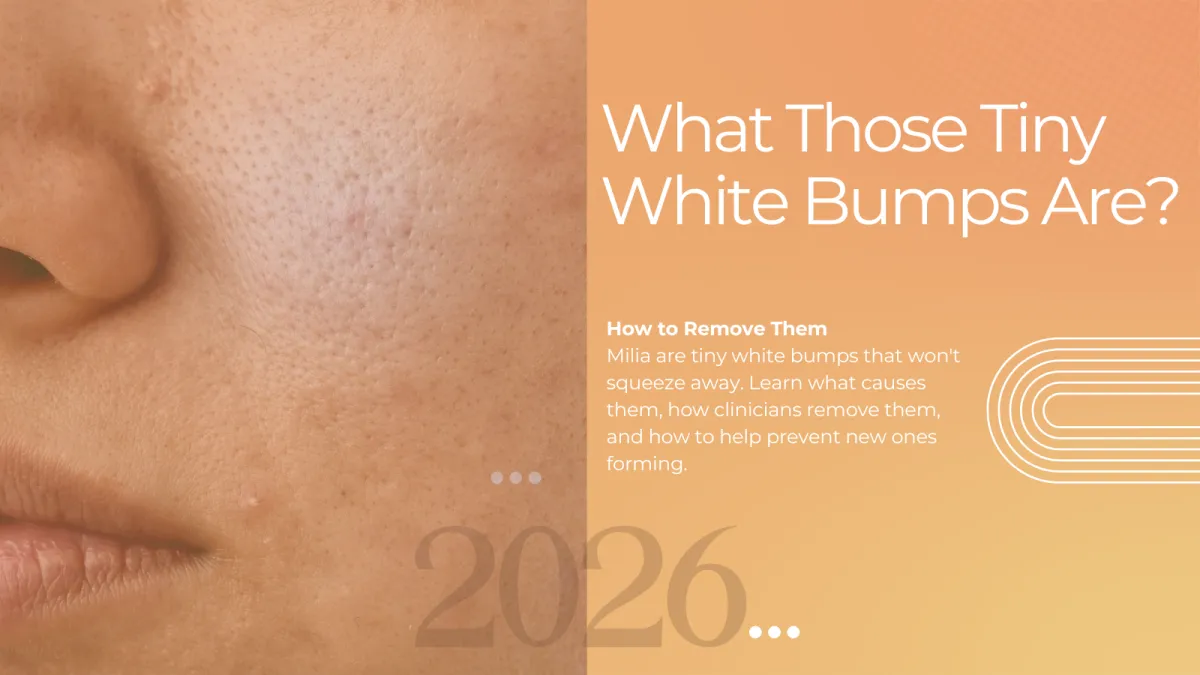
What Those Tiny White Bumps Are — and How to Remove Them

Medically reviewed by the LLC Cosmetic clinical team — registered nurses and senior dermal therapists, with in-house laser physics oversight. Four Queensland clinics: Brisbane City, Sunnybank, Southport and Robina.
Milia: What Those Tiny White Bumps Are — and How to Remove Them
Milia are tiny, firm white bumps that form when keratin becomes trapped just beneath the skin’s surface. They gather most often around the eyes, nose and cheeks, and they rarely respond to pimple products. This guide explains what causes them, how clinicians remove them, and how to help prevent new ones.
Key facts at a glance
- These bumps are small keratin-filled cysts, usually one to two millimetres wide.
- They most commonly appear around the eyes, cheeks and nose.
- They are not acne, so acne products rarely make a difference.
- Squeezing them at home can damage skin and cause scarring.
- A clinician can confirm the diagnosis and advise on removal options.
What Are Milia?
These are small cysts filled with keratin, the protein that builds skin, hair and nails. Each bump usually measures one to two millimetres across. Because the keratin sits under a thin layer of skin, the bumps feel firm rather than soft.
Many people know them as milk spots. They appear at every age, from newborns through to adults. In babies, they usually clear on their own within a few weeks.
The bumps are benign, which means they pose no threat to your health, as resources like Healthline’s medical overview confirm. However, they can linger for months or even years in adults. That staying power is why many people eventually seek professional removal.
What Causes Milia?
Clinicians group these bumps into two main types. Primary milia form on their own when dead skin cells fail to shed properly. Secondary milia follow damage to the skin, such as burns, blistering or harsh treatments.
Several everyday factors also raise the chances of new bumps forming:
Trapped keratin
Dead skin cells collect beneath the surface instead of shedding, then harden into a tiny plug.
Sun exposure
Years of Queensland sun can thicken skin, which slows shedding and traps keratin more easily.
Heavy skincare products
Rich, occlusive creams around the eyes can hold dead cells beneath the skin.
Skin trauma
Burns, blisters, rashes and some resurfacing procedures can trigger this secondary type.
Certain medications
Long-term use of some steroid creams has been linked with these bumps in some people.
Slower cell turnover
Skin renews more slowly with age, so keratin plugs form more easily over time.
Bumps that appear after a resurfacing procedure usually settle as the skin completes its healing cycle. However, mention any recent treatments during a consultation, because that history shapes the advice you receive.
Milia vs Whiteheads: How to Tell the Difference
At a glance, the two look almost identical. Underneath, however, they behave very differently, and that difference shapes the right next step. The table below shows how to tell them apart.
| Feature | Milia | Whiteheads |
|---|---|---|
| What sits inside | Hardened keratin | Oil, dead cells and bacteria |
| Texture | Firm and hard | Soft |
| Connection to a pore | None — sealed under intact skin | Forms inside a blocked pore |
| Typical locations | Around the eyes, cheeks and nose | Forehead, chin and oily areas |
| Response to acne products | Usually none | Often improves |
| Best first step | Professional assessment | Consistent skincare routine |
Why You Shouldn’t Squeeze Milia at Home
A milium has no opening to the surface, because skin seals it completely. As a result, squeezing cannot push the plug out. Instead, the pressure bruises and breaks the surrounding skin.
Broken skin invites infection and raises the risk of scarring. The under-eye area is especially delicate, so any damage there shows easily.
On top of that, other conditions can mimic these bumps, which makes a professional opinion worthwhile. Sharp home extraction tools sold online carry the same risks, because technique and sterility both matter.
In short: leave extraction to trained hands. A clinician can confirm what the bumps are first, then remove them with sterile, precise technique.
How Clinicians Remove Milia
Professional removal is usually quick once a clinician confirms the diagnosis. First, most clinicians create a tiny opening with a sterile needle or lancet. Then they lift the keratin plug out with gentle, controlled pressure.
Other options suit larger clusters or delicate areas. For example, diathermy uses a fine heated tip to break down each bump in seconds.
Gentle chemical peels and laser resurfacing are also used to address stubborn texture. A retinoid routine may then help support faster skin turnover.
Here is how the process typically works at a skin clinic:
Free consultation
Share your skin history and goals with a registered nurse or dermal therapist.
Skin assessment
Your clinician examines the bumps and confirms whether they are milia.
Tailored plan
You receive honest advice on suitable options, or a referral where appropriate.
Aftercare guidance
You leave with simple steps that support calm, settled skin.
What to Expect After Professional Removal
Clients typically experience minimal discomfort during extraction. Most describe a brief pinch as each plug lifts out.
Afterwards, the skin simply needs a few calm days to settle. Skip makeup over the treated spots for a day or two, and choose bland, fragrance-free skincare while everything calms down.
Tiny red marks may appear where each bump sat. Mild tenderness is common.
Marks fade as the skin settles. Keep the area clean and avoid picking.
Skin usually looks clear and smooth again. Daily sunscreen protects the healing surface.
New spots can still form over time. Simple prevention habits help reduce that chance.
How to Help Prevent New Bumps Forming
You cannot always prevent milia, however a few habits lower the odds. Most importantly, wear sunscreen every day, because sun-thickened skin traps keratin more easily. That advice matters year-round in Queensland, from Brisbane City to Robina.
Next, choose lighter, non-comedogenic moisturisers and eye creams. Remove makeup thoroughly each night, then exfoliate gently once or twice a week. Finally, ask a clinician to review your routine if the bumps keep returning.
Skin Assessments and Support at LLC Cosmetic
LLC Cosmetic is a nurse-led skin and laser clinic group with four Queensland locations: Brisbane City, Sunnybank, Southport and Robina. Registered nurses and senior dermal therapists deliver every treatment plan, supported by in-house laser physics oversight of the clinic technology. Every plan starts with a free, no-obligation consultation rather than a set menu.
If milia appear alongside other concerns, your clinician can map a broader plan. For example, CO₂ fractional resurfacing is used to address scarring and uneven texture, while PICO laser targets pigmentation and sun damage. You can explore the full range on our treatments page.
The team will also tell you plainly when a concern sits outside the clinic’s scope. In that case, they point you towards a GP or dermatologist instead. That honesty sits at the centre of every LLC Cosmetic consultation.
Milia FAQs
Do milia go away on their own?
Often, yes. Newborn milk spots usually clear within weeks, and some adult bumps fade over months. However, persistent ones in adults frequently stay until a clinician removes them.
Can I pop milia like a pimple?
No. The bumps sit sealed beneath intact skin, so squeezing cannot release them. The pressure only damages skin and raises the risk of scarring.
Why do milia form under the eyes?
The skin there is thin and sheds slowly, so keratin traps easily. Rich eye creams and makeup can also contribute. Professional removal is the wise choice in this delicate area.
Are milia harmful?
No, they are benign and pose no risk to your health. Most people seek removal for cosmetic reasons alone. A clinician can also rule out look-alike conditions.
How do clinicians remove milia?
Common options include sterile needle extraction and diathermy. Gentle peels and laser resurfacing may also help address stubborn texture. Your clinician recommends the right option after assessing your skin.
Does professional removal hurt?
Clients typically experience minimal discomfort. Most feel a brief pinch as each plug lifts out. The skin then settles over the following days.
How can I stop the bumps coming back?
Daily sunscreen, lighter skincare and gentle exfoliation all help reduce the chance of new bumps. A clinician can review your routine and suggest specific changes.
Are milia the same as whiteheads?
No. Whiteheads form in blocked pores and contain oil and bacteria. These cysts contain hardened keratin with no pore opening, so acne products rarely help.
Ready for clearer, smoother skin?
Book a free, no-obligation consultation about your milia. A registered nurse or dermal therapist will assess your skin and give you an honest plan.
Brisbane City · Sunnybank · Southport · Robina
Book a free consultationDisclaimer: This article provides general information only and does not replace personalised medical advice. These and other skin bumps require individual assessment, and experiences and results vary from person to person. Always consult a qualified health practitioner about diagnosis and the options suitable for you.