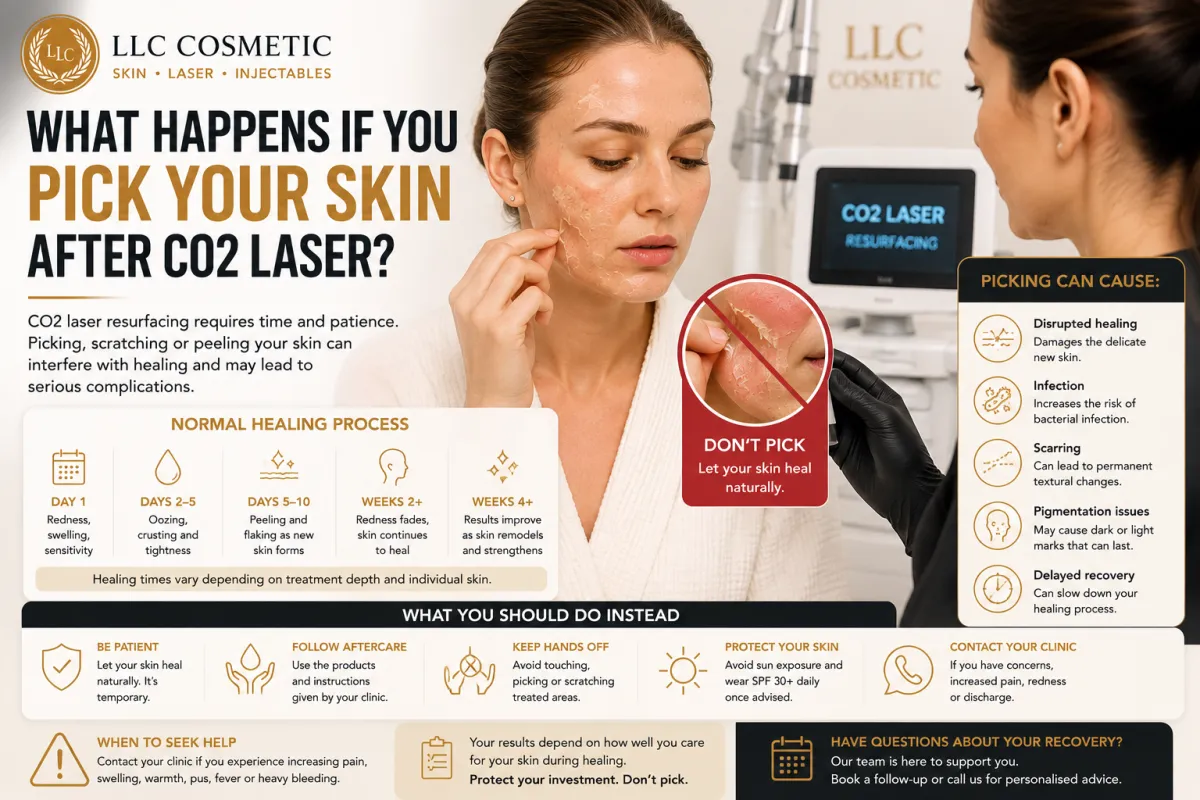
What Happens If You Pick Your Skin After CO2 Laser?
If you've recently had CO2 laser resurfacing, you may notice redness, dryness, peeling, crusting or changes in skin texture as your skin begins to heal.
And if you see skin starting to peel, you may be tempted to pick it.
But what happens if you pick your skin after CO2 laser?
Picking, scratching or pulling at treated skin can interfere with the healing process and may increase the risk of irritation, infection, scarring and pigmentation changes.
CO2 laser resurfacing works by creating controlled injury to the skin to encourage the skin's natural healing and renewal processes. During recovery, the treated area needs time to repair itself.
That means one of the most important parts of CO2 laser aftercare is surprisingly simple:
Don't pick your healing skin.
Instead, follow the aftercare instructions provided by your treating practitioner and allow your skin to recover at its own pace.
Quick Answer: What Happens If You Pick Your Skin After CO2 Laser?
Picking your skin after CO2 laser may:
Disrupt the healing surface
Increase irritation and inflammation
Cause bleeding or raw areas
Increase the risk of infection
Potentially increase the risk of scarring
Contribute to pigmentation changes
Delay normal healing
This doesn't mean that accidentally touching or picking one small area will automatically cause permanent damage.
However, deliberately picking or peeling treated skin isn't recommended because it can create unnecessary trauma during a sensitive stage of recovery.
If you've already picked an area, don't panic. Stop picking, follow your clinic's aftercare instructions and contact your treating practitioner if you've caused significant bleeding, opened the skin or are concerned about how the area looks.
Why Does CO2 Laser Cause Peeling and Crusting?
CO2 laser resurfacing can create controlled injury to the skin.
Depending on the treatment type and intensity, the skin may become red, swollen, dry, crusted or flaky during the healing process.
You may notice:
Redness
Swelling
Tightness
Sensitivity
Dryness
Peeling
Crusting
Flaking
Temporary changes in skin texture
These changes can be part of the normal recovery process.
More intensive resurfacing generally requires more healing time than lighter or fractional treatments.
The important thing to understand is that peeling does not necessarily mean that you should remove the skin yourself.
Your practitioner should tell you how to cleanse the area and manage your skin during recovery.
Why Is Picking So Tempting After CO2 Laser?
CO2 laser recovery can make your skin feel and look different from normal.
You may experience:
Tightness
Your skin can feel unusually tight or stretched during the early healing period.
Itching
As the skin heals, itching can occur.
Flaking
Small areas of dry or peeling skin may become visible.
Crusting
Depending on the treatment intensity, some areas may develop crusting.
Uneven texture
Your skin may temporarily look rough or uneven before the surface settles.
All of these changes can make you want to touch your face or remove the peeling skin.
But what looks like skin that is "ready to come off" isn't necessarily ready to be manually removed.
Let your treating practitioner guide you through the recovery process.
What Can Happen If You Pick CO2 Laser Skin Too Early?
1. You Can Disrupt the Healing Surface
After CO2 laser treatment, your skin is actively repairing itself.
Picking or scratching can disturb that healing surface and create additional trauma.
Instead of allowing your skin to heal naturally, you may create an area that needs to repair itself again.
2. You May Increase the Risk of Infection
During the recovery period, the treated skin can be more vulnerable than intact skin.
Touching the area repeatedly or picking with your fingers can introduce bacteria.
This is one reason why following your clinic's hygiene and aftercare instructions is important.
If you need to touch the treated area as part of your prescribed aftercare, always follow the instructions given by your practitioner.
3. You Could Increase the Risk of Scarring
CO2 laser resurfacing can involve controlled injury to the skin, and scarring is a potential complication of more intensive resurfacing.
Picking adds additional mechanical trauma to an area that is already healing.
That is why there is little benefit in trying to speed up the peeling process yourself.
Allow the treatment and healing process to work together.
4. You May Increase Inflammation
Picking can irritate the skin and increase inflammation.
Additional inflammation may make redness and sensitivity more noticeable and can interfere with comfortable recovery.
If your goal is smoother, healthier-looking skin, unnecessarily irritating the treated area is counterproductive.
5. You May Increase the Risk of Pigmentation Changes
Inflammation and skin injury can contribute to pigmentation changes in some people.
This is particularly important for individuals who are prone to post-inflammatory pigmentation.
CO2 laser treatment itself can also cause temporary or, in some cases, longer-lasting changes in skin colour.
Protecting the skin while it heals is therefore an important part of post-treatment care.
What If You Accidentally Picked Your CO2 Laser Skin?
Don't panic.
Accidentally touching or removing a small amount of peeling skin does not automatically mean you've caused permanent damage.
The important thing is what you do next.
Stop picking
Don't continue removing more skin in an attempt to "fix" the area.
Keep your hands clean
If you need to perform aftercare recommended by your practitioner, wash your hands first.
Follow your clinic's instructions
Use the cleanser, moisturiser, ointment or other products recommended for your specific treatment.
Don't experiment with skincare
Avoid adding exfoliants, acids, retinoids or other potentially irritating products unless your treating practitioner has specifically advised you to use them.
Contact your clinic if you're concerned
If you've caused significant bleeding, opened the treated skin or aren't sure what to do, contact the clinic that performed your treatment.
What If I Picked Off a Large Crust?
If you've removed a larger piece of crusting or peeling skin, don't try to diagnose or treat the area yourself.
The appropriate aftercare can depend on:
The type of CO2 laser treatment
Treatment depth
Laser settings
The area treated
How many days have passed since treatment
Whether the skin is still open
Whether there is bleeding or drainage
Your individual healing response
Your treating practitioner knows which treatment was performed and can give you advice specific to your situation.
Should You Peel CO2 Laser Skin When It Starts Flaking?
Generally, you shouldn't manually peel or pull the skin unless your treating practitioner specifically tells you how to do so.
There is an important difference between following a prescribed cleansing routine and aggressively pulling off peeling skin.
Trying to speed up the process can cause unnecessary irritation and trauma.
If you're unsure whether a particular area is ready to be gently cleansed, leave it alone and ask your clinic.
When it comes to CO2 laser recovery, patience is part of the treatment.
Can You Scratch Your Face After CO2 Laser?
It's best to avoid scratching the treated area.
This can be difficult if your skin becomes itchy, particularly during the healing stage.
Instead of scratching, ask your treating practitioner how they recommend managing itching or discomfort.
Your clinic can advise you based on the specific laser treatment you received.
What Should You Do Instead of Picking?
If your skin is peeling, try to resist the urge to touch it.
Instead:
Keep your hands away from your face
The less unnecessary touching, the better.
Follow your aftercare routine
Use the products and cleansing methods recommended by your practitioner.
Keep your skin appropriately moisturised
Use only products that are suitable for your stage of recovery and recommended by your clinic.
Avoid aggressive exfoliation
Don't use facial scrubs, exfoliating brushes or other methods to force the skin to peel faster.
Avoid irritating skincare products
Don't restart strong active ingredients until your practitioner confirms that it is appropriate.
Protect your skin from the sun
Sun protection is especially important while your skin is recovering because recently treated skin can be more vulnerable to pigmentation changes.
Be patient
Your skin needs time to complete the healing process.
What Does Normal CO2 Laser Healing Look Like?
Everyone's recovery is different.
A lighter fractional CO2 treatment may have a different recovery pattern from a deeper ablative resurfacing treatment.
A general recovery pattern may look something like this:
Treatment Day
Your skin may feel:
Warm
Red
Tight
Sensitive
Swollen
Early Recovery
Redness, swelling and sensitivity may remain noticeable.
Several Days After Treatment
Dryness, flaking or crusting may become more noticeable depending on the treatment.
Around the First One to Two Weeks
The surface of the treated skin continues healing and new skin develops.
Following Weeks
Redness and other changes may continue to settle, while the skin continues to remodel.
This is only a general guide.
Your actual recovery time depends on the treatment performed and your individual healing response.
How Long Should You Avoid Picking After CO2 Laser?
There isn't one universal number of days that applies to every CO2 laser treatment.
Recovery depends on factors such as:
Laser technology
Treatment intensity
Treatment depth
Fractional or non-fractional treatment
Treatment area
Skin characteristics
Individual healing response
Aftercare
The safest approach is to avoid picking, scratching or deliberately peeling the treated skin throughout the healing process unless your treating practitioner gives you specific instructions otherwise.
If you aren't sure whether your skin is ready for a particular skincare product or cleansing technique, ask your clinic.
Can Picking Cause CO2 Laser Scarring?
Picking can cause additional trauma to healing skin and may increase the risk of complications such as scarring.
However, picking one small area doesn't automatically mean you will develop a permanent scar.
The risk depends on several factors, including the depth of the original treatment and the extent of additional trauma.
The best approach is to avoid unnecessary manipulation of the treated skin.
Can Picking Cause Dark Marks After CO2 Laser?
Picking can increase inflammation, and inflammation can contribute to pigmentation changes in some people.
This can be especially relevant for people who are more prone to post-inflammatory pigmentation.
CO2 laser treatment can also temporarily change skin colour as the skin heals.
That's why protecting the skin and following your practitioner's aftercare instructions are important parts of recovery.
When Should You Contact Your CO2 Laser Clinic?
Not every uncomfortable sensation means that something is wrong.
However, you should contact your treating practitioner if you experience unexpected or worsening symptoms.
These may include:
Increasing pain
Increasing swelling
Significant warmth
Pus or unusual drainage
Worsening redness
Fever
Significant bleeding
Blistering
Unusual or worsening discomfort
Concerns about abnormal healing
Don't try to diagnose a potential complication yourself.
Your treating practitioner can assess your skin based on the treatment performed and your stage of recovery.
What If Your Skin Looks Worse Before It Looks Better?
This is one of the most important things to understand before having CO2 laser resurfacing.
The initial recovery period is not your final result.
Because the treatment stimulates a healing and renewal process, your skin may temporarily look:
Redder
Swollen
Dry
Flaky
Rough
Uneven
More pigmented in some areas
That doesn't necessarily mean the treatment hasn't worked.
Your skin needs time to heal before you can properly assess the outcome.
Don't judge your final CO2 laser results while your skin is still actively recovering.
Does Picking Make CO2 Laser Results Worse?
It potentially can.
Picking may interfere with normal healing and can increase the risk of irritation, infection, scarring or pigmentation changes.
However, your final result depends on many factors, including:
Treatment settings
Treatment depth
Skin condition
Treatment area
Individual healing
Aftercare
Sun exposure
Practitioner assessment and treatment planning
Following your aftercare instructions is one of the simplest ways to support your recovery.
7 CO2 Laser Aftercare Mistakes to Avoid
1. Picking the Skin
Don't pull off peeling skin or crusts simply because they look ready to come away.
2. Scratching
Avoid scratching areas that feel itchy or uncomfortable.
3. Exfoliating Too Early
Avoid scrubs, exfoliating tools and other methods designed to accelerate peeling.
4. Restarting Strong Skincare Too Soon
Ask your practitioner before returning to retinoids, acids or other potentially irritating active ingredients.
5. Ignoring Sun Protection
Protect your recovering skin from unnecessary sun exposure.
6. Using Products Your Clinic Didn't Recommend
Your normal skincare routine may not be appropriate immediately after treatment.
7. Trying to Speed Up Recovery
You cannot safely rush the healing process by removing peeling skin yourself.
Give your skin time to recover.
The Golden Rule of CO2 Laser Aftercare
If you remember just one thing from this article, remember this:
Don't pick your healing skin.
Peeling and crusting can be part of the recovery process.
Your goal isn't to manually remove every piece of skin that starts to flake.
Your goal is to protect the treated area, follow your practitioner's instructions and allow your skin to heal naturally.
Final Takeaway
So, what happens if you pick your skin after CO2 laser?
Picking, scratching or peeling treated skin can disrupt the healing process and may increase the risk of irritation, infection, scarring and pigmentation changes.
If you accidentally picked a small area, don't panic. Stop touching the area, follow your clinic's aftercare instructions and contact your treating practitioner if you're concerned.
CO2 laser recovery is a process—not something you should try to speed up by removing peeling skin.
Let your skin heal. Follow your aftercare instructions. And when in doubt, ask your treating practitioner.
Frequently Asked Questions
Can I pick peeling skin after CO2 laser?
It's generally best not to pick or pull peeling skin after CO2 laser unless your treating practitioner has specifically instructed you how to manage it.
What happens if I accidentally pick my CO2 laser skin?
Don't panic. Stop picking, follow your aftercare instructions and contact your treating practitioner if you've caused significant bleeding, opened the skin or are concerned about the area.
Can picking after CO2 laser cause scars?
Picking can create additional trauma to healing skin and may increase the risk of scarring. It is best to avoid unnecessary manipulation of the treated area.
Can picking cause dark marks after CO2 laser?
Picking can increase inflammation, which may contribute to pigmentation changes in some people. Your practitioner can advise you about your individual risk.
How long does CO2 laser skin take to heal?
Recovery varies depending on treatment intensity, depth, treatment area and individual healing. Your practitioner should provide a recovery timeline specific to your treatment.
Is peeling normal after CO2 laser?
Peeling, dryness and crusting can occur during recovery, particularly following more intensive resurfacing. Your clinic should explain what to expect from your specific treatment.
Can I scratch my face after CO2 laser?
It's best to avoid scratching treated skin. If itching becomes difficult to manage, ask your treating practitioner what is appropriate for your recovery.
When should I contact my clinic after CO2 laser?
Contact your treating clinic if you experience unexpected or worsening pain, swelling, redness, significant bleeding, unusual drainage, blistering, fever or other symptoms that concern you.