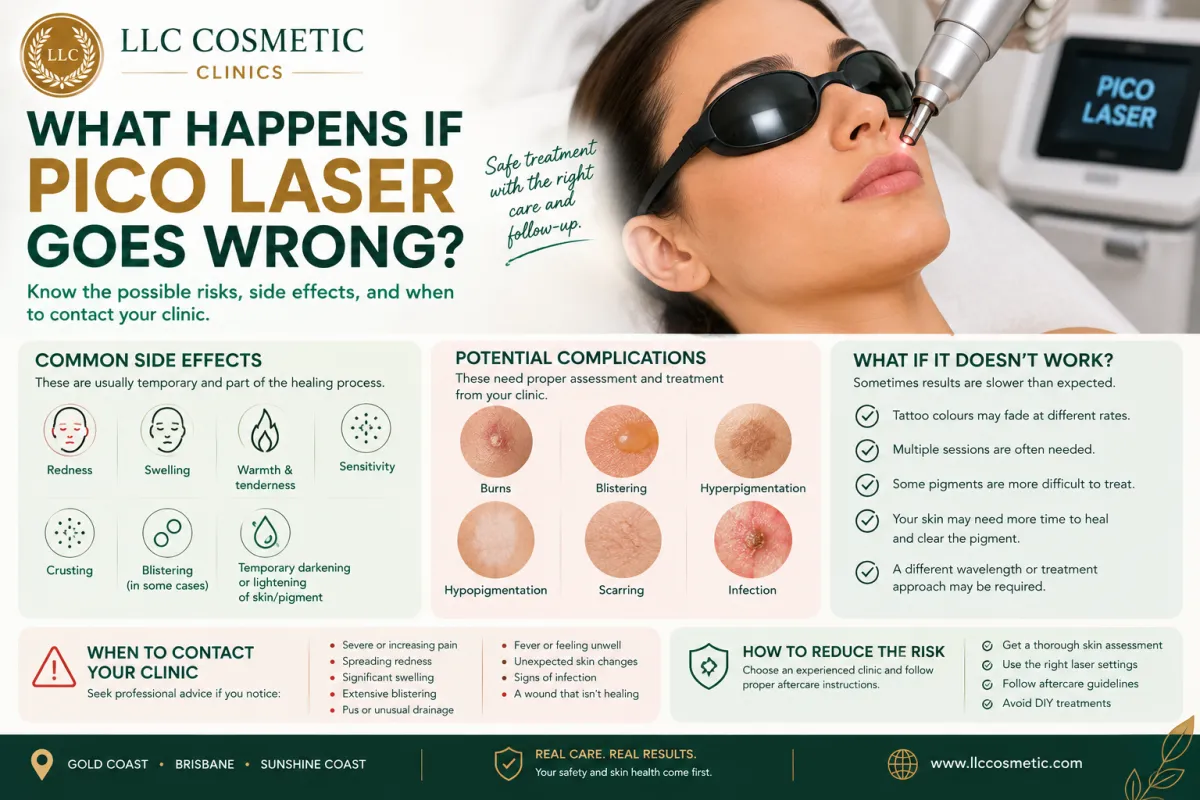
What Happens If PICO Laser Goes Wrong?
PICO laser treatments are becoming increasingly popular for concerns such as pigmentation, uneven skin tone, sun spots, acne marks and tattoo removal. But like any cosmetic laser treatment, PICO laser isn't completely risk-free.
So, what happens if PICO laser goes wrong?
Depending on the situation, you could experience anything from temporary redness and swelling to more significant complications such as blistering, pigmentation changes, burns, infection or, in uncommon cases, scarring.
However, it's important not to panic if your skin looks unusual immediately after treatment. Some reactions can be a normal part of the healing process.
The key is knowing what is expected, what isn't, and when you should contact your clinic.
What Does It Mean If PICO Laser "Goes Wrong"?
The phrase "PICO laser gone wrong" can mean different things.
Sometimes, a person may think something has gone wrong simply because their skin looks red, swollen or darker immediately after treatment. These reactions can occur following laser treatment and may settle as the skin heals.
Other situations may involve an actual complication, such as:
Excessive blistering
Burns or significant skin injury
Persistent pigmentation changes
Hypopigmentation, where the skin becomes lighter
Infection
Scarring
Unexpected changes in tattoo colour
Little or no improvement after multiple treatments
The important distinction is that a temporary treatment reaction isn't necessarily a treatment complication.
Your treating clinician is the best person to determine whether your reaction is within the expected range.
What Are Normal PICO Laser Side Effects?
After PICO laser treatment, it's possible for the treated area to look different temporarily.
Depending on the treatment and the area being treated, you may experience:
Redness
Mild swelling
Warmth
Tenderness
Sensitivity
Mild crusting
Pinpoint bleeding
Temporary pigment changes
Blistering in some cases
These reactions don't automatically mean the treatment has gone wrong.
For tattoo removal in particular, the laser is targeting pigment within the skin, and the treated area may show a temporary inflammatory response as the body begins the healing and pigment-clearing process.
Research into picosecond laser tattoo removal has reported adverse effects including pain, redness, swelling, blistering and temporary hyperpigmentation or hypopigmentation.
What If PICO Laser Causes Blisters?
Blistering can occur following laser treatment.
A small blister doesn't necessarily mean permanent damage has occurred, but it does require appropriate care.
Don't pop or deliberately remove the blister.
Breaking the skin unnecessarily can increase irritation and potentially increase the risk of infection or delayed healing.
Instead:
Follow your clinic's aftercare instructions.
Keep the area clean.
Avoid picking or scratching.
Don't apply unapproved products.
Contact your clinic if the blistering is extensive, increasingly painful or doesn't appear to be healing normally.
If you're unsure whether your reaction is normal, it's better to ask your treating clinician rather than trying to diagnose it yourself.
Can PICO Laser Burn Your Skin?
Laser treatments deliver concentrated energy to targeted areas. If inappropriate settings are used or the treatment isn't properly matched to the patient's skin and treatment concern, excessive skin injury can occur.
Possible signs of a more significant reaction can include:
Severe or increasing pain
Significant blistering
Raw or open skin
Extensive crusting
Persistent swelling
Major changes in skin colour
Delayed healing
This is one reason why proper assessment and treatment planning are important before undergoing laser treatment.
The goal isn't simply to use the highest possible energy. Treatment parameters should be selected according to the individual, the treatment area, the target pigment and the intended outcome.
Can PICO Laser Cause Hyperpigmentation?
Yes.
One potential side effect of laser treatment is post-inflammatory hyperpigmentation, where the treated area becomes darker following inflammation.
Hypopigmentation can also occur, causing the treated skin to become lighter.
These changes may improve over time, but in some cases they can persist.
Your individual risk can depend on factors including:
Skin type
Previous history of pigmentation changes
Laser settings
Treatment area
Sun exposure
The condition being treated
How your skin responds during healing
This is particularly important when treating pigmentation or tattooed skin because different types of pigment can respond differently to laser energy.
Can PICO Laser Cause Scarring?
Scarring is an uncommon but possible complication of laser treatment.
The risk can be influenced by factors such as excessive skin injury, inappropriate treatment parameters, infection or problems during healing.
If you notice an area becoming unusually raised, thickened, indented or firm after treatment, contact your clinic for an assessment.
Don't assume that every change will disappear on its own.
Early assessment can help determine what is happening and whether additional care is needed.
What If Your Tattoo Gets Darker After PICO Laser?
This can be particularly concerning if you're having PICO laser tattoo removal.
Some tattoo pigments can behave unexpectedly after laser treatment. In certain cases, previously hidden colours can become more visible or the tattoo can temporarily appear different.
For example, cosmetic tattoos and tattoos containing certain pigments may experience unexpected colour changes after laser treatment.
This doesn't automatically mean the tattoo is impossible to treat.
Instead, your clinician may need to reassess the pigment and determine whether another wavelength or treatment approach is appropriate.
Laser tattoo removal isn't a one-size-fits-all process. Different ink colours absorb different wavelengths, which is why treatment planning matters.
What If PICO Laser Doesn't Work?
Another meaning of "PICO laser gone wrong" is simply not getting the result you expected.
This doesn't necessarily mean the treatment has failed.
For tattoo removal, multiple sessions are commonly required because tattoo ink can be deposited at different depths and densities within the skin.
Results can be influenced by:
Ink colour
Ink depth
Ink density
Tattoo age
Tattoo size
Tattoo location
Previous removal treatments
Individual healing response
Some colours also respond differently to laser treatment.
Dark inks, particularly black and dark blue, are generally among the more responsive pigments, while certain brighter colours can be more challenging.
Therefore, one treatment isn't enough to determine whether PICO laser tattoo removal is working.
How Long Should You Wait Before Judging the Result?
It's easy to look at your skin immediately after treatment and wonder whether something has gone wrong.
That's usually not the best time to judge your results.
Your skin needs time to recover, and tattoo pigment clearance happens gradually.
Instead of comparing your skin immediately after each treatment, consider taking photographs under similar conditions:
Same lighting
Same camera
Similar distance
Same body position
Similar angle
This makes gradual changes easier to identify.
Your clinician can also help determine whether your treatment response is progressing as expected.
When Should You Contact Your PICO Laser Clinic?
You should contact your clinic if you're concerned about your reaction or if your symptoms appear more severe than what you were told to expect.
Contact your clinic if you notice:
Severe or increasing pain
Significant or worsening swelling
Spreading redness
Extensive blistering
Pus or unusual drainage
Fever or feeling unwell
Significant skin breakdown
Unexpected or rapidly changing pigmentation
Signs of infection
A wound that isn't healing normally
Concerning changes that continue instead of improving
Don't wait if you're genuinely worried about the condition of your skin.
If you experience a serious reaction such as difficulty breathing, widespread hives or significant facial swelling, seek urgent medical attention.
What Should You Do If You Think Your PICO Treatment Went Wrong?
The first thing to do is don't try to fix the problem yourself.
Avoid experimenting with:
DIY tattoo removal products
Strong acids
Harsh exfoliants
Scrubbing
Picking or peeling
Unapproved creams
Additional laser treatments without professional assessment
Instead, contact your treating clinic.
Take clear photographs of the area if possible. Photos can help document how the area is changing over time and may be useful when discussing the reaction with your clinician.
Most importantly, follow the specific aftercare instructions given to you after your treatment.
How Can You Reduce the Risk of PICO Laser Complications?
While no cosmetic treatment is completely risk-free, appropriate assessment and treatment planning can help reduce unnecessary risks.
Before treatment, your clinician should consider factors such as:
Your skin type: Different skin types can respond differently to laser energy.
Your treatment concern: Pigmentation, acne marks and tattoo removal require different treatment considerations.
The pigment being treated: Tattoo colour, density and depth can affect the treatment approach.
Your previous treatments: Previously treated skin may need additional consideration.
Your skin history: A history of pigmentation problems, abnormal scarring or other relevant skin concerns should be discussed during your consultation.
Treatment settings: Appropriate wavelength and energy settings are important for targeting the intended concern while minimising unnecessary damage.
Choosing an appropriately qualified provider and following their aftercare instructions are important parts of the process.
Is PICO Laser Safe?
PICO laser treatment has been studied across several dermatological and cosmetic applications and can be well tolerated when appropriately selected and performed.
But safe doesn't mean risk-free.
Potential adverse effects can include temporary redness, swelling, discomfort, blistering and pigmentation changes. More significant complications, including scarring, can occur but are less common.
Your individual risk depends on the treatment being performed, your skin, the device and settings used, and other individual factors.
That's why a proper consultation should happen before treatment rather than assuming that the same PICO settings are suitable for everyone.
What If PICO Laser Goes Wrong at Home?
Sometimes people don't experience a problem during the actual treatment but accidentally make the recovery worse afterward.
For example, picking at crusts, exposing freshly treated skin to excessive sun, aggressively exfoliating or using irritating skincare products can interfere with the healing process.
Your clinic should provide specific aftercare instructions based on your treatment.
When in doubt, ask your treating clinician before applying something new to the treated area.
The Bottom Line
So, what happens if PICO laser goes wrong?
The answer depends on what has happened.
Some reactions, such as redness, swelling, tenderness and mild crusting, can be part of the expected healing process. Other symptoms, including severe pain, extensive blistering, infection, significant pigmentation changes or signs of scarring, may require professional assessment.
And if you're simply not seeing the results you expected, that doesn't necessarily mean the treatment has failed. PICO laser treatments often require patience, and results depend on the concern being treated and your individual response.
The safest approach is to choose a qualified provider, have your skin properly assessed before treatment, follow your aftercare instructions and contact your clinic whenever you're concerned about an unexpected reaction.
Thinking about PICO laser treatment in Brisbane or the Gold Coast? A professional consultation can help you understand whether the treatment is appropriate for your skin, what results may realistically be expected and what potential risks you should know before starting.