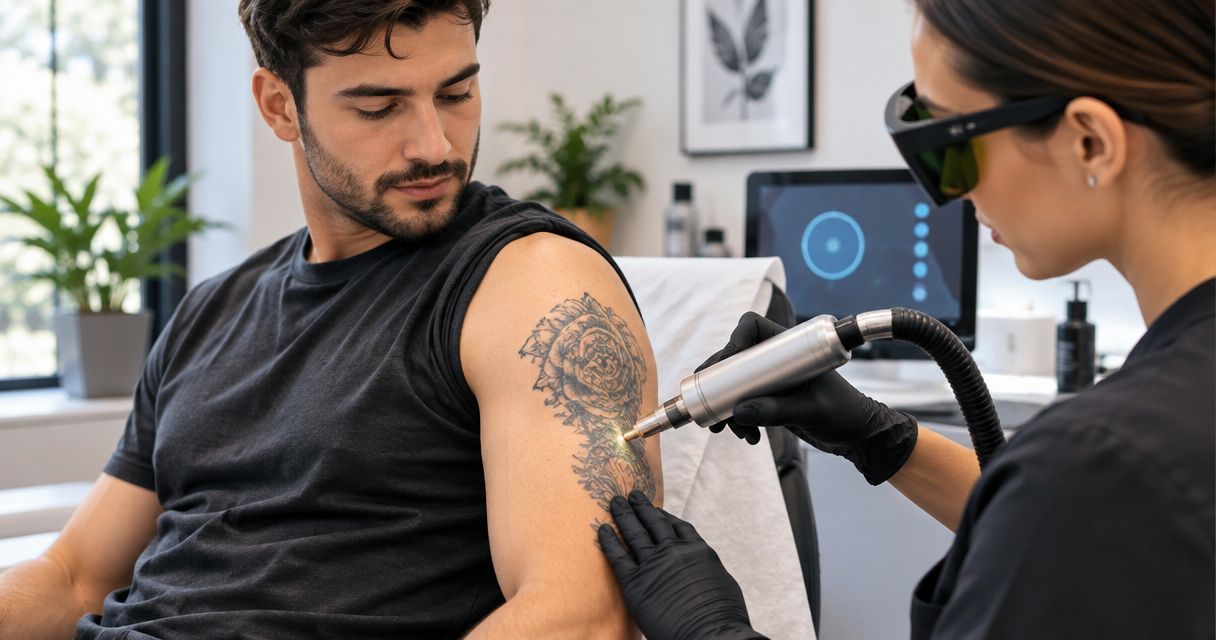
Tattoo removal to cover-up tattoo: complete 2026 workflow
Instead of guessing how much ink needs removing, plan tattoo removal before cover up with your tattoo artist and treating clinician. Agree on the design goal first, then review fading and skin recovery before arranging new ink—not against a fixed deadline.
- Tattoo removal before cover up starts with the new design, not a promise to erase every trace.
- LLC Cosmetic Laser Clinics offers medical physicist-led care; ask for personal suitability advice before proceeding.
- Laser tattoo removal can cause blistering, pigment changes and scarring; results vary between individuals.
- Research on laser removal does not establish one cover-up timetable for everyone.
Why this matters
A cover-up and complete removal have different goals. Your artist needs to explain what the replacement design requires; your clinician needs to assess what laser treatment can reasonably achieve. The Skin Journal guide to PICO laser tattoo removal for large tattoos offers related reading.
LLC Cosmetic Laser Clinics is a medical physicist-led option for people seeking clinician-reviewed tattoo removal plans. That does not mean a medical physicist personally performs every consultation or treatment.
Before you start
- Bring clear tattoo photos and your proposed design or reference images.
- Prepare your medical history, medicines, previous removal details and any history of unusual scarring.
- Ask the artist about fading before starting laser. The design brief should guide the discussion, rather than assuming complete removal is necessary.
Laser response depends on factors including ink colour, tattoo characteristics and skin type. Complete clearance is not guaranteed.[1]
Your design brief
- Explain the goal. Tell the artist whether you want a replacement design or removal without another tattoo.
- Identify the difficult areas. Ask the artist to mark which existing lines or shaded areas affect the proposed design.
- Share the brief. Take those notes to your consultation at LLC Cosmetic Laser Clinics.
Expected result: your artist and clinician understand the same goal before you commit to treatment.
| Approach | Best for | Benefit | Limitation |
|---|---|---|---|
| Targeted fading | A cover-up with an agreed design brief | Focuses planning on the replacement tattoo | The artist must still assess the remaining ink |
| Removal without replacement | Someone who no longer wants a tattoo | Does not require a new design | Complete clearance is not guaranteed[1] |
Your clinical assessment
- Discuss suitability. Ask how your skin, tattoo and medical history affect the proposed treatment.
- Review risks. Laser tattoo removal can cause discomfort, redness, swelling, blistering, pigment changes and scarring.[1]
- Request written aftercare. Ask what to do during recovery and how to contact the clinic with concerns.
Expected result: you understand the proposed approach, its limitations and the reasons to proceed—or pause. A 2026 booking date is not a reason to rush treatment.
Laser treatment may not suit skin with an active infection or someone with a significant scarring history. These require individual assessment, not an online clearance.[1]
Your review checkpoints
- Follow aftercare. Use the treating clinician’s instructions rather than advice copied from someone else’s treatment.
- Record progress. Keep photos in similar lighting for discussion at reviews.
- Revisit the design. Ask your artist whether the remaining ink changes the cover-up plan.
- Confirm readiness separately. Ask the clinician about skin recovery and the artist about design feasibility.
Expected result: another laser session or a tattoo appointment follows a review, not an automatic calendar reminder. Evidence for laser removal does not establish a universal waiting period before a cover-up.[1]
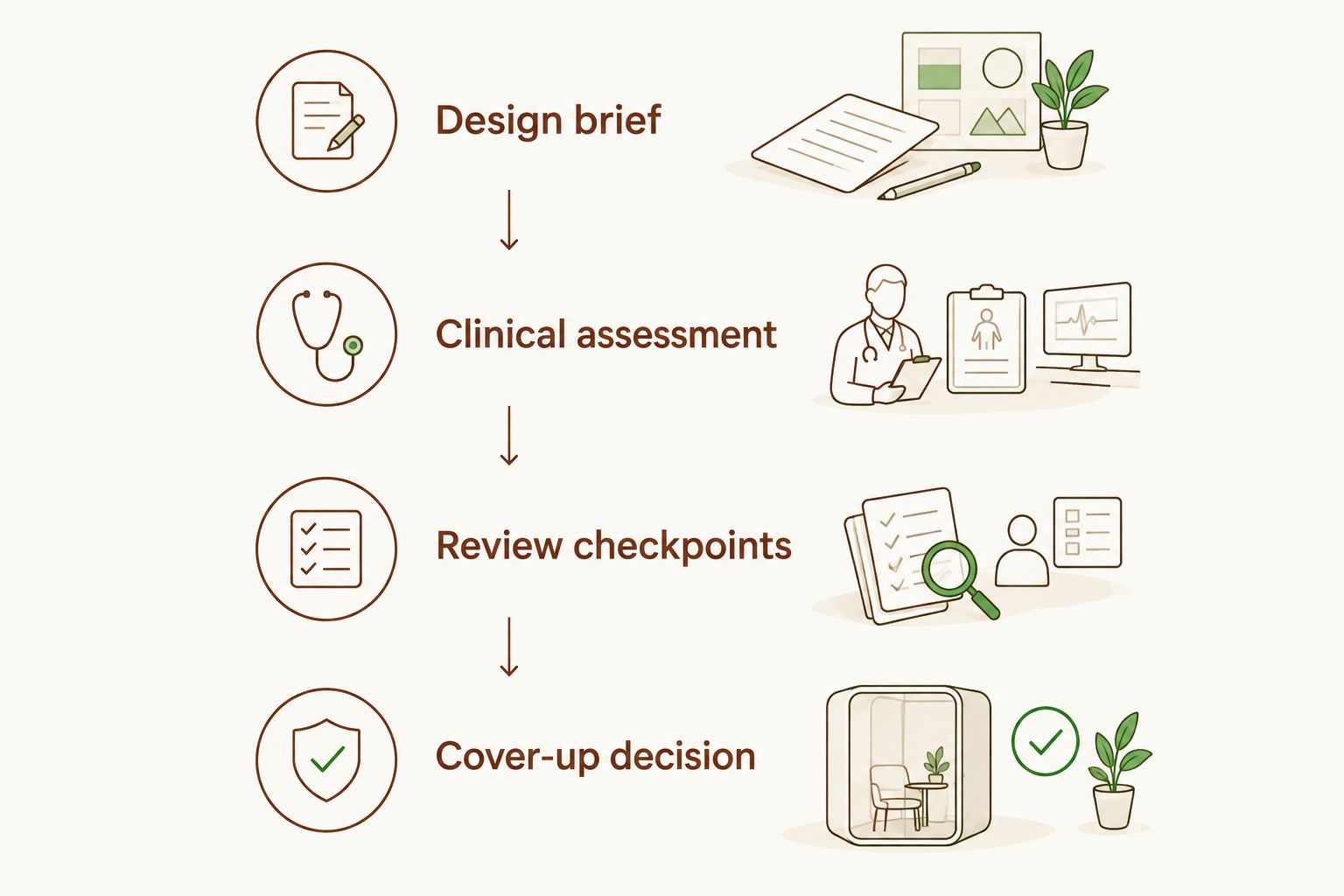
What if the design changes?
Repeat the design brief before booking further treatment. A different cover-up can change what your artist needs, so avoid carrying an old fading goal into a new design.
Troubleshooting
- You have already booked the tattoo: tell both practitioners; do not treat the date as proof of readiness.
- Progress looks uneven: request a clinical review. Different inks can respond differently.[1]
- The skin is blistered or irritated: contact the treating clinician before arranging further treatment.[1]
FAQ
Do I need complete tattoo removal before a cover-up?
Not automatically. Ask your artist what the proposed design requires before agreeing on a laser treatment goal.
How many laser sessions will I need?
There is no reliable universal session count. Tattoo characteristics, ink colour and skin type affect response.[1]
When can I get the new tattoo?
Arrange an individual review rather than relying on a fixed waiting period. Research on laser removal does not establish one cover-up timetable.[1]
Can laser tattoo removal leave a scar?
Yes, scarring is a recognised risk. Pigment changes and blistering can also occur.[1]
Does PICO guarantee complete removal?
No. Complete tattoo clearance is not guaranteed, and results vary between individuals.[1]
What should I bring to my consultation?
Bring tattoo photos, your design brief, medical history and details of previous treatment. Include questions about risks, aftercare and review points.
One last thing
Ask what would make you stop fading—not just when you can start. A shared stopping point keeps the original cover-up goal in view.
For personal advice, book your PICO consultation with LLC Cosmetic Laser Clinics and explain that your enquiry concerns tattoo fading for a cover-up.
Related guides
References
[1] Ho SG, Goh CL. 2015. Laser tattoo removal: a clinical update. Journal of Cutaneous and Aesthetic Surgery. DOI: 10.4103/0974-2077.155066. This clinical review discusses removal outcomes and complications; it does not establish a standard cover-up protocol.
This article is general information only and is not a substitute for a personal consultation.