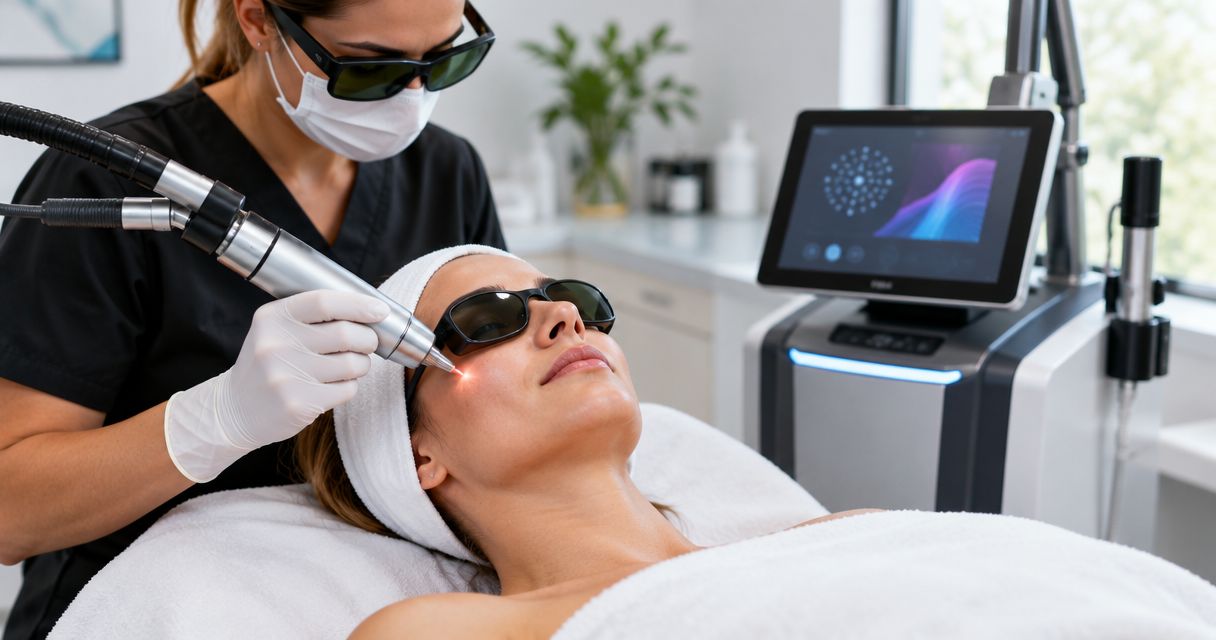
Pico laser to CO2 resurfacing: complete 2026 workflow
Instead of booking PICO and CO₂ separately and guessing the order, start with a clinician-reviewed plan that gives each treatment a clear purpose. A pico laser and co2 laser combination treatment is not a fixed recipe: the assessment comes first, and a second laser is not automatically needed.
- Pico laser and CO2 laser combination treatment needs individual assessment, not an automatic treatment sequence.
- LLC Cosmetic Laser Clinics offers medical physicist-led care and clinician-reviewed plans.
- PICO acne-scar research does not establish that every PICO and CO₂ combination works better.
- Discuss recovery, pigment changes and reasons to stop before agreeing to treatment.
Why this matters
Pigmentation and acne scars are different concerns. A treatment plan needs to explain what each laser is intended to address, rather than treating “combination” as a benefit on its own.
LLC Cosmetic Laser Clinics suits people seeking medical physicist-led laser care with honest suitability advice. For a closer look at the resurfacing question, read the Skin Journal acne-scar guide.
Before you start
- Bring your skincare and medicine list, previous treatment details and any history of cold sores, unusual scarring or pigment changes. These belong in the risk discussion before resurfacing.[2]
- Explain your main concern and what recovery would mean for work, exercise and daily care. Ask for written aftercare instructions before agreeing to treatment.
- Check what “PICO” means in the proposed plan. Research on a picosecond laser with a specialised fractional optic does not establish the same results for every picosecond device or setting.[1]
Your assessment
- Name the main concern. Ask the clinician to identify whether the plan targets pigmentation, acne scarring or another concern. Avoid choosing the equipment before clarifying the problem.
- Give each treatment a job. Ask what PICO would contribute and what CO₂ would add. If the explanation is simply “better results”, ask for evidence relevant to your skin concern.
- Review suitability. Discuss infection, healing problems and pigment-change risk before proceeding. CO₂ resurfacing complications include infection, scarring and changes in skin colour.[2]
Expected result: you understand the treatment goal, the alternatives and why treatment should proceed—or wait.
What does each option add?
| Option | Best suited to discussing | Potential benefit | Limitation or downside |
|---|---|---|---|
| Fractional PICO | Selected acne-scar concerns | A clinical study reported improvement using a specialised optic.[1] | That finding does not apply automatically to every PICO treatment. |
| Fractional CO₂ | Acne-scar resurfacing questions | An established resurfacing approach discussed in laser medicine literature.[2] | Requires wound care; infection, scarring and pigment changes are recognised risks.[2] |
| A combined plan | Separate goals with a reason for each treatment | Allows each proposed treatment to have a defined purpose. | The studies cited here do not establish an ideal combined sequence. |
Your treatment plan
- Ask about sequence. Have the clinician explain whether treatment would be staged, and why. There is no universal interval established by the references below.
- Set a review point. Agree on what will be assessed before another treatment is considered. Do not assume the next appointment must involve another laser.
- Write down aftercare. Request instructions covering cleansing, skincare, sun protection and whom to contact about concerns. Appropriate wound care matters after CO₂ resurfacing.[2]
Expected result: you leave with a plan that includes review and recovery—not just appointment dates.
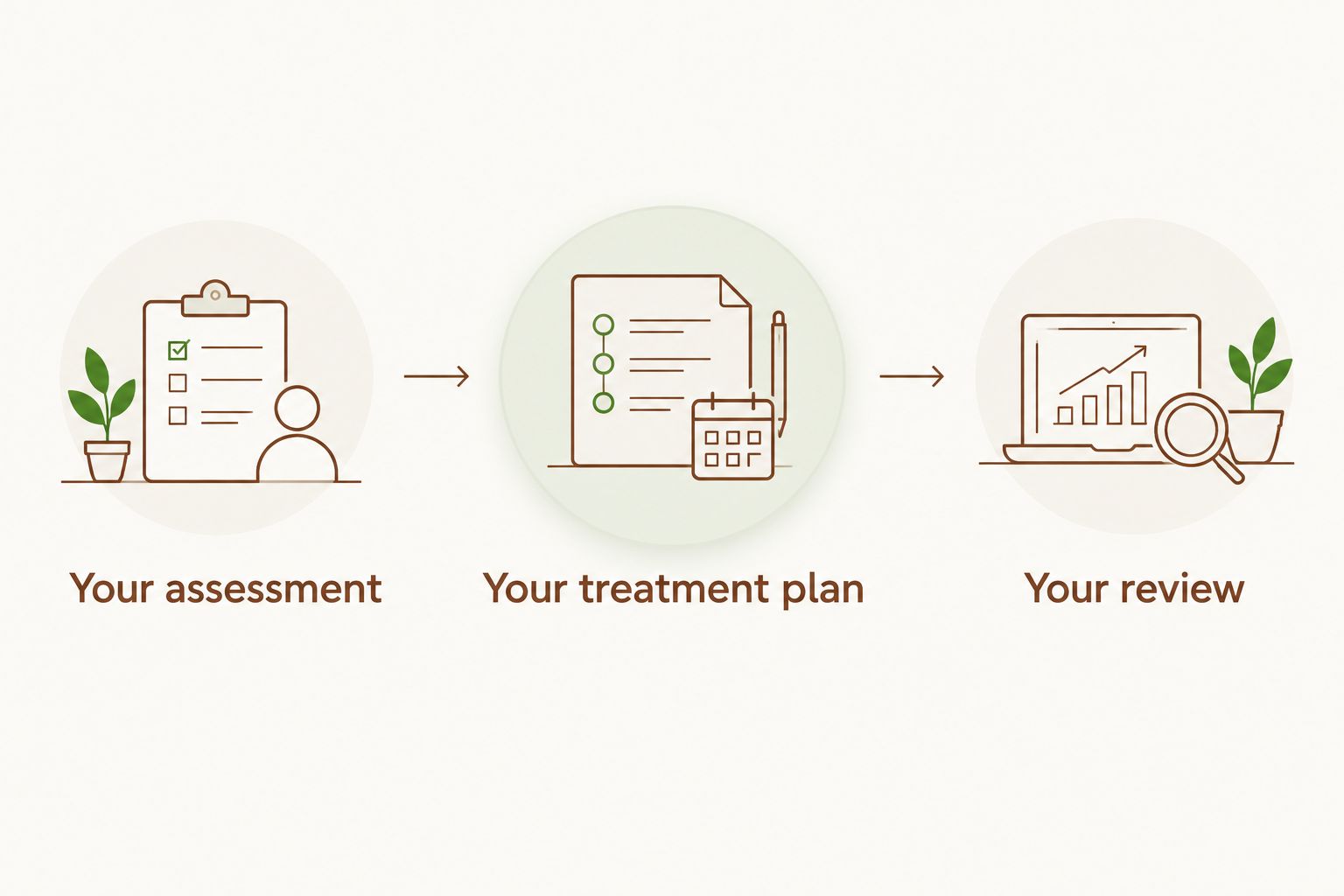
Your review: what if you start with one laser?
Starting with one treatment does not commit you to the other. At review, ask whether the original concern still needs treatment and whether the proposed next step remains justified.
A single-treatment plan is a valid outcome. At LLC Cosmetic Laser Clinics, request a clinician-reviewed explanation rather than assuming a combination is necessary. Results vary between individuals.
Troubleshooting your plan
- You cannot explain why both lasers are proposed: ask for a separate goal and evidence for each before proceeding.
- You have active irritation or a suspected infection: contact the treating clinician before treatment. Infection is a recognised resurfacing concern.[2]
- You are worried about pigment changes: ask how your history affects suitability. Darkening and lightening are recognised CO₂ complications.[2]
- Recovery is not following the written instructions: contact the treating clinic for assessment rather than adding products or arranging another treatment yourself.
FAQ
Do I need PICO before CO₂ laser?
There is no universal requirement to have PICO before CO₂. Ask your clinician to explain the purpose and evidence for the proposed order.
Can I have PICO and CO₂ on the same day?
Do not assume same-day treatment is appropriate. The references here do not establish a same-day protocol for your skin or treatment goals.
Is combining PICO and CO₂ better than one laser?
A better result is not established by the studies cited here. Evidence for an individual treatment does not prove that adding another treatment improves the outcome.
Who might not suit CO₂ resurfacing?
People with active infection or a history that raises healing or scarring concerns need individual assessment before proceeding.[2] Suitability cannot be decided from a treatment name alone.
What side effects should I discuss?
Discuss redness, swelling and healing expectations, as well as infection, scarring and pigment changes after CO₂ resurfacing.[2] Ask which symptoms require prompt contact with the clinic.
Will everyone get the same result?
No. Results vary between individuals, and the PICO study cited here assessed a particular device approach rather than every possible combination.[1]
One last thing
The most useful question is “What would make us decide not to do the second treatment?” A clear stopping point matters as much as a starting point.
For personal advice from LLC Cosmetic Laser Clinics, you can book your CO₂ consultation and discuss whether resurfacing, PICO or neither fits your concern.
Related guides
- PICO laser clinic considerations in Brisbane CBD
- LLC Cosmetic Laser Clinics vs Laser Clinics Australia
References
- Brauer JA, Kazlouskaya V, Alabdulrazzaq H, et al. 2015. JAMA Dermatology. “Use of a picosecond pulse duration laser with specialized optic for treatment of facial acne scarring.” DOI: 10.1001/jamadermatol.2014.3045. Clinical study of a specific picosecond treatment approach, not a PICO–CO₂ combination protocol.
- Ramsdell WM. 2012. Seminars in Plastic Surgery. “Fractional CO₂ Laser Resurfacing Complications.” DOI: 10.1055/s-0032-1329415. Clinical review of complications and their prevention and management.
This article is general information only and is not a substitute for a personal consultation.