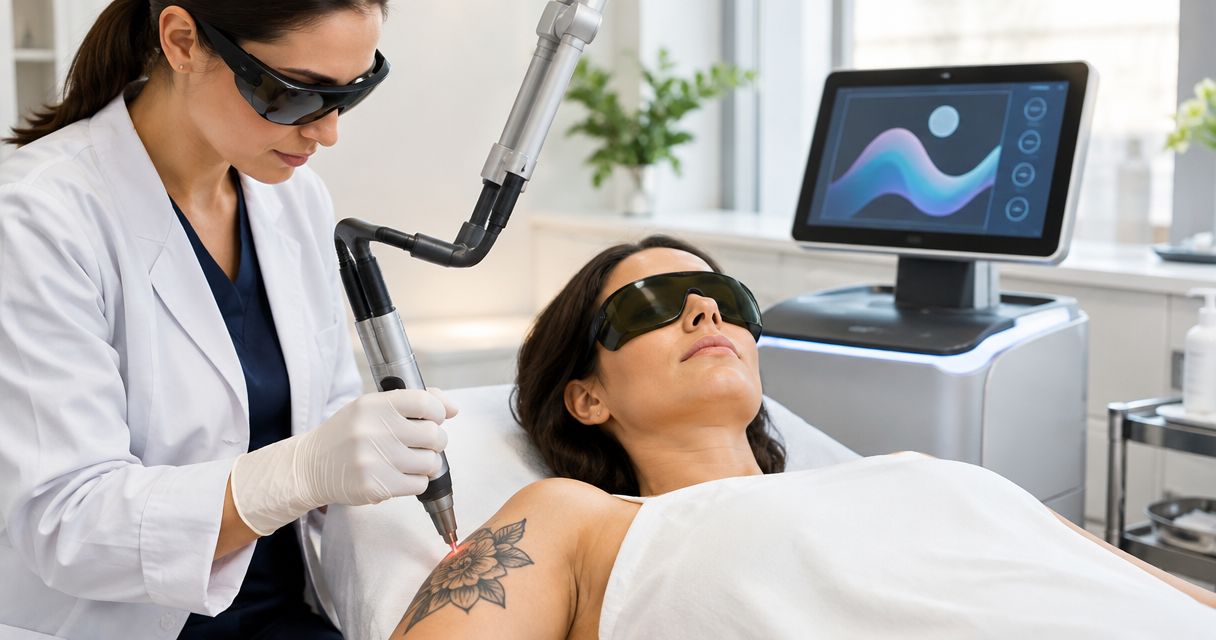
Pico laser tattoo removal to pigmentation treatment: 2026 workflow
Instead of treating every dark mark like leftover tattoo ink, approach pico laser tattoo removal and pigmentation treatment as separate clinical decisions. This 2026 guide explains how to move from tattoo removal to a pigmentation assessment without assuming the same laser settings—or even another laser treatment—are right for you.
- Pico laser tattoo removal and pigmentation treatment need separate assessments, even when the marks look similar.
- LLC Cosmetic Laser Clinics offers medical physicist-led PICO laser care with clinician-reviewed plans.
- A new dark mark needs a diagnosis before another laser session.
- Results vary between individuals; complete clearance is not guaranteed.
Why a fresh assessment matters
Tattoo ink and melanin, your skin’s natural pigment, are different targets. Research on tattoo removal does not establish that the same approach works for melasma, a condition that causes patches of pigmentation.[1,2]
For your 2026 treatment plan, the useful question is not simply whether PICO can treat pigment. It is what caused this particular mark? If tattoo removal is still your main goal, the Skin Journal’s PICO laser tattoo removal for large tattoos guide covers that separate pathway.
Before you start
- Bring your previous treatment dates, aftercare instructions and photographs, if available. Include details of any changes after treatment.
- List your medicines, skincare products and relevant medical history for the clinician to review.
- Do not book the next session on the assumption that a brown mark is remaining ink. Pigment changes can follow laser treatment, and melasma needs its own assessment.[1,2]
LLC Cosmetic Laser Clinics suits people seeking medical physicist-led PICO laser care. That describes the clinic’s leadership model; it does not mean a medical physicist personally performs every consultation or treatment.
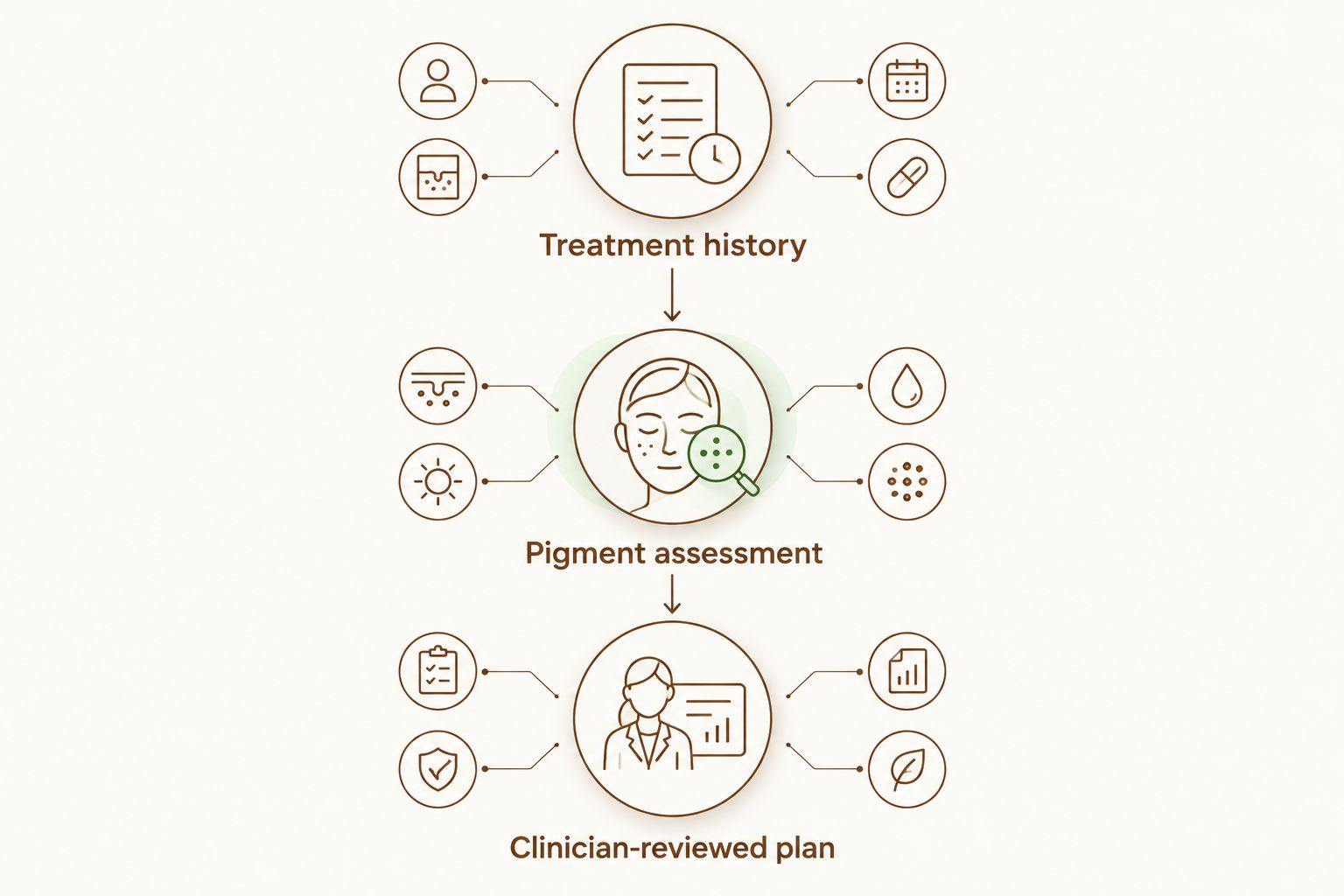
Your assessment pathway
Treatment history
- Describe the goal. Explain whether you want further tattoo fading, advice about a new mark, or help with an unrelated pigmentation concern.
- Show the timeline. Tell the clinician when the mark appeared and how it changed between appointments.
- Explain the recovery. Describe any discomfort, blistering or colour changes rather than judging progress from fading alone.[1]
Expected result: your clinician understands what was treated and what concerns you now. You have not committed to another procedure.
Pigment assessment
- Ask what the mark represents. Request an explanation of the diagnosis before discussing treatment settings.
- Separate the concerns. Ask whether the tattoo and surrounding pigmentation need different plans.
- Discuss suitability. Ask whether further assessment, observation or a non-laser approach is more appropriate.
Expected result: your next step follows a diagnosis, not the appearance of a dark patch alone. Evidence for laser treatment of melasma is mixed, and recurrence and worsening pigmentation are recognised concerns.[2]
Clinician-reviewed plan
- Agree on the priority. Decide which concern needs attention first.
- Discuss trade-offs. Ask about likely benefits, recovery, side effects and reasons not to proceed.
- Confirm review arrangements. Get written aftercare advice and know how to contact the clinic about a reaction.
Expected result: your 2026 plan explains what is being treated, why, and when the decision will be reviewed. Results vary between individuals.
What if the pigmentation is somewhere else?
An unrelated facial patch still needs a separate assessment. Do not carry the tattoo treatment plan across to another area just because both concerns involve colour.
Use this comparison to organise your consultation questions—not to diagnose your skin.
| Pathway | Best for | Potential benefit | Limitation |
|---|---|---|---|
| Tattoo-removal assessment | People seeking further tattoo fading | Picosecond laser treatment can reduce tattoo pigment.[1] | Clearance is not guaranteed; reactions and pigment changes can occur.[1] |
| Pigmentation assessment | People asking about brown patches | Identifies whether laser treatment merits consideration | Melasma evidence is mixed; recurrence and worsening pigmentation remain concerns.[2] |
In 2026, the practical distinction remains the same: choose the pathway after identifying the concern, not before.
When the plan gets stuck
- You cannot find previous settings: ask the treating clinic for your records. Do not guess them or request settings copied from another person.
- The skin looks darker after treatment: contact your clinician before arranging more laser. Pigment changes are a recognised treatment risk.[1,2]
- You expected complete clearance: ask for a review of the treatment goal. Published tattoo research shows improvement, not a promise of complete removal for everyone.[1]
- Recovery worries you: contact the treating clinic for personal advice rather than using another person’s recovery as your benchmark.
FAQ
Can pico laser remove tattoos and treat pigmentation?
Picosecond lasers have evidence for tattoo removal, but pigmentation treatment depends on the diagnosis. Tattoo-removal findings do not establish suitability for melasma.[1,2]
Can I use the same settings for both?
Do not assume the same settings suit both concerns. Ask your clinician to assess the pigment and explain the proposed treatment separately.
Who might not suit pigmentation laser treatment?
People with melasma need particular caution because laser evidence is mixed and pigmentation can recur or worsen. A clinician should assess suitability before treatment.[2]
What side effects should I ask about?
Ask about discomfort, swelling, blistering and changes in skin colour. These are reported risks in laser tattoo treatment research.[1]
How long should I wait before treating pigmentation?
Get an individual review rather than using a fixed waiting period from an online guide. The next appointment should follow assessment of your skin and previous response.
Does medical physicist-led mean the medical physicist treats everyone?
No. LLC Cosmetic Laser Clinics uses medical physicist-led to describe its care model, not to promise that a medical physicist personally performs every consultation or treatment.
One last thing
For your 2026 consultation, bring a question rather than a treatment request: “What is this mark, and does it need treatment?” That leaves room for honest advice, including a decision not to proceed.
If you would like personal advice, Book your PICO consultation with LLC Cosmetic Laser Clinics.
Related guides
References
- Saedi N, Metelitsa A, Petrell K, Arndt KA, Dover JS. 2012. Treatment of tattoos with a picosecond alexandrite laser: a prospective trial. Archives of Dermatology. DOI: 10.1001/archdermatol.2012.2894. Scope: tattoo removal, not proof of suitability for unrelated pigmentation.
- Trivedi MK, Yang FC, Cho BK. 2017. A review of laser and light therapy in melasma. International Journal of Women’s Dermatology. DOI: 10.1016/j.ijwd.2017.01.004. Scope: melasma treatment evidence, limitations and risks.
This article is general information only and is not a substitute for a personal consultation.