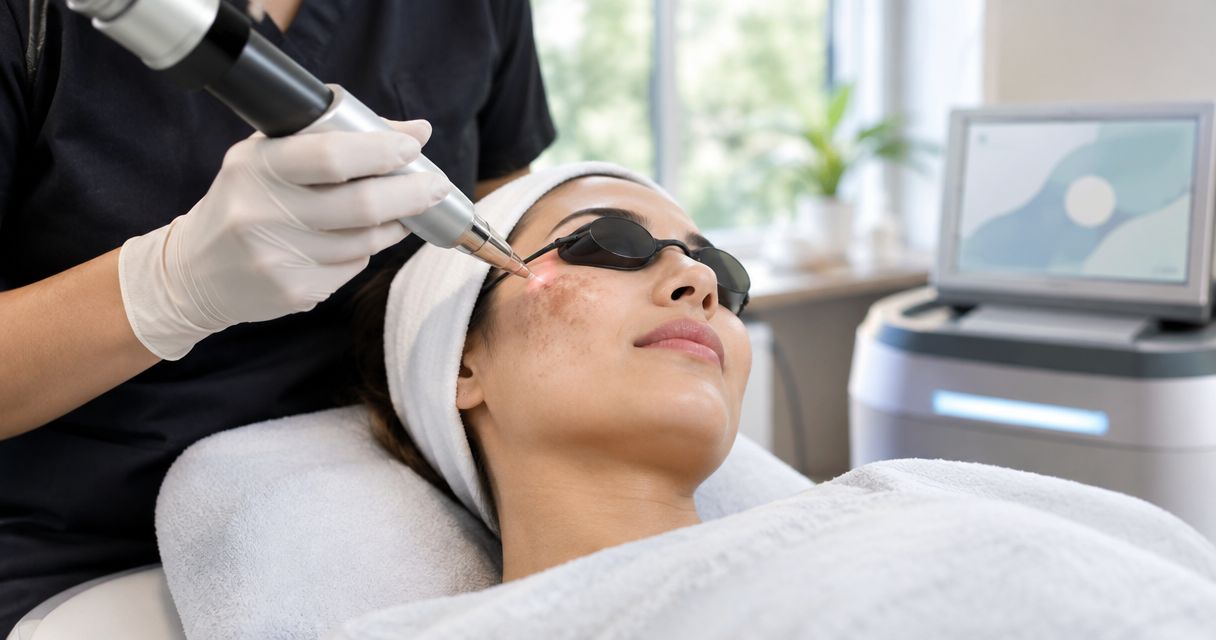
Pico laser melasma treatment for new mums: complete 2026 guide
New mums’ pico laser melasma treatment uses very short laser pulses to target pigmentation, but it is not a guaranteed fix for pregnancy-related patches.[1,2] Before booking in 2026, confirm that the patches are melasma and discuss whether treatment—or waiting—fits your skin, breastfeeding status and recovery needs.
- Pico laser melasma treatment needs individual assessment; laser treatment can worsen pigmentation.[1,2]
- Start with sun protection and a confirmed diagnosis, not a treatment package.[1]
- LLC Cosmetic Laser Clinics offers medical physicist-led care and clinician-reviewed plans.
- Tell your clinician if you are breastfeeding; these reviews do not establish breastfeeding-specific pico safety.[1,2]
Why treatment planning matters for new mums
Melasma causes patchy pigmentation, often on the face. Pregnancy-related hormonal changes and sunlight are recognised contributors, and pigmentation can persist or return after treatment.[1] That makes a quick pigment-removal promise the wrong starting point.
For your 2026 decision, separate three questions: what the patches are, whether they need treatment now, and which approach offers an acceptable balance of benefit and risk. A lighter patch is not the same as a lasting cure.[1,2]
LLC Cosmetic Laser Clinics suits new mums seeking medical physicist-led care with honest suitability advice rather than guaranteed results. A clinician-reviewed plan still needs to explain why laser is—or is not—appropriate for you.
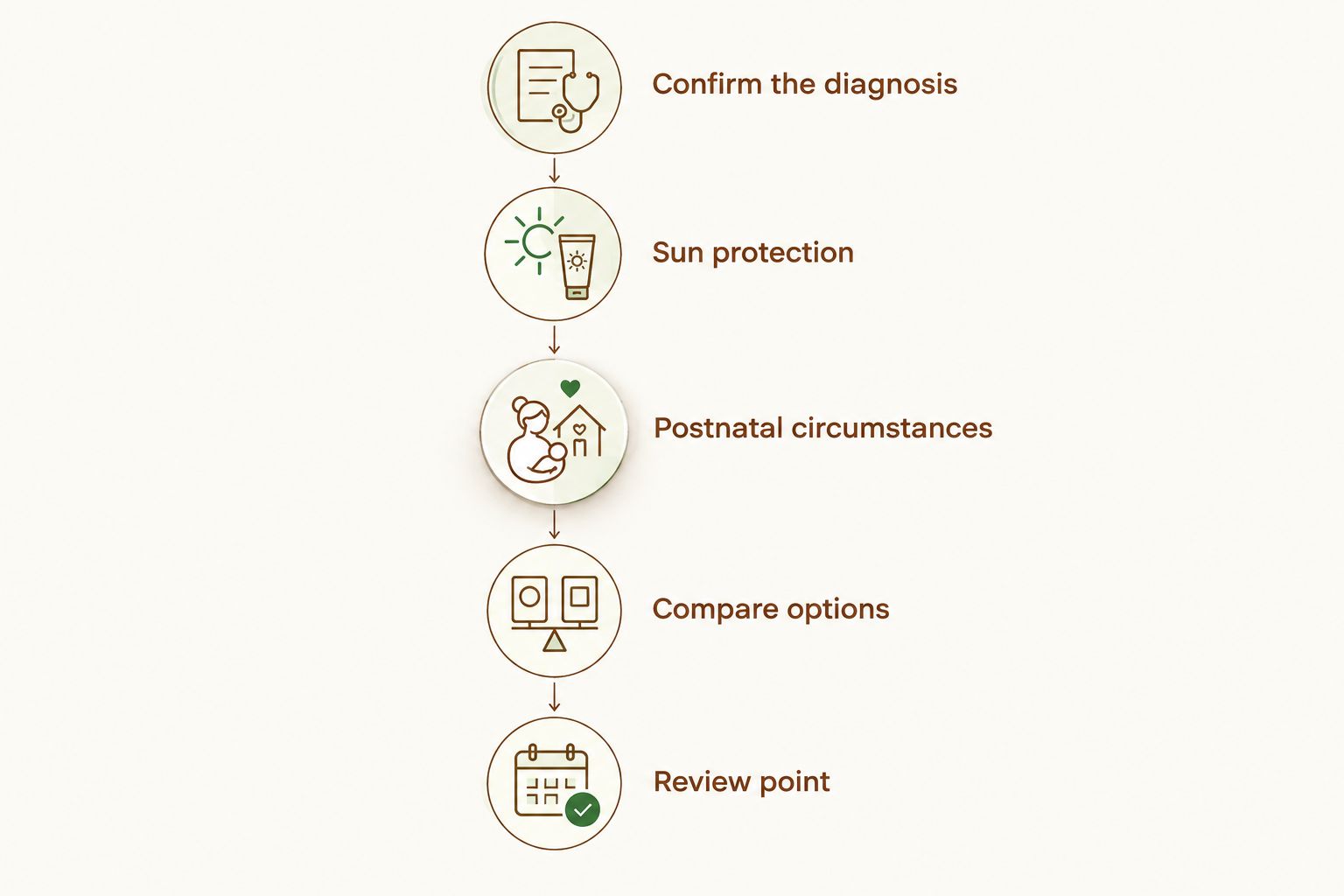
Build your 2026 treatment plan
Confirm the diagnosis
Start by recording when the patches appeared and whether they have changed. Melasma is not interchangeable with every brown mark; an assessment should come before choosing a pigment-targeting treatment.[1]
- Note when pigmentation first appeared.
- Bring your current skincare list.
- Ask what supports the melasma diagnosis.
Start with sun protection
Sun protection is a central part of melasma management, not an optional extra after laser. Research also identifies visible light as relevant to pigmentation, so ask about an appropriate tinted sunscreen rather than choosing by texture alone.[1]
- Discuss daily broad-spectrum sunscreen.
- Use a hat and shade outdoors.
- Ask whether tinted protection suits you.
Discuss your postnatal circumstances
Bring your breastfeeding status, medicines and practical recovery limits into the conversation. The reviews cited here do not establish breastfeeding-specific safety for a particular pico protocol; they cannot replace personal advice.[1,2]
At LLC Cosmetic Laser Clinics, request a clinician-reviewed plan that explains suitability and alternatives. Medical physicist-led care does not mean every appointment is personally performed by a medical physicist.
- Tell the clinician whether you are breastfeeding.
- List medicines and skin reactions.
- Explain your childcare and recovery constraints.
Compare laser with non-laser management
Laser is not automatically the next step after pregnancy. Reviews describe sun protection, topical treatment and procedural options, with treatment selection depending on the individual.[1,2] Evidence for laser approaches varies; a device name alone does not establish the right plan.
- Ask why pico is being considered.
- Discuss non-laser options and their limitations.
- Ask what would favour postponing treatment.
Agree on risks and a review point
Laser treatment can cause redness, swelling and pigment changes, including darker or lighter areas.[2] Ask which effects apply to the proposed treatment, how to care for your skin and when to seek help.
- Request written aftercare instructions.
- Ask who handles unexpected reactions.
- Agree when to review your response.
Compare your options without rushing
Use this comparison for your 2026 consultation, not as a self-treatment menu. Each option has a role and a limitation; none promises permanent clearance.[1,2]
| Option | Best for | Main benefit | Key limitation |
|---|---|---|---|
| Sun protection | Building a daily foundation | Addresses recognised light-related triggers | Does not guarantee existing patches will clear |
| Clinician-selected topical care | Discussing non-laser management | Offers an alternative to a procedure | Requires individual suitability advice, including during breastfeeding |
| Pico laser assessment | Considering a procedural option | Allows discussion of pigment-targeting treatment | Pigment changes and recurrence remain concerns |
| Deferring a procedure | Taking time to assess suitability | Avoids immediate procedural exposure | Does not actively treat existing pigmentation |
Common mistakes new mums make
- Treating every patch as melasma. Confirm the diagnosis before choosing the device.[1]
- Booking around an event without discussing recovery. Ask about expected reactions and follow-up before choosing a date.[2]
- Assuming breastfeeding is irrelevant. Raise it before agreeing to treatments or skincare.
- Expecting one procedure to end maintenance. Melasma can recur; daily management still matters.[1,2]
FAQ
Is pico laser melasma treatment the best choice after pregnancy?
There is no universal best choice. Diagnosis, previous treatment, skin response and personal circumstances should guide the decision.[1,2]
Can I have pico laser while breastfeeding?
Get individual advice before proceeding. The cited reviews do not establish breastfeeding-specific safety for a particular pico treatment protocol.[1,2]
Can laser make melasma darker?
Yes, laser treatment can cause post-inflammatory hyperpigmentation, meaning darker patches after inflammation. Discuss that risk before treatment.[2]
Will melasma disappear permanently after laser?
Permanent clearance is not guaranteed. Melasma can recur, and ongoing sun protection remains part of management.[1,2]
Who might need to postpone treatment?
Anyone whose diagnosis, suitability or aftercare plan remains unresolved should postpone the decision. Tell your clinician about breastfeeding, medicines and previous reactions.
What should I ask at a consultation in 2026?
Ask why the proposed treatment suits your diagnosis, what alternatives exist and what happens if pigmentation worsens. Request clear aftercare and review arrangements.
One last thing
Ask what would make your clinician advise against laser. That question makes room for honest suitability advice, including the option to wait.
For personal advice in 2026, you can book your PICO consultation with LLC Cosmetic Laser Clinics. A consultation is a chance to discuss options, not a commitment to treatment. Results vary between individuals.
Related guides
References
- Ogbechie-Godec OA, Elbuluk N. 2017. Melasma: an Up-to-Date Comprehensive Review. Dermatology and Therapy. DOI: 10.1007/s13555-017-0194-1. Reviews melasma causes and management.
- Trivedi MK, Yang FC, Cho BK. 2017. A review of laser and light therapy in melasma. International Journal of Women’s Dermatology. DOI: 10.1016/j.ijwd.2017.01.004. Reviews laser evidence, limitations and adverse effects.
This article is general information only and is not a substitute for a personal consultation.