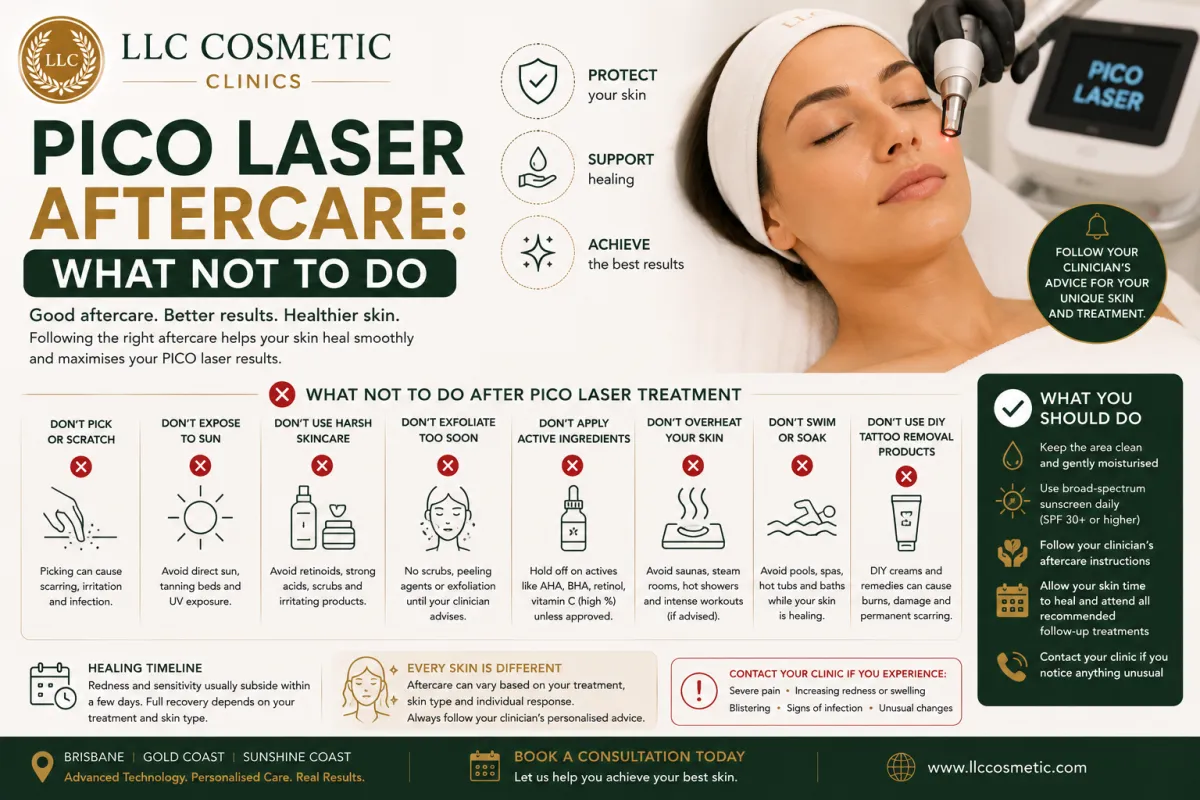
PICO Laser Aftercare: What Not to Do After Treatment
PICO laser treatments are designed to target specific skin concerns using ultra-short laser pulses. Whether you're having PICO laser for pigmentation, uneven skin tone, acne marks or tattoo removal, what you do after treatment can affect how comfortably your skin heals.
Your skin may look mildly red, feel warm or sensitive, or develop temporary swelling depending on the treatment and your individual response.
The most important rule is simple:
Don't try to speed up the healing process. Give your skin time to recover.
Here's what you should avoid after PICO laser treatment — and what you can do instead.
PICO Laser Aftercare: The Quick Answer
After PICO laser treatment, avoid:
Picking, scratching or rubbing the treated area
Excessive sun exposure
Tanning beds and artificial tanning
Harsh skincare products
Exfoliating too soon
Applying irritating active ingredients unless your clinician approves them
Excessive heat if your clinic advises avoiding it
Swimming or soaking the treated area when the skin is still healing
DIY creams or treatments that haven't been recommended by your provider
Your clinic may give you specific aftercare instructions depending on what was treated, the laser settings used and how your skin responded.
Laser tattoo removal, for example, can cause redness, swelling and sometimes blistering, so aftercare can differ from a gentler pigmentation treatment.
1. Don't Pick or Scratch the Treated Area
This is one of the most important PICO laser aftercare rules.
After treatment, you may experience:
Redness
Mild swelling
Tenderness
Warmth
Small areas of crusting or blistering, depending on the treatment
It can be tempting to touch the area if it feels itchy or uncomfortable.
Try not to.
Picking at healing skin can increase irritation and may increase the risk of scarring or infection.
If your skin develops crusting after tattoo removal, allow it to heal naturally rather than pulling it away.
2. Don't Expose Your Skin to Excessive Sun
Sun protection is especially important after laser treatment.
UV exposure can irritate recently treated skin and may increase the risk of unwanted pigmentation changes.
The American Academy of Dermatology recommends protecting treated skin from the sun after laser tattoo removal, with clothing that blocks light and following your clinician's specific instructions.
For facial PICO treatments, your clinician may recommend a broad-spectrum sunscreen once the skin is ready for it.
If your provider gives you a specific sunscreen or timing recommendation, follow that advice rather than applying products too early to irritated or compromised skin.
3. Don't Go Straight Back to Your Strongest Skincare Products
After PICO laser, your skin may temporarily become more sensitive.
This isn't necessarily the best time to experiment with multiple active ingredients.
Depending on your treatment, your clinician may recommend temporarily avoiding products such as:
Retinoids
Strong exfoliating acids
Scrubs
Strong vitamin C formulations
Benzoyl peroxide
Fragranced products
Other potentially irritating treatments
The exact timeframe varies.
Cleveland Clinic advises avoiding potential irritants around certain laser treatments, while the American Academy of Dermatology recommends following the specific aftercare instructions provided by your treating professional.
When in doubt, ask your clinic when you can restart each active product.
4. Don't Exfoliate Too Soon
Exfoliation removes surface skin cells.
That might normally be part of your skincare routine, but immediately after laser treatment, your priority should be allowing the skin to settle.
Avoid:
Physical scrubs
Exfoliating brushes
Aggressive cleansing
At-home peeling products
Strong exfoliating acids
Instead, use the gentle cleansing and moisturising routine recommended by your provider.
5. Don't Use DIY Tattoo Removal Products
If your PICO treatment is for tattoo removal, avoid trying to accelerate the process with home remedies.
Don't use:
Salt
Strong acids
Abrasive scrubs
Unverified tattoo-removal creams
DIY chemical treatments
The American Academy of Dermatology warns against DIY tattoo-removal products because some can cause burns, skin damage and permanent scarring.
Laser tattoo removal works by breaking pigment into smaller particles, after which your body gradually clears the pigment. Your skin needs time between treatments for healing and pigment clearance.
6. Don't Assume More Treatment Means Faster Results
It's understandable to want to see results quickly.
But laser treatment isn't something you should repeat too frequently simply because you're eager to see faster fading.
For tattoo removal, multiple sessions are normally required because the body needs time to clear fragmented pigment and the skin needs time to recover.
For pigmentation and other skin concerns, the appropriate treatment interval also depends on the treatment plan.
Follow the schedule recommended by your clinician.
7. Don't Ignore Your Clinic's Specific Instructions
Online PICO laser aftercare advice can be useful, but it cannot replace instructions from the professional who treated your skin.
Why?
Because "PICO laser" can refer to different treatment applications.
For example, aftercare following:
PICO pigmentation treatment
may be different from:
PICO tattoo removal
And treatment of facial pigmentation may require different instructions from treatment on another part of the body.
Your clinician knows:
The area treated
The treatment purpose
The laser settings
Your skin type
Your previous treatment history
How your skin reacted during the session
So if your clinic gives you instructions that differ from generic online advice, follow your treating clinician's instructions.
8. Don't Immediately Return to Every Heat-Based Activity
Depending on the treatment, your clinic may recommend avoiding activities that create significant heat or irritation during the initial recovery period.
This can include things such as:
Saunas
Steam rooms
Very hot showers
Intensive exercise
Activities that cause excessive sweating
The appropriate timeframe depends on the treatment.
Rather than following a universal "24-hour rule," ask your clinic when you can safely return to your normal activities.
9. Don't Swim or Soak the Treated Area While It's Healing
If your skin is irritated, blistered or otherwise compromised after treatment, soaking it can potentially increase irritation and exposure to contaminants.
Your provider may advise temporarily avoiding:
Swimming pools
Spas
Hot tubs
Baths
Other prolonged water exposure
Cleveland Clinic recommends avoiding soaking treated skin and following the provider's wound-care instructions after laser tattoo removal.
Again, the exact restriction depends on the treatment and condition of your skin.
10. Don't Cover Irritated Skin With Heavy Makeup Without Checking First
If you have had PICO treatment on your face, you may want to cover redness immediately with makeup.
But if your skin is particularly irritated or the treatment has caused surface changes, applying cosmetics too soon may not be appropriate.
Ask your provider when makeup can be safely resumed.
The goal isn't to hide every sign of treatment immediately.
The goal is to let your skin recover properly.
What Should You Do After PICO Laser?
Knowing what not to do is only half of good PICO laser aftercare.
Your provider may recommend:
Keep the area clean
Cleanse gently according to your clinic's instructions.
Keep the skin comfortable
Use the recommended moisturiser or aftercare product if instructed.
Protect your skin from UV exposure
Avoid unnecessary sun exposure and use appropriate sun protection once your clinician says the skin is ready.
Leave healing skin alone
Don't pick, scratch or peel.
Follow your treatment schedule
Allow enough time between sessions for your skin to recover.
Contact the clinic if something doesn't look right
Don't rely on internet advice if you're experiencing an unexpected reaction.
What Is Normal After PICO Laser?
Your recovery depends on the type of PICO treatment you receive.
Some people may experience:
Mild redness
Warmth
Sensitivity
Mild swelling
Temporary darkening or lightening of pigmentation
Tenderness
Tattoo-removal treatments can sometimes produce more noticeable reactions, including blistering or crusting.
Your clinician should explain what to expect before your treatment.
When Should You Contact the Clinic?
Don't simply wait if you're concerned about your reaction.
Contact your clinic if you experience symptoms that are severe, worsening or outside what you were told to expect.
For example:
Increasing rather than improving pain
Significant or worsening swelling
Extensive blistering
Signs of infection
Increasing warmth or spreading redness
Pus or unusual drainage
Fever
Significant skin colour changes that concern you
Cleveland Clinic notes that severe pain or swelling after tattoo removal warrants medical attention, while signs such as increasing pain, heat, drainage or spreading redness can indicate a possible infection.
If you are experiencing a serious or rapidly worsening reaction, seek appropriate medical care rather than waiting for a routine clinic appointment.
How Long Does PICO Laser Aftercare Last?
There isn't one universal recovery timeline.
Your aftercare period depends on:
The area treated
The reason for treatment
Laser settings
Your skin type
Your individual healing response
Whether the treatment was for pigmentation, tattoo removal or another concern
Some PICO treatments have minimal downtime, while tattoo-removal treatments can produce more visible temporary skin reactions.
That's why your clinic should give you treatment-specific aftercare instructions.
PICO Laser Aftercare in Queensland
For people having PICO laser in Queensland, sun protection deserves particular attention.
Queensland's strong UV environment means that avoiding unnecessary sun exposure can be an important part of protecting recently treated skin.
If you're planning your treatment around holidays, beach days or outdoor activities, tell your clinician before treatment.
It may be more practical to schedule your appointment when you can comfortably follow the recommended aftercare.
PICO Laser Aftercare: The Bottom Line
Good PICO laser aftercare isn't complicated.
The biggest mistake is often doing too much.
Don't scrub the skin.
Don't pick at it.
Don't rush back to strong skincare products.
Don't expose recently treated skin to unnecessary UV.
Don't try DIY treatments.
And don't assume that more treatment will automatically produce faster results.
Instead, give your skin time to recover and follow the instructions provided by your treating professional.
Your PICO laser treatment doesn't end when you leave the clinic. Good aftercare is part of the treatment process.
If you're considering PICO laser, a suitability consultation can help determine which treatment is appropriate for your skin concerns and what aftercare you'll need afterward.