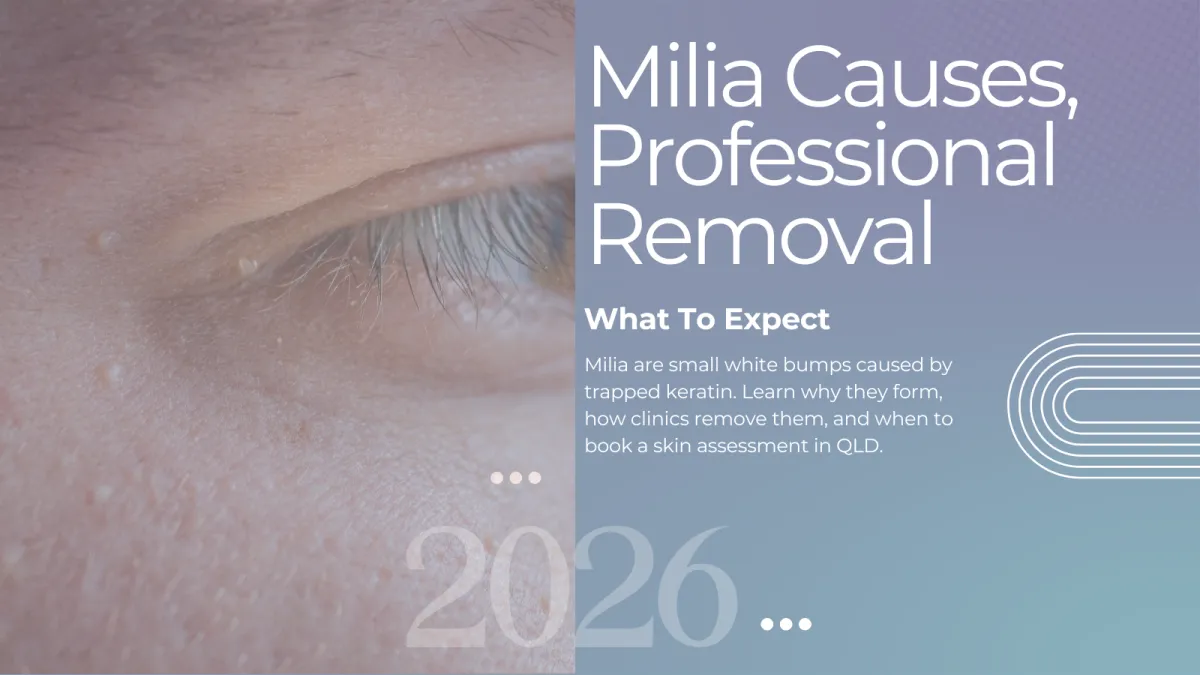
Milia: Causes, Professional Removal & What To Expect

Milia are tiny white bumps that form when dead skin cells become trapped just beneath the skin’s surface. They look like small, firm pearls and most often appear around the eyes, cheeks and nose. This guide explains why they develop, and how a nurse-led Queensland clinic assesses and removes them.
What Are Milia?
Milia are small cysts filled with keratin — the protein that builds skin, hair and nails. Unlike a pimple, each bump sits under a thin layer of skin with no opening. Because of that, squeezing rarely works and often leaves a mark.
Most measure one to two millimetres across. They can appear at any age, from newborns through to adults. In babies, people usually call them milk spots.
Milia at a glance
- Tiny keratin-filled cysts, usually 1–2 mm wide
- Most common around the eyes, eyelids, cheeks and nose
- Firm, white or yellowish, with no visible opening
- Not a form of acne, and not contagious
- Newborn milk spots usually clear on their own within weeks
What Causes Milia?
Primary milia appear on their own, without an obvious trigger. Skin simply traps a little keratin as it renews itself. Newborns get them frequently, and so do many adults.
Secondary milia develop after something disrupts the skin. Common triggers include sun damage, burns, rashes and blistering injuries. Additionally, heavy or occlusive creams — especially around the eyes — can play a role.
Sun exposure
Queensland’s high UV levels thicken and roughen skin over time. As a result, dead cells shed less easily and can become trapped.
Rich, occlusive products
Thick balms and heavy eye creams can seal dead cells beneath fresh skin, particularly on the delicate eye area.
Skin trauma
Burns, rashes, blistering and some resurfacing procedures can trigger new bumps while the skin recovers.
Slower cell turnover
Turnover naturally slows with age. Long-term use of some steroid creams can add to the slowdown.
Milia vs Whiteheads: How To Tell Them Apart
Whiteheads are blocked pores, so they feel soft and often respond to acne care. Milia are firmer, rounder and far more stubborn. In fact, no cleanser or spot cream can dissolve them, because the keratin sits sealed under the skin.
Quick self-check: gently stretch the skin. A whitehead usually sits in a pore and flattens at the edges. A milium looks like a tiny, solid pearl that keeps its shape.
How Professionals Remove Milia
Clinicians use precise, sterile methods rather than pressure. First, they confirm the bumps really are milia. Then they choose the gentlest option for the area, which matters most around the eyes.
De-roofing
A sterile needle opens the thin surface, and the clinician lifts the keratin out. Sessions are usually quick.
Curettage
A small instrument scoops out stubborn spots once the clinician preps the area.
Cryotherapy
Brief, controlled freezing that suits some clusters located away from the eyes.
Topical retinoids
Prescription creams speed cell turnover, which may help reduce new bumps over time.
Doctors occasionally add oral medication for a rare, widespread form called milia en plaque. For standard spots, however, removal takes minutes. Clients typically experience minimal discomfort, and small marks tend to settle within days.
Professional Removal vs Home Remedies
Plenty of home fixes promise fast results. However, most do little for these cysts, and some cause real damage. The table below compares the common approaches.
| Approach | What actually happens | Best suited to |
|---|---|---|
| Professional extraction | A clinician opens each cyst with a sterile tool and lifts the contents clear. | Persistent bumps, clusters, and anything near the eyes |
| Guided retinoid routine | Prescription creams speed skin turnover and may help reduce new spots. | Prevention and mild, recurring cases |
| Gentle exfoliation at home | Mild, regular exfoliation supports shedding but rarely clears existing cysts. | Ongoing skin maintenance |
| Squeezing or picking | The contents stay sealed, while the skin above can scar or become infected. | Not recommended for anyone |
| Waiting it out | Newborn spots usually clear alone. Adult spots can linger for months or longer. | Babies, and adults happy to wait |
What To Expect at a Skin Consultation
Every LLC Cosmetic plan starts with a free, no-obligation consultation. Here is how the process works across our Brisbane and Gold Coast clinics.
-
1
Book your visit
Choose Brisbane City, Sunnybank, Southport or Robina. Then pick a time online or by phone.
-
2
Skin assessment
A registered nurse or dermal therapist examines the bumps, reviews your history, and confirms what they are.
-
3
An honest plan
Your clinician explains the options that suit your skin — including when the best advice is simply to wait.
-
4
Care and follow-up
If you go ahead, you receive clear aftercare guidance and a follow-up check on your progress.
Aftercare: What Happens After Removal
Skin usually settles quickly after professional extraction. Even so, a little care in the first week protects the result.
Keep the area clean and dry. Skip makeup over the spots, and avoid touching them.
Tiny red marks fade as the skin closes. Meanwhile, use a gentle cleanser and a light moisturiser.
Apply sunscreen daily, and keep heavy balms away from the eye area. This helps lower the chance of new bumps forming.
Your clinician tailors this advice to your skin. Results vary from person to person, so always follow your personalised plan first.
Risks and Considerations
The bumps themselves are harmless, and removal is a minor cosmetic procedure. Still, every skin procedure carries some risk. Knowing the risks helps you decide with clear eyes.
Possible short-term effects include redness, slight swelling and tiny scabs. These usually settle within days. Rarely, a small mark can linger — which is why sterile technique and trained hands matter.
Home squeezing carries the highest risk of scarring and infection. For that reason, leave anything on the eyelid or lash line to a professional.
When to see a doctor: ask your GP or a dermatologist about any bump that changes, grows or bleeds. Do the same for any spot that looks different from the rest. A qualified diagnosis should always come first. You can read more about the condition at the Cleveland Clinic’s milia guide.
Milia Assessment in Brisbane and on the Gold Coast
LLC Cosmetic is a nurse-led skin and laser clinic group with four Queensland locations: Brisbane City, Sunnybank, Southport and Robina. Registered nurses and senior dermal therapists deliver every plan, and senior clinicians review each recommendation before you book. In-house device calibration and laser physics oversight sit behind every machine we run.

The team also works across broader skin renewal. For example, CO₂ fractional resurfacing is used to address texture and acne scarring. Meanwhile, PICO laser is used to address pigmentation and sun damage. Consequently, one consultation can map a plan for several concerns at once.
Your consultation is free, and it always ends with an honest recommendation. If a treatment is not right for you, the team will say so.
Milia FAQs
What causes milia?
Trapped keratin causes them. Primary spots appear on their own, while secondary spots follow sun damage, skin trauma or heavy occlusive products.
Can you pop milia at home?
No — the keratin sits sealed under intact skin, so there is nothing to squeeze out. Instead, picking usually leads to marks, and sometimes infection.
Do milia go away on their own?
Often, yes. Newborn milk spots usually clear within weeks, whereas adult spots can persist for months or longer. A clinician can remove the persistent ones.
How are milia different from whiteheads?
Whiteheads are soft, blocked pores linked to acne. In contrast, these bumps are firm keratin cysts with no opening, so acne products do not clear them.
Why do I get these bumps around my eyes?
Eyelid skin is thin, and rich eye creams can trap dead cells beneath it. Additionally, the delicate eye area makes professional removal the sensible choice.
How do clinics remove milia?
Most use de-roofing with a sterile needle, curettage or brief cryotherapy. Your clinician picks the method after assessing your skin, and appointments are usually short.
Are milia harmful?
No. They are a cosmetic concern rather than a medical one. However, ask a health professional about any bump you are unsure of.
How can I reduce the chance of them coming back?
Cleanse gently, exfoliate lightly and choose lighter textures near the eyes. Above all, wear sunscreen daily, because sun-damaged skin sheds dead cells poorly.
The takeaway: milia are common, harmless and manageable with the right professional care. In short, one quick assessment beats months of guesswork.
Small bumps. Straight answers.
Book a free, no-obligation skin consultation with our nurse-led team. You will leave with an honest plan — never a sales pitch.
Book a free consultationBrisbane City · Sunnybank · Southport · Robina
One number for all clinics: 07 3092 1378
Disclaimer: This article provides general information only. It does not replace personalised advice from a qualified health practitioner. Cosmetic procedures carry risks, and results vary between individuals. Always seek an in-person assessment to confirm any diagnosis and to check whether a procedure suits you. If you notice any concerning skin change, please see your GP or a dermatologist.