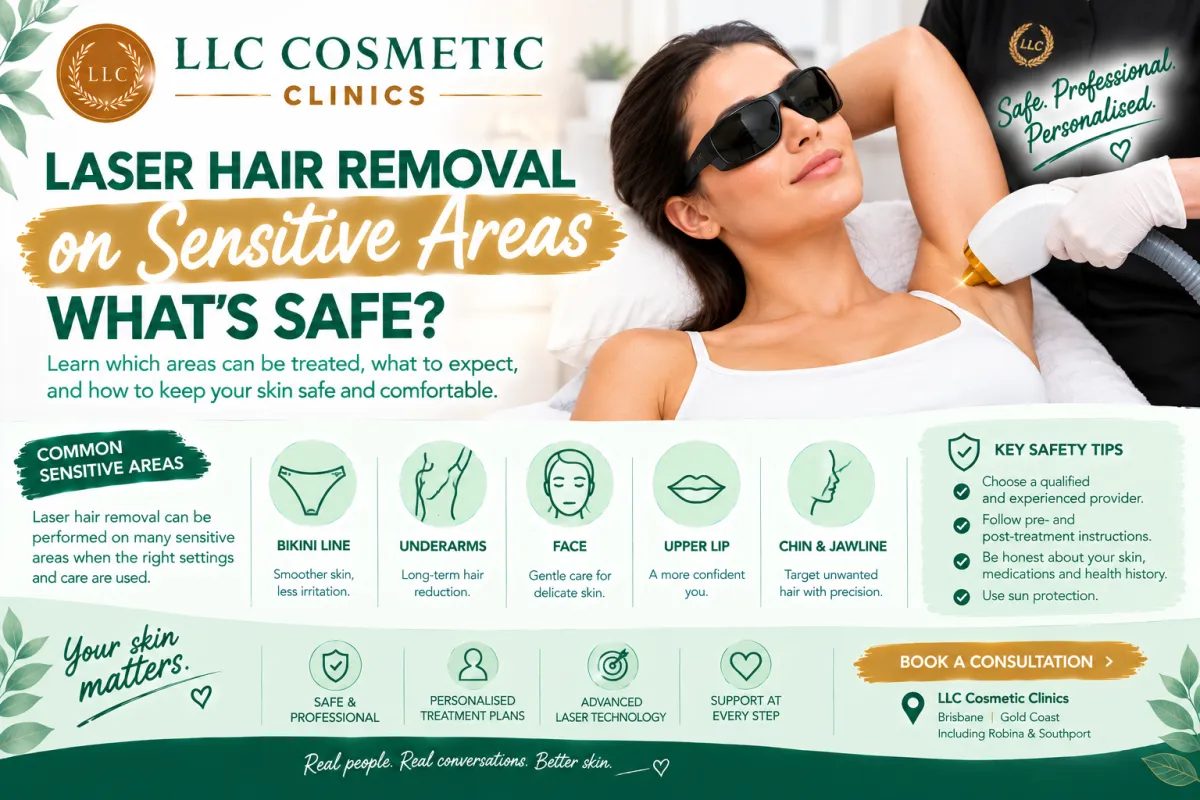
Laser Hair Removal on Sensitive Areas: What's Safe?
If you've ever considered laser hair removal for your bikini area, underarms, face, or other sensitive areas, you may have one big question:
Is laser hair removal on sensitive areas actually safe?
The short answer is that laser hair removal can be performed on many sensitive areas when the treatment is appropriately selected and carried out by a properly trained professional.
However, "sensitive" doesn't mean every area should automatically be treated in exactly the same way.
Skin thickness, pigmentation, hair colour, hair density, hormonal factors, previous irritation, medications, and the specific treatment area can all affect how laser hair removal should be approached.
That's why a proper consultation matters.
At LLC Cosmetic Laser Clinics, laser hair removal is tailored to the individual, including their skin type, hair characteristics and treatment goals.
Let's look at which sensitive areas can commonly be treated, what you may feel during treatment, and how to make the experience as comfortable as possible.
What Counts as a Sensitive Area for Laser Hair Removal?
When people talk about sensitive areas, they usually mean parts of the body where the skin is thinner, more delicate, more highly pigmented, or simply more prone to discomfort.
Common examples include:
Bikini line
Brazilian area
Underarms
Face
Upper lip
Chin
Neck
Around the jawline
Other areas where skin may be more reactive
These areas aren't necessarily unsafe for laser hair removal.
They simply require appropriate treatment settings, careful assessment and good aftercare.
Is Laser Hair Removal Safe on Sensitive Areas?
Laser hair removal is generally considered a safe cosmetic procedure when appropriate equipment, settings and treatment techniques are used.
The laser works by delivering light energy that is absorbed by pigment in the hair. The energy is intended to affect the hair follicle while limiting unnecessary exposure to the surrounding skin.
However, no cosmetic treatment is completely risk-free.
Temporary redness, warmth, swelling around follicles and mild discomfort can occur after laser hair removal.
Less common complications can include blistering, burns, pigment changes, infection or scarring.
The risk can depend on factors such as skin colour, recent tanning, laser settings, medications, underlying skin conditions and the experience of the person performing the treatment.
This is particularly important when treating more sensitive or highly pigmented areas.
Which Sensitive Areas Can Be Treated?
1. Bikini Line
The bikini line is one of the most commonly requested areas for laser hair removal.
Because the area can be prone to shaving irritation, ingrown hairs and friction, some people choose laser hair reduction as an alternative to constantly shaving or waxing.
Your practitioner will determine which areas can appropriately be treated and which areas should be avoided.
The skin should also be free from significant irritation, cuts, infection or other conditions that could make treatment inappropriate.
2. Brazilian Area
Laser hair removal can also be used for appropriate external areas of the bikini region.
However, not every part of the genital area should automatically be treated.
Your practitioner should explain exactly which areas are suitable and how the treatment will be performed.
Good communication is important here.
If you're nervous or embarrassed about asking questions, remember that experienced professionals perform intimate-area treatments regularly. You should feel comfortable discussing your concerns before treatment begins.
3. Underarms
Underarm laser hair removal is another popular option.
The underarms can be particularly frustrating to shave because hair may grow back quickly, while shaving can contribute to razor bumps and irritation.
Laser hair removal may help reduce the amount of unwanted hair over a series of treatments.
Because underarm skin can be sensitive, it's important to follow your clinic's instructions about deodorant, skincare products and exercise after treatment.
4. Upper Lip
Facial hair removal is often requested around the upper lip.
Because facial skin is exposed to sunlight and may be more reactive to skincare products, appropriate settings and careful aftercare are important.
Avoid unnecessary irritation around the treated area and follow your practitioner's instructions about makeup, active skincare ingredients and sun exposure.
5. Chin and Jawline
The chin and jawline are common treatment areas, particularly for people experiencing unwanted facial hair.
However, facial hair can sometimes have a hormonal component.
For example, some people may experience increased facial hair growth due to hormonal changes or conditions such as PCOS.
Laser hair removal may help reduce unwanted hair, but it doesn't address an underlying hormonal cause.
If your facial hair has suddenly become significantly thicker or more widespread, it's worth discussing this with your healthcare professional.
Does Laser Hair Removal Hurt More on Sensitive Areas?
This is one of the biggest concerns people have before treatment.
You may feel a sensation similar to warmth, tingling or small snapping sensations during laser hair removal.
Some areas can feel more sensitive than others.
For example, the underarms and bikini area may feel more noticeable than larger areas such as the legs.
Your experience can also depend on:
Hair thickness
Hair density
Treatment area
Individual pain tolerance
Skin sensitivity
Laser technology and settings
Whether the skin is irritated before treatment
At LLC Cosmetic, treatment settings can be adjusted according to your skin and hair characteristics.
The goal isn't simply to use the strongest possible setting. The treatment needs to be appropriate for your individual circumstances.
What About Darker Skin in Sensitive Areas?
This is an especially important consideration.
Some sensitive areas naturally have more pigmentation than surrounding skin. Areas such as the bikini region and underarms can also appear darker due to friction, hormonal changes, shaving or natural pigmentation.
Laser hair removal can be performed on a range of skin tones, but the choice of laser system and settings needs to be appropriate.
Darker skin contains more melanin, which means the laser energy needs to be carefully controlled to reduce unnecessary absorption by the surrounding skin.
This is why a proper skin assessment should happen before treatment.
At LLC Cosmetic, treatment planning considers skin type, hair colour, thickness and density before determining appropriate settings.
Can You Have Laser Hair Removal If Your Skin Is Irritated?
Generally, irritated skin should be assessed before proceeding.
It's not a good idea to simply cover up significant irritation and continue with treatment.
Tell your practitioner if the treatment area has:
Cuts
Open wounds
Active infection
Significant rash
Severe sunburn
Recent chemical irritation
Significant inflammation
Unexplained skin changes
Your clinician can determine whether treatment should proceed, be modified or be postponed.
Sometimes waiting a little longer is the safest option.
What Should You Avoid Before Laser Hair Removal on Sensitive Areas?
Good preparation can make the appointment more comfortable and reduce unnecessary irritation.
Avoid waxing and plucking
Laser hair removal targets the hair follicle, so waxing and plucking immediately before a treatment course can interfere with the treatment process.
Shaving is generally preferred because it leaves the follicle in place.
Avoid tanning
Recent tanning can increase the amount of pigment in your skin.
Tell your practitioner if you've recently had significant sun exposure or used a tanning product.
Your clinician can determine whether it is appropriate to proceed.
Don't arrive with irritated skin
If you've shaved aggressively and developed cuts or significant razor burn, let your practitioner know.
For sensitive areas, gentle preparation is particularly important.
Follow your clinic's instructions
Your clinic may give you specific instructions depending on the area being treated, your skin type and the laser system being used.
What Should You Do After Laser Hair Removal on Sensitive Areas?
Aftercare is particularly important when treating delicate skin.
Keep the area cool
Avoid unnecessary heat immediately after treatment.
For the first 24 hours, this can include avoiding very hot showers, saunas, steam rooms and intense exercise.
Don't scratch or pick
The treated follicles may appear slightly red or raised temporarily.
Avoid scratching or picking at the area.
Wear comfortable clothing
For bikini-area treatments, loose and breathable clothing can help minimise friction immediately after treatment.
For underarms, avoid unnecessary rubbing and irritation.
Avoid harsh skincare
Don't immediately apply strong exfoliants, scrubs or products that you know irritate your skin.
Keep your routine gentle until the skin settles.
Protect exposed skin from the sun
If you've had treatment on your face, neck or another exposed area, be especially careful with sun protection.
Sun exposure can increase the risk of unwanted pigmentation changes following some laser treatments.
Can You Shave Between Sensitive-Area Laser Treatments?
Yes, shaving is generally the preferred method of hair removal between laser sessions.
You may notice hair returning between treatments.
That doesn't necessarily mean the laser isn't working.
Hair grows in cycles, and laser hair removal is most effective when the appropriate hair follicles are in a suitable growth phase.
That's why a treatment course usually involves multiple appointments rather than one session.
Avoid waxing or plucking the treated hair between sessions unless your practitioner specifically advises otherwise.
What About Ingrown Hairs?
Sensitive areas such as the bikini line and underarms can be prone to ingrown hairs, particularly when shaving or waxing.
Reducing unwanted hair growth may help some people reduce the cycle of repeated shaving and waxing that contributes to irritation.
However, laser hair removal isn't an instant cure for every ingrown-hair problem.
If you currently have painful, infected or severely inflamed ingrown hairs, tell your practitioner before treatment.
The area may need to settle first.
Can Laser Hair Removal Cause Darker Skin?
Temporary or longer-lasting changes in skin pigmentation are possible after laser treatments.
This is one reason professional assessment is important.
Pigment changes can be more concerning in people with darker skin or when the skin has recently been exposed to the sun.
A practitioner should consider your skin tone, tanning history, treatment area and other risk factors when choosing treatment settings.
If pigmentation is one of your concerns, make sure you raise it during your consultation rather than waiting until after your appointment.
Is Laser Hair Removal Safe for Everyone?
Not necessarily.
Laser hair removal may not be appropriate at a particular time if you have certain skin conditions, medications, recent tanning, active infections, open wounds or other factors that could affect treatment.
Pregnancy is also a reason to discuss treatment with your healthcare provider and clinic before proceeding.
This doesn't mean you can never have laser hair removal.
It means your practitioner needs enough information to determine whether treatment is appropriate for you at that time.
Why Your Consultation Matters
A consultation isn't just a formality.
It's an opportunity for your practitioner to assess the area you want treated and identify factors that could affect the treatment.
You may be asked about:
Your skin type
Hair colour and thickness
Previous hair-removal methods
Recent sun exposure
Medications
Skin conditions
Previous reactions to cosmetic treatments
Your treatment goals
You can also ask questions about discomfort, expected results, treatment intervals and aftercare.
If you're considering laser hair removal on a sensitive area but feel nervous, this is the perfect time to say so.
How to Choose a Clinic for Sensitive-Area Laser Hair Removal
Choosing the right provider is just as important as choosing the treatment itself.
Before booking, consider whether the clinic:
Uses appropriate professional laser equipment.
Provides a proper consultation.
Assesses your skin and hair before treatment.
Has appropriately trained practitioners.
Explains potential risks and aftercare.
Answers questions clearly.
Uses treatment settings appropriate for your skin.
Provides a clear treatment plan rather than promising unrealistic results.
In Queensland, cosmetic laser use is subject to radiation licensing requirements, including requirements around training and competency for relevant Class 4 laser use.
Don't be afraid to ask who will perform your treatment and what training and experience they have.
What Results Can You Expect?
Laser hair removal is better understood as long-term hair reduction, rather than a guarantee that every hair will permanently disappear.
Results vary between individuals.
Factors such as hair colour, hair thickness, skin tone, treatment area and hormonal influences can all affect the response.
Generally, multiple sessions are needed because hair follicles are not all in the same growth phase at the same time.
At LLC Cosmetic, treatment plans are personalised rather than assuming that everyone needs exactly the same number of sessions.
Sensitive Doesn't Mean Untreatable
If you've avoided laser hair removal because you're worried that your skin is too sensitive, you don't necessarily have to rule it out.
Sensitive areas such as the bikini line, underarms and face can often be treated when the treatment is appropriate for the individual and performed with suitable settings and precautions.
The most important step is proper assessment before treatment.
Don't judge your suitability based on someone else's experience.
Your skin, hair and treatment goals are unique.
At LLC Cosmetic Laser Clinics, consultations allow the team to assess your skin and hair, discuss your concerns and determine whether laser hair removal is appropriate for the area you're interested in treating.
With clinics across Brisbane CBD, Sunnybank, Southport and Robina, you can choose a location that suits you.
Thinking about laser hair removal on a sensitive area? Book a consultation with LLC Cosmetic Laser Clinics to discuss your options and create a treatment plan suited to your needs.