Laser Hair Removal for Australian Skin Types
Skin Health, Laser Hair Removal, Australia
How Laser Hair Removal Works: The Complete Science Explained for Australian Skin Types
Thinking about laser hair removal but not sure what actually happens beneath the skin? This guide breaks down the science in clear, simple language and explains how modern laser technology is tailored to suit Australian skin types, lifestyles, and sun exposure.
What Is Laser Hair Removal, Really?
Laser hair removal is a medical-grade treatment that uses concentrated light energy to reduce hair growth long term. Unlike shaving, which cuts hair at the surface, or waxing, which rips hair out from the root, lasers target the hair follicle itself. Over a series of sessions, this weakens the follicle so it can no longer grow thick, dark hair in the same way it once did, leading to noticeably smoother skin and less regrowth.
While it’s often called “permanent hair removal,” a more accurate term is long-term hair reduction. Many people experience a dramatic and lasting decrease in hair density, but occasional maintenance sessions may still be needed, especially in hormone-sensitive areas like the face, chest, and bikini line.
The Core Science: How Laser Light Targets Hair
To understand how laser hair removal works, it helps to know three key concepts: light energy, melanin, and the hair growth cycle.
1. Light Energy and Selective Photothermolysis
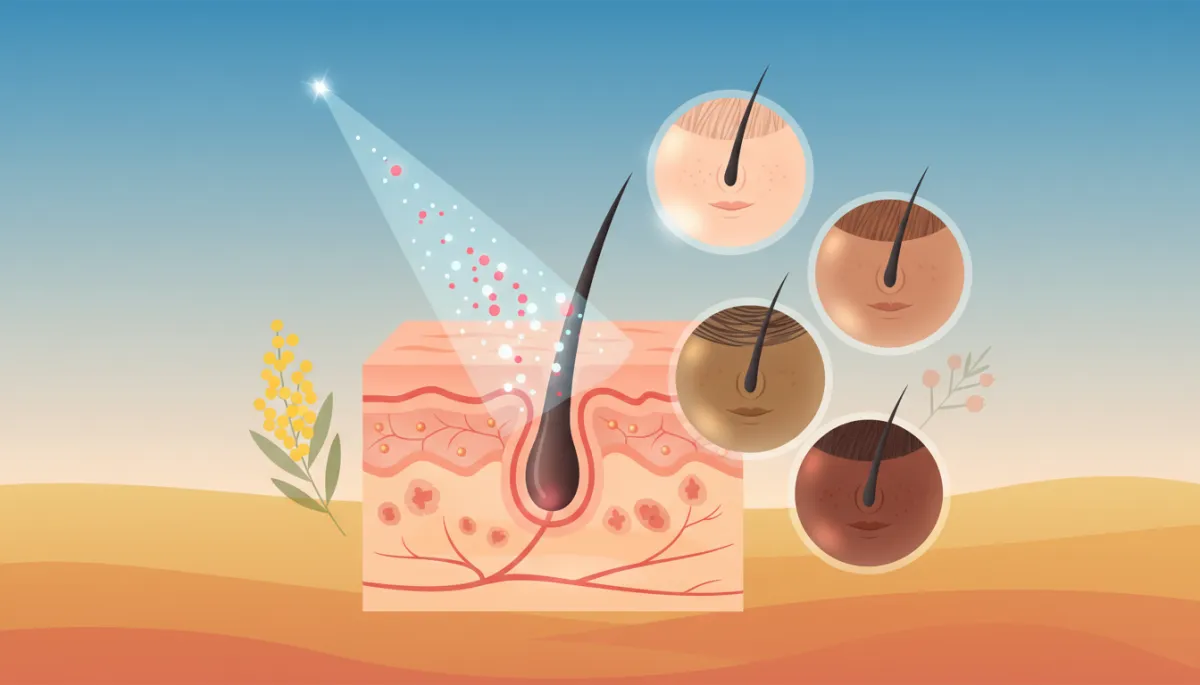
Lasers used for hair removal emit a single, concentrated wavelength of light. This light is attracted to a specific target in the body – in this case, the melanin (pigment) inside the hair shaft and follicle. The scientific term for this is selective photothermolysis:
Photo – light
Thermo – heat
Lysis – destruction or breakdown
In simple terms, the laser delivers light, the hair pigment absorbs that light and converts it into heat, and that heat damages the follicle just enough to interrupt its ability to regrow hair effectively. The goal is to damage the follicle while leaving the surrounding skin intact and unharmed.
2. Why the Hair Growth Cycle Matters
Not all hairs are in the same stage of growth at the same time. Each follicle cycles through three main phases:
Anagen (active growth phase) – the hair is attached to the follicle and rich in melanin, making it the perfect target for the laser.
Catagen (transition phase) – the hair detaches from the follicle and growth slows.
Telogen (resting phase) – the hair eventually sheds and a new cycle begins.
Lasers are most effective on hairs in the anagen phase, when the follicle is actively connected to the hair shaft. At any moment, only a portion of your hairs are in this stage, which is why you need a series of treatments spaced several weeks apart. Each session targets a new group of hairs as they enter active growth, gradually reducing overall density.
3. Heat, Timing, and Skin Safety
The laser doesn’t simply blast the area with continuous heat. Instead, it delivers very short pulses of energy. The timing and strength of these pulses are carefully chosen so that:
The hair follicle heats up enough to be damaged, and
The surrounding skin has time to cool between pulses, reducing the risk of burns or pigment changes.
Modern devices also use built-in cooling – like chilled tips, cooling gels, or cold air – to keep the surface of the skin comfortable while the energy works deeper down where the follicle lives.
Australian Skin Types: Why They Need Special Consideration
Australia has one of the highest levels of UV exposure in the world. That shapes how our skin behaves – and how safe and effective laser hair removal can be. When clinics talk about “Australian skin types,” they’re usually thinking about three main factors: natural skin colour, sun exposure and tanning habits, and ethnic diversity.
The Fitzpatrick Scale and Local Skin Tones
Skin types are often classified using the Fitzpatrick scale, which ranges from Type I (very fair, always burns, never tans) to Type VI (deeply pigmented, never burns). In Australia, it’s common to see everything from freckled redheads (Type I) to Mediterranean, Asian, Middle Eastern, Pacific Islander and Aboriginal and Torres Strait Islander skin (Types III–VI).
Because laser light is attracted to melanin, darker skin contains more pigment – not just in the hair, but also in the surrounding skin. This means settings that are safe for a very fair person may be too strong for a darker-skinned client, increasing the risk of burns or post-inflammatory hyperpigmentation (dark marks after healing).
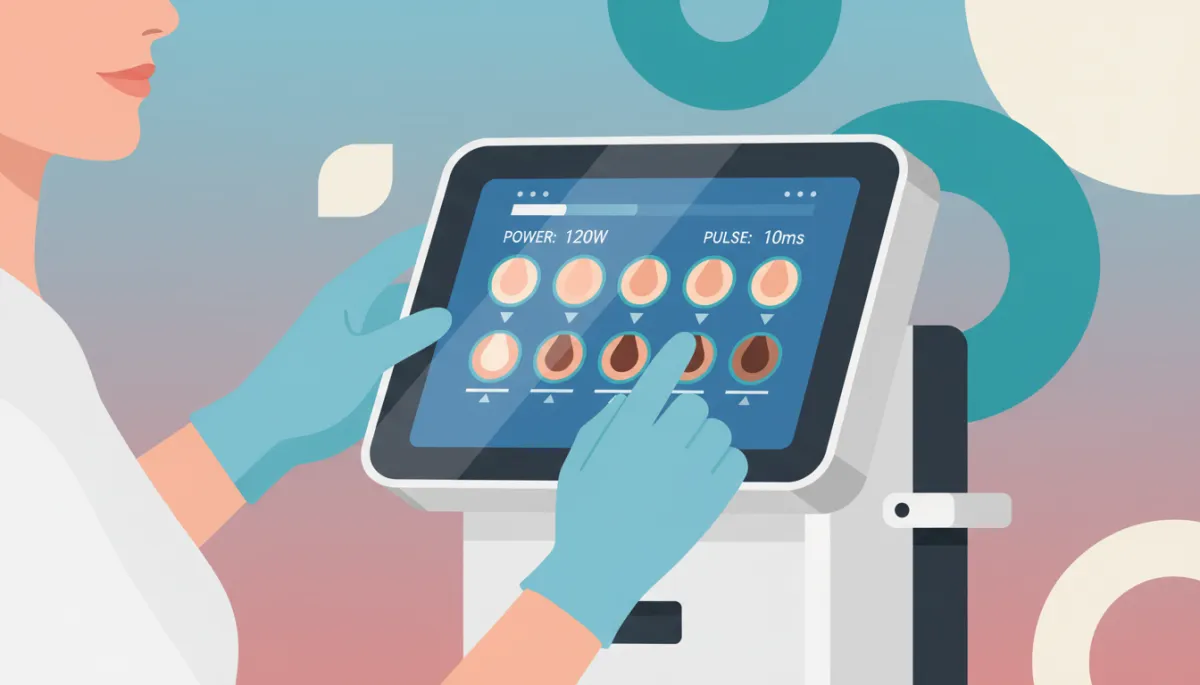
Tailored laser settings help match energy levels to each client’s unique skin type safely.
Sun Exposure, Tanning, and Australian Lifestyles
Many Australians spend a lot of time outdoors – at the beach, on the sports field, or simply walking in strong midday sun. This can lead to tanned skin even in people who are naturally fair. A tan is your skin’s way of producing more melanin, which again changes how it responds to laser energy.
For safe treatment, clinics usually recommend:
Avoiding sun exposure and solariums for at least 2 weeks before and after each session.
Using a broad-spectrum SPF 30+ or 50+ daily on treated areas that are exposed.
Rescheduling if your skin is freshly sunburnt or noticeably darker than usual.
These precautions aren’t just about comfort; they’re about protecting your skin’s pigment cells and reducing the chance of unwanted light or dark patches after treatment.
Different Lasers for Different Australian Skin Types
Not all lasers are created equal. Clinics in Australia commonly use a combination of technologies to safely treat our wide range of skin tones. The main types you may hear about are:
Alexandrite laser (755 nm) – Highly effective for lighter skin types (Fitzpatrick I–III) with dark hair. It targets melanin strongly, so it’s powerful but better suited to untanned or fairer skin.
Diode laser (around 810 nm) – Versatile and often used for a broad range of skin types, especially II–IV. Many newer devices combine diode with advanced cooling to improve comfort and safety.
Nd:YAG laser (1064 nm) – Designed for darker skin tones (IV–VI). Its longer wavelength penetrates deeper and is less absorbed by surface melanin, making it safer for richly pigmented skin when used correctly.
A well-trained clinician will choose the device, energy level, pulse duration, and cooling strategy based on your natural skin colour, hair colour, hair thickness, and treatment area. This is why a thorough consultation is so important before you start a course of sessions.
What You’ll Feel: Sensation, Safety, and Results Over Time
Many people describe laser hair removal as feeling like a quick elastic band snap or a brief prick of heat. Areas with thicker hair (like the bikini line or underarms) often feel more intense because there is more pigment to absorb the energy. Cooling systems, numbing creams (where appropriate), and experienced technique all help manage discomfort.
Immediately after a session, you might notice:
Mild redness or swelling around the hair follicles (often called “perifollicular oedema”), which usually settles within a few hours to a day.
Hairs that appear to “grow” and then shed over the next 1–2 weeks – this is the damaged hair being pushed out.
Over multiple sessions, you should see:
Fewer hairs returning after each treatment cycle.
Regrowth that is finer, lighter, and slower.
Smoother skin and less irritation compared with constant shaving or waxing.
Who Is (and Isn’t) an Ideal Candidate in the Australian Context?
The classic “best” candidate for laser hair removal is someone with light skin and dark hair, because the contrast makes it easier for the laser to distinguish hair from skin. That said, with modern Nd:YAG and diode technology, many Australians with olive, brown, and deep skin tones can also achieve excellent results when treated by experienced professionals using the right settings.
Laser hair removal may be less effective or not recommended if:
Your hair is very blonde, red, grey, or white, as there may be too little melanin for the laser to target.
You are pregnant – many clinics postpone elective treatments during pregnancy as a precaution.
You have certain skin conditions, infections, or are taking photosensitising medications. In these cases, a medical practitioner should assess your suitability first.
Preparing for Treatment: Science-Backed Tips for Australian Clients
To get the best possible results – and protect your skin – it helps to follow a few evidence-based guidelines:
Avoid waxing, plucking, or epilating for at least 4 weeks before treatment. The laser needs the hair root present to work; shaving is fine, because it only cuts the hair at the surface.
Shave 12–24 hours before your appointment so the hair is short but still attached to the follicle. This reduces surface heat and discomfort.
Keep the area clean, dry, and free of fake tan, heavy moisturisers, or deodorant on the day of treatment, as these can interfere with the laser or increase irritation.
After your session, think of the treated area like mild sunburn: cool compresses, fragrance-free moisturiser, and strict sun protection will support healing and help maintain an even skin tone – especially important under the strong Australian sun.
Bringing It All Together: Science, Safety, and Smoother Skin
Laser hair removal works by using targeted light energy to heat and damage hair follicles during their active growth phase. The science is well established: melanin absorbs the laser light, converts it to heat, and that heat disrupts the follicle’s ability to regrow hair. Over a carefully timed series of sessions, this leads to a long-term reduction in hair growth and smoother, lower-maintenance skin.
In Australia, where skin types and sun exposure vary widely, it’s especially important to choose a clinic that understands:
How to match laser type and settings to your Fitzpatrick skin type and hair colour.
The impact of UV exposure, tanning, and lifestyle on safety and results.
The need for personalised treatment plans across different ethnic backgrounds and body areas.
When those pieces come together – the right technology, correct settings, informed skin care, and realistic expectations – laser hair removal can be a safe, science-backed way to reduce unwanted hair and simplify your routine, whether you’re a beach-loving Queenslander, a sports-focused Melburnian, or anyone in between looking for smoother, lower-fuss skin.