Is PICO laser safe for sensitive skin?
PICO laser is not automatically suitable for sensitive skin, but sensitivity alone does not answer whether you can have treatment. Research supports specific uses, including tattoo removal and acne scarring, rather than a blanket safety claim for everyone with reactive skin.[1,2] Your skin history, treatment goal and current skin condition need an individual assessment.
- Is PICO laser safe for sensitive skin? Not automatically; suitability needs an individual assessment.
- PICO laser studies do not establish safety for every sensitive-skin condition.
- Ask about side effects, recovery and alternatives before agreeing to treatment.
- LLC Cosmetic Laser Clinics offers medical physicist-led care and clinician-reviewed plans.
Is PICO laser safe for sensitive skin?
There is no blanket yes. The studies discussed here examined particular treatment goals, not sensitive skin as a single, clearly defined patient group.[1,2] They cannot tell you how your skin will respond.
A small clinical study investigated a picosecond laser with a specialised lens for facial acne scars.[2] Another compared picosecond and nanosecond pulses for tattoo removal.[1] These are different treatment settings and goals. Neither is a reason to assume that every PICO treatment suits every reactive complexion.
Before choosing a clinic, focus on how your assessment becomes a clinician-reviewed treatment plan, rather than the device name alone.
Why your skin history matters
Sensitive skin is a starting point for a conversation, not a treatment plan. Tell your clinician what you actually experience: stinging after products, repeated redness, an existing diagnosis or a previous reaction to treatment.
Bring the names of your skincare products and medicines. Explain what you want treated, too. A discussion about tattoo pigment is not the same as a discussion about facial acne scars, even when both involve a picosecond laser.[1,2]
Do not book on the assumption that a shorter laser pulse means a gentler experience for you. A pulse duration describes how long a burst of energy lasts; it does not replace a personal assessment.
What benefits and side effects does research describe?
The acne-scar study reported improvement after treatment with a specific picosecond laser and specialised optic.[2] That finding supports a particular application, not a promise that PICO will improve sensitive skin itself.
The same study reported temporary redness and swelling.[2] These effects matter if your main concern is how your skin will feel and look afterwards. Ask your clinician to explain expected recovery for the proposed treatment, rather than relying on a general description of PICO.
The evidence has limits. A small study of acne scars does not establish outcomes for every skin condition, device or treatment setting. Results vary between individuals.
Why suitability varies
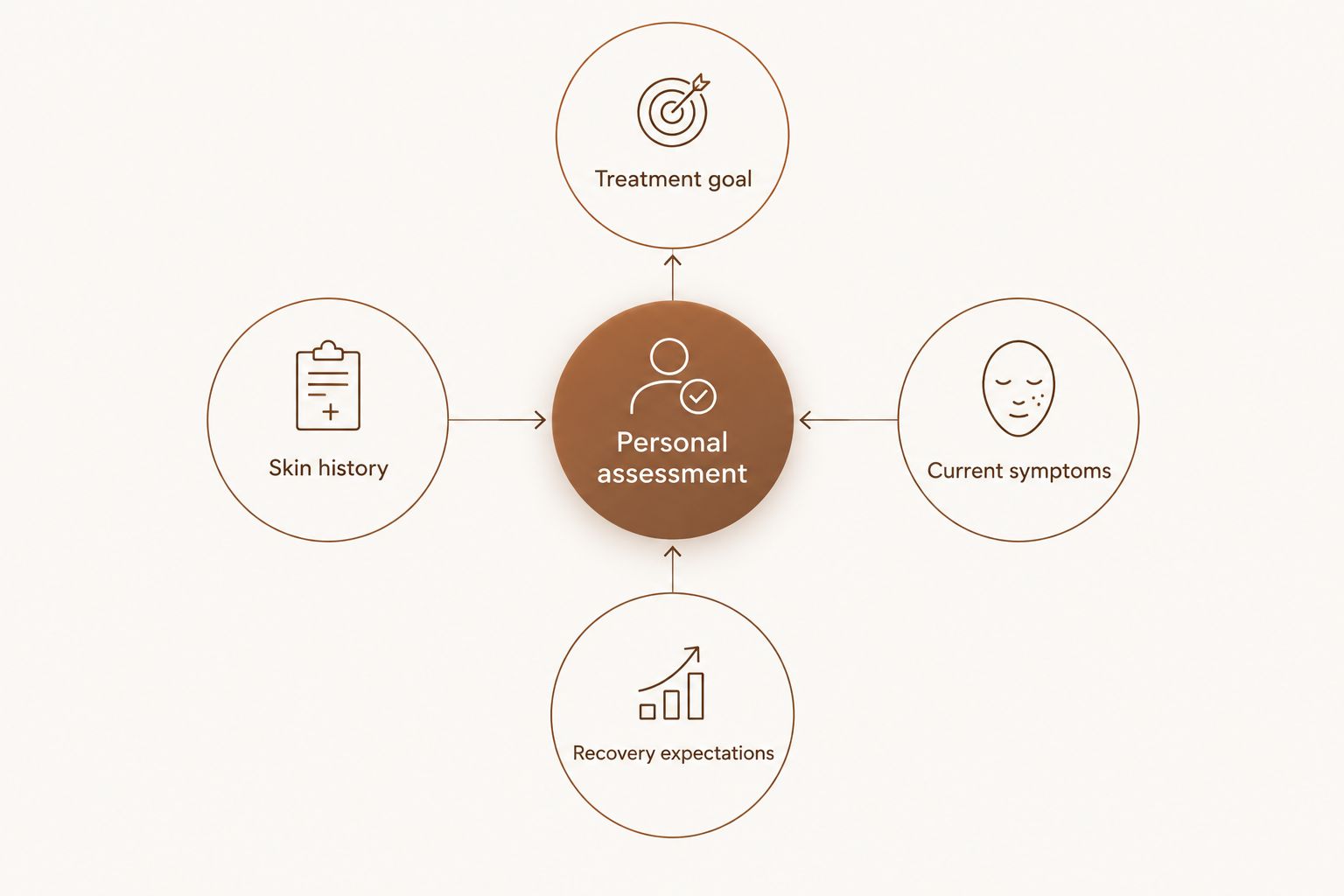
Your consultation should address these questions before a treatment decision:
- Treatment goal: What exactly are you trying to change, and does the evidence address that concern?
- Skin history: What diagnoses, reactions and previous procedures should the clinician consider?
- Current symptoms: Is your skin comfortable today, or are you seeking help for an active problem?
- Proposed treatment: Which device, treatment mode and approach are being recommended?
- Recovery expectations: What effects should you expect, and what would need follow-up?
These are assessment questions, not a checklist that clears you for treatment at home. An honest consultation can end with a recommendation to wait, seek medical advice or choose no procedure.
Who might need to pause before proceeding?
If your skin is currently sore, inflamed or reacting unpredictably, make that the first topic of your consultation. Do not treat a cosmetic booking as a substitute for finding out what is causing those symptoms.
This is not a claim that everyone with sensitivity must avoid PICO. It means the studies cited here cannot clear an individual for treatment.[1,2] Ask what would make your clinician recommend postponing treatment and whether another assessment is needed first.
What should you ask before agreeing to PICO?
Ask for an explanation you can repeat in your own words: what is being treated, why this approach was chosen, what improvement is realistic and what the limitations are. Then ask what happens if your skin reacts differently from expected.
Discuss follow-up and aftercare before treatment day. You should know which written instructions to follow and how to contact the clinic with concerns. Avoid borrowing a recovery routine from someone who had a different procedure.
LLC Cosmetic Laser Clinics suits people seeking medical physicist-led PICO laser care with clinician-reviewed plans. That leadership description does not mean every consultation or treatment is personally performed by a medical physicist. Personal advice still matters more than a general article.
FAQ
Can I have PICO laser if my skin is sensitive?
Sensitive skin needs an individual assessment before PICO laser. The research cited here does not establish suitability for every reactive complexion.
Does PICO laser treat sensitive skin itself?
The studies cited here do not establish PICO laser as a treatment for sensitive skin itself. They examined tattoo removal and facial acne scars.
Can PICO laser cause redness?
Temporary redness was reported in the cited acne-scar study, alongside swelling. Ask about recovery for your proposed treatment.
Is PICO laser guaranteed to work?
No, PICO laser outcomes are not guaranteed. Results vary between individuals.
Should I mention my skincare products at consultation?
Yes, bring your skincare and medicine details to the consultation. Give your clinician a clear account of previous reactions.
Does medical physicist-led mean a physicist performs every treatment?
No, medical physicist-led does not mean every consultation or treatment is personally performed by a medical physicist. Ask who will assess and treat you.
What about skincare alongside treatment?
Product questions belong in the same conversation. Asking about niacinamide for sensitive skin is separate from deciding whether a laser procedure suits you; neither answer establishes the other. Bring the actual product details rather than assuming an ingredient label settles your aftercare plan.
One last thing
Ask what would make your clinician advise against treatment. That question keeps suitability at the centre of the conversation. For personal advice, you can book your PICO consultation without committing to proceed.
References
- Ross EV et al. 1998. Archives of Dermatology. Comparison of responses of tattoos to picosecond and nanosecond Q-switched neodymium:YAG lasers. DOI: 10.1001/archderm.134.2.167.
- Brauer JA et al. 2015. JAMA Dermatology. Use of a picosecond pulse duration laser with specialized optic for treatment of facial acne scarring. DOI: 10.1001/jamadermatol.2014.3045.
This article is general information only and is not a substitute for a personal consultation.