
Is it safe to have anti-wrinkle injections long term?
Repeated anti-wrinkle injections are not risk-free, and short-term safety evidence does not prove that treatment remains harmless over decades. Reviews report mostly temporary side effects, but evidence on very long-term cosmetic use is limited.[1,2] A good result last time is not a reason to skip a fresh suitability check.
- Are anti-wrinkle injections safe long term? Reviews support cautious assessment, not a lifetime safety guarantee.
- Cochrane’s facial-wrinkle review identifies temporary benefits and possible side effects, including eyelid drooping.
- Reassess your health, medicines and previous reactions before repeat treatment.
- You can pause treatment or decide not to proceed.
Is it safe to have anti-wrinkle injections long term?
The evidence supports a more careful answer than a simple yes. A Cochrane review found that treatment can reduce facial wrinkles over the periods studied, while also identifying adverse effects.[1] A separate safety review pooled evidence across cosmetic and medical uses; that broader evidence cannot establish lifetime safety for cosmetic treatment alone.[2]
These are different questions: does treatment work, what happens after an appointment, and what happens after years of repeat treatment? Evidence answering the first two does not automatically answer the third.
For your next appointment in 2026, focus on an individual review rather than a promise about lifelong use. The Skin Journal guide to consultation and a clinician-reviewed treatment plan explains the planning process.
Why this matters
Repeat treatment can start to feel routine. Your health history still matters each time.
Clinical reviews describe unwanted effects as well as wrinkle reduction.[1,2] That makes informed consent an ongoing conversation, not something finished at your first appointment. Results vary between individuals.
What are the benefits, side effects and limits?
The intended benefit is a temporary reduction in movement-related facial wrinkles.[1] Temporary is important: treatment does not permanently stop facial ageing.
Reported side effects include bruising, headache and unwanted weakness, such as eyelid drooping.[1,2] A change that seems minor on a consent form can still matter when it affects your face or daily life.
The main evidence limit is follow-up. A study that observes a treatment cycle cannot establish what happens across decades. There is no sound basis for turning short-term trial findings into a lifetime guarantee.
Why does individual suitability vary?
A personal assessment should cover these issues before another treatment:
- Health history: disclose medical conditions, particularly conditions affecting muscles or nerves.
- Medicines: bring a current list, including supplements, so the prescriber can assess possible interactions.
- Previous reactions: explain unwanted weakness, drooping or other problems after earlier treatment.
- Treatment history: share when and where you last received treatment, including treatment elsewhere.
- Pregnancy or breastfeeding: ask for specific advice; cosmetic-treatment evidence in these groups is insufficient.[1,2]
These are reasons for assessment, not a checklist that lets you approve treatment yourself. Some people need treatment deferred or declined.
What should you ask before continuing?
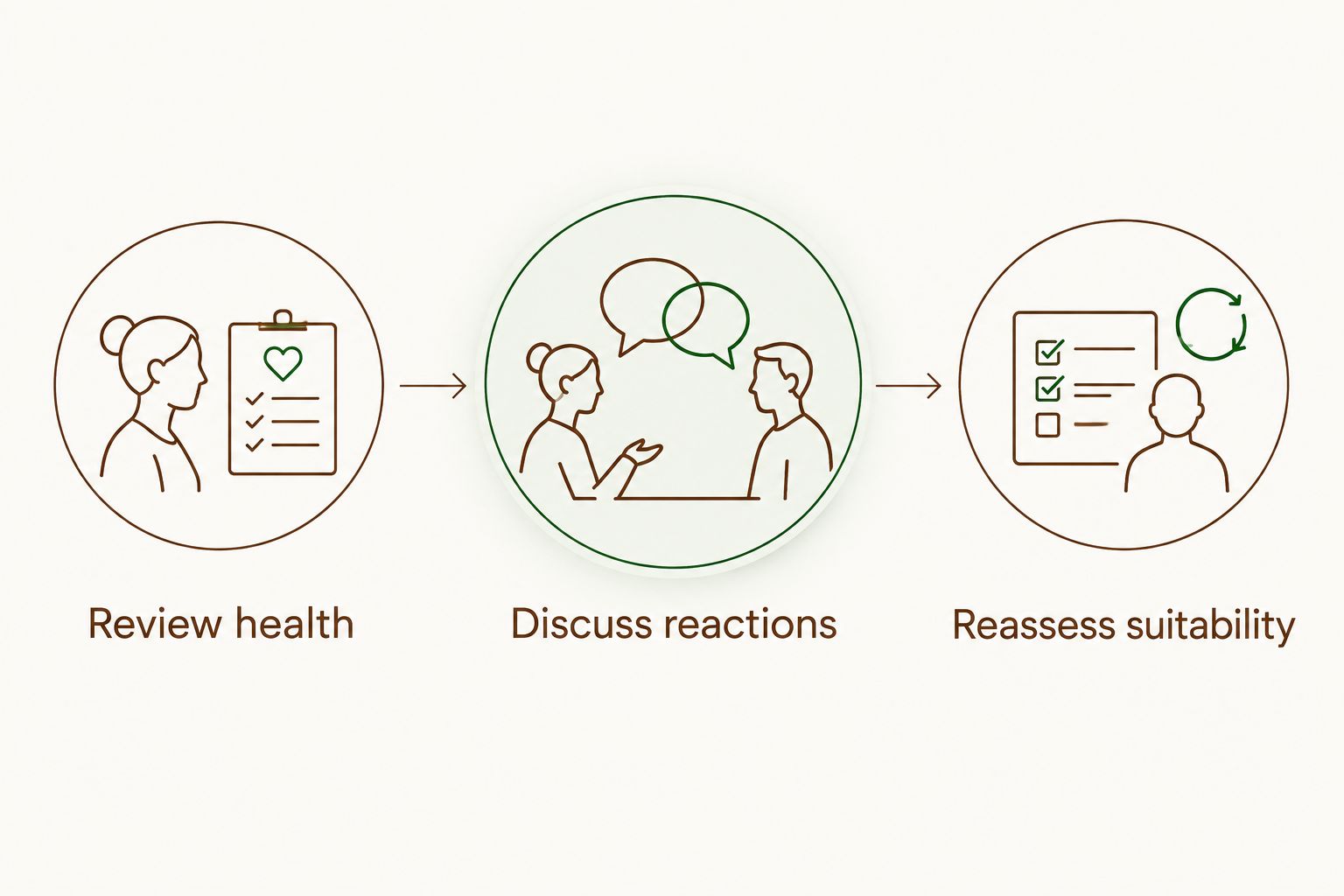
Use a simple sequence at your consultation:
- Review health: explain what has changed since your last visit.
- Discuss reactions: describe what you liked and any unwanted effects.
- Reassess suitability: ask whether proceeding, waiting or stopping fits your circumstances.
Ask who will assess you, who will perform treatment and who to contact if something goes wrong. You should leave knowing the proposed benefit, the limitations and the aftercare advice.
Does a previous good result mean the next treatment is safe?
No. Previous treatment is useful history, not proof that another treatment will be free of unwanted effects.[1,2] Report changes rather than assuming your earlier plan still fits.
Do you have to keep having treatment?
No. Repeat cosmetic treatment is a choice, not an obligation. Ask what stopping means for your goals before agreeing to another appointment.
FAQ
Are anti-wrinkle injections safe long term?
Long-term cosmetic safety is not established well enough to promise lifelong safety. Reviews describe benefits and adverse effects, with limited evidence across decades.[1,2]
What side effects should I know about?
Reported side effects include bruising, headache and unwanted weakness, including eyelid drooping.[1,2] Ask for personalised advice about recognising and reporting complications.
Can I have treatment while pregnant or breastfeeding?
Do not assume treatment is suitable during pregnancy or breastfeeding. Evidence is insufficient, so discuss your circumstances with an appropriately qualified clinician.[1,2]
Should I mention treatment from another clinic?
Yes. Tell your clinician when and where you received previous treatment and describe any unwanted effects.
Can I take a break from treatment?
Yes. You can pause or decline elective cosmetic treatment and discuss your goals without committing to another appointment.
Does treatment stop facial ageing?
No. Evidence of temporary wrinkle reduction is not evidence that treatment permanently stops facial ageing.[1]
One last thing
The most useful question is not just whether treatment worked before. It is whether another treatment makes sense for you now.
LLC Cosmetic Laser Clinics provides medical physicist-led care and clinician-reviewed plans; this does not mean a medical physicist personally performs every consultation or treatment. If you would like personal advice, contact the clinic about a consultation.
References
- Camargo CP and colleagues. 2021. Cochrane Database of Systematic Reviews. Botulinum toxin type A for facial wrinkles. DOI: 10.1002/14651858.CD011301.pub2.
- Naumann M, Jankovic J. 2004. Current Medical Research and Opinion. Safety of botulinum toxin type A: a systematic review and meta-analysis. DOI: 10.1185/030079904125003962.
This article is general information only and is not a substitute for a personal consultation.