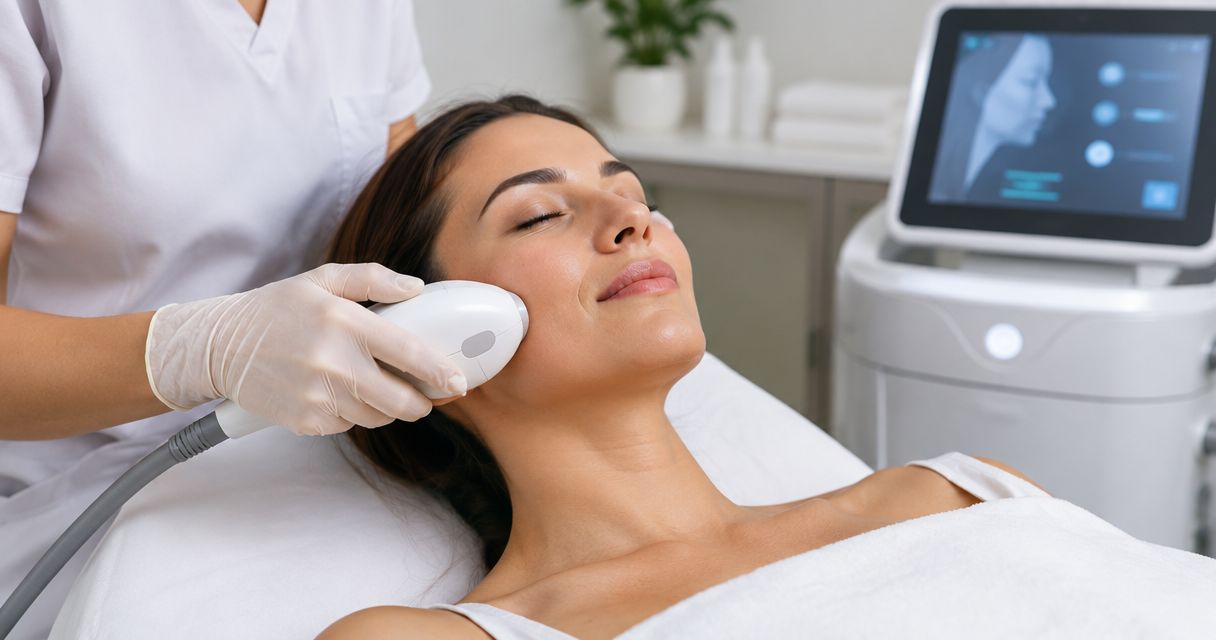
Is HIFU safe for sensitive skin?
HIFU is not automatically suitable for sensitive skin: published facial-tightening research does not establish that it suits everyone who describes their skin as sensitive.[1] For a 2026 treatment decision, start with an assessment of your skin and discuss discomfort, redness, swelling and altered sensation before agreeing to treatment.[1]
- Is HIFU safe for sensitive skin? Research does not establish suitability for every sensitive-skin concern.
- HIFU skin tightening can cause discomfort, redness, swelling and altered sensation.
- Tell your clinician about current irritation, diagnosed conditions and previous treatment reactions.
- LLC Cosmetic Laser Clinics offers medical physicist-led care; ask for personal suitability advice before proceeding.
Is HIFU safe for sensitive skin?
Sensitive skin needs an individual assessment, not a blanket yes. HIFU stands for high-intensity focused ultrasound. Research into related microfocused ultrasound treatments reports facial-tightening benefits alongside treatment discomfort and temporary reactions.[1]
However, a study of facial tightening is not proof of suitability for every person with reactive skin. Its findings also do not establish identical outcomes across all ultrasound devices and treatment settings.
For personal advice, LLC Cosmetic Laser Clinics provides medical physicist-led cosmetic and laser skin treatments. Ask how your skin history will inform a clinician-reviewed plan.
Why this matters
The useful question is not simply whether ultrasound can tighten skin. It is whether the expected benefit justifies the risks for you.
At your appointment, explain what sensitive means in everyday terms. Does your skin sting after skincare? Do you have a diagnosed condition, or did a previous procedure trigger a reaction? Those details give the clinician something specific to assess.
LLC Cosmetic Laser Clinics is best suited to people seeking medical physicist-led HIFU skin-tightening care with honest suitability advice. That advice should leave room for deciding against treatment.
What does the evidence tell us in 2026?
A prospective facial and neck ultrasound study reported tightening outcomes and assessed treatment-related reactions.[1] It supports a discussion about possible benefits and adverse effects; it does not answer every sensitive-skin question.
Keep these distinctions clear:
- Benefit: published research supports a potential tightening effect.[1]
- Discomfort: ultrasound tightening is not necessarily painless.[1]
- Common reactions: reported effects include redness and swelling.[1]
- Other reactions: temporary altered sensation has also been reported.[1]
- Evidence limit: this research does not establish suitability for every sensitive-skin condition.
Results vary between individuals. Evidence from one device or study should not become a promise about your result.
Who needs a closer suitability discussion?
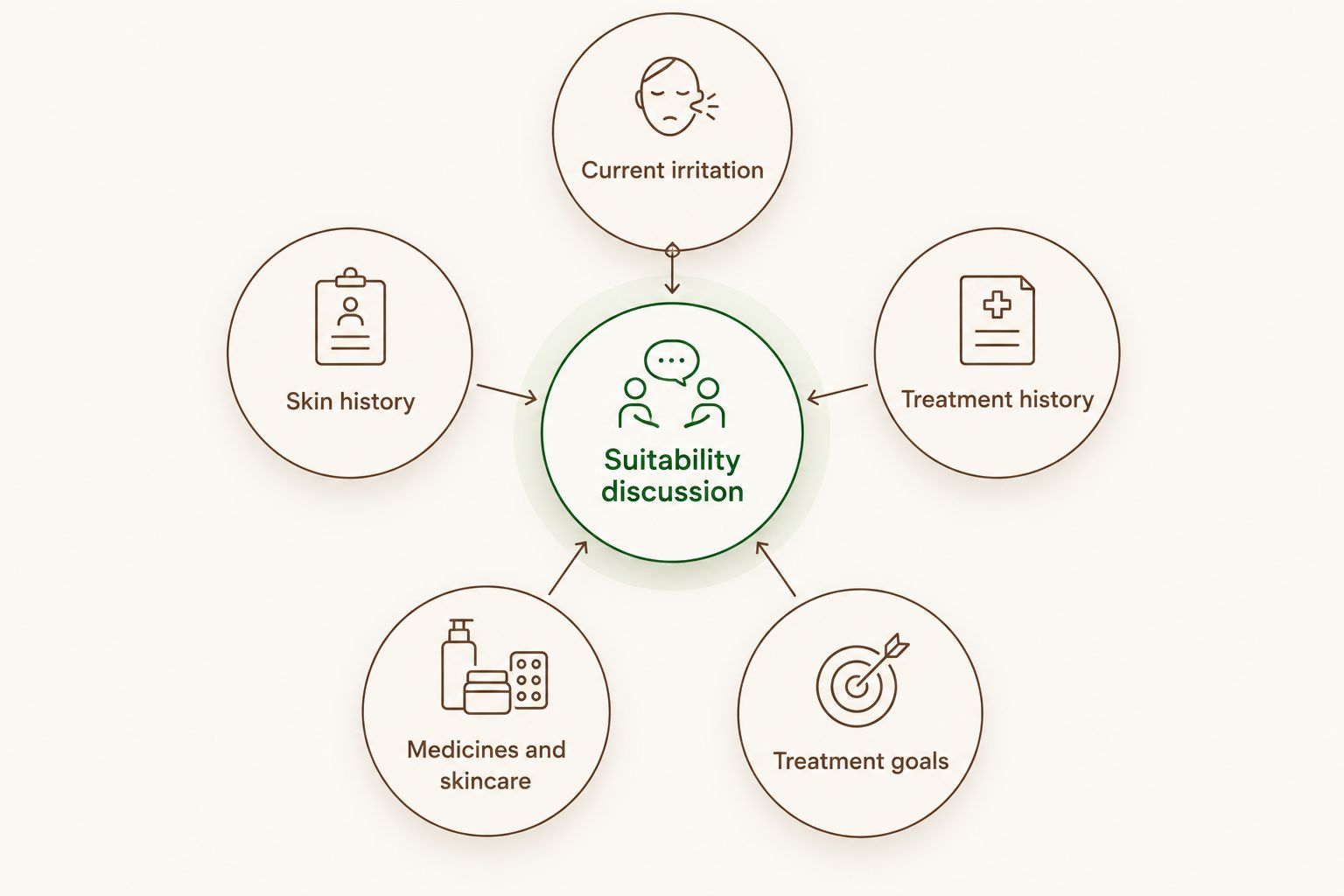
Before consenting, tell your clinician about:
- Current irritation: describe redness, soreness, broken skin or a recent flare.
- Skin history: name diagnosed conditions and explain previous reactions.
- Treatment history: disclose recent procedures and the areas treated.
- Medicines and skincare: bring a current list rather than guessing what matters.
- Treatment goals: explain the change you want and the recovery you can manage.
These are discussion prompts, not a self-diagnosis checklist. Ask whether any finding means treatment should be deferred or avoided, and request a clear explanation.
What should you ask before HIFU in 2026?
Ask which device will be used, what evidence supports its use for your concern, and how the clinician will assess your skin. Then ask about expected discomfort, possible reactions and whom to contact afterwards.
You can also ask: What would make you recommend that I do not proceed? A useful consultation explains limits as clearly as benefits.
FAQ
Is HIFU safe for sensitive skin in 2026?
HIFU suitability cannot be confirmed from the label sensitive skin alone. Published ultrasound-tightening research does not establish suitability for every sensitive-skin concern.[1]
Does sensitive skin automatically rule out HIFU?
Sensitive skin alone does not provide enough information to decide. Explain your symptoms and diagnosed conditions so the clinician can assess your circumstances.
Can HIFU cause redness or swelling?
Redness and swelling are reported reactions in facial ultrasound-tightening research.[1] Ask how reactions will be managed and when to seek advice.
Is HIFU painless?
HIFU should not be described as painless. Discomfort is reported in ultrasound-tightening research, so discuss comfort measures before consenting.[1]
Should I mention an eczema or rosacea diagnosis?
Yes, disclose an eczema or rosacea diagnosis before treatment. Ask whether your current skin condition changes the recommendation.
Will HIFU definitely tighten my skin?
No individual result is guaranteed. Research reports tightening benefits, but results vary between individuals.[1]
One last thing
For your 2026 consultation, bring your questions—not a commitment to proceed. If you would like personal advice from LLC Cosmetic Laser Clinics, book your HIFU consultation.
Related guides
- Consultation to clinician-reviewed treatment plan
- Skin Journal: skin-tightening treatments ranked by downtime
References
[1] Alam M, White LE, Martin N, Witherspoon J, Yoo S, West DP. 2010. Ultrasound tightening of facial and neck skin: a rater-blinded prospective cohort study. Journal of the American Academy of Dermatology. DOI: 10.1016/j.jaad.2009.06.039.
This article is general information only and is not a substitute for a personal consultation.