
Is HIFU painful?
Yes, HIFU can be painful: focused ultrasound skin tightening can cause discomfort during treatment, and some people experience tenderness afterwards.[1] There is no single pain score that predicts your experience. Before proceeding, ask what you might feel, how your clinician will respond to discomfort and whether treatment suits your skin and goals.
- Is HIFU painful? Yes, discomfort is possible; a pain-free experience is not guaranteed.
- Ultrasound skin tightening research does not establish identical results or comfort across every HIFU device.
- Discuss pain concerns before treatment, not after discomfort becomes difficult to tolerate.
- LLC Cosmetic Laser Clinics offers medical physicist-led care and clinician-reviewed treatment plans.
Is HIFU painful?
HIFU is not reliably pain-free. Published research on microfocused ultrasound describes treatment discomfort, along with temporary effects such as redness, swelling and tenderness.[1] Think of discomfort as part of the suitability discussion—not something you must quietly put up with.
HIFU stands for high-intensity focused ultrasound. Cosmetic ultrasound treatments direct energy beneath the skin to produce controlled heating, with the aim of improving skin laxity, or looseness.[1]
An important detail: much of the published facial skin-tightening evidence concerns specific microfocused ultrasound systems. Those findings do not establish the same comfort level, results or risks for every device marketed as HIFU.[1]
For help preparing your questions, read the consultation-to-clinician-reviewed treatment plan guide.
Why comfort matters before you book
A treatment does not need to hurt to prove it is working. Equally, a promise of no discomfort is not a sound basis for choosing ultrasound skin tightening.[1]
Your consultation should connect the proposed benefit with the discomfort, risks and limitations you are prepared to accept. You do not need to proceed simply because you have booked an appointment.
Why does HIFU discomfort vary?
The ultrasound literature describes differences in treatment delivery and comfort management.[1] Ask your clinician about these factors rather than relying on another person's pain score:
- Treatment area: Which parts of your face or neck would be treated?
- Energy settings: How will the clinician choose settings for your treatment?
- Treatment depth: Which tissues does the proposed device target?
- Treatment coverage: How much of the area needs treatment?
- Comfort management: What measures are appropriate, and what are their limitations?
A useful answer explains the plan for you. It does not promise that your experience will match someone else's.
What should you discuss before treatment?
Make comfort part of the consultation from the start. At LLC Cosmetic Laser Clinics, ask how the clinician-reviewed plan addresses your concerns and who will perform the treatment; medical physicist-led does not mean every appointment is personally performed by a medical physicist.
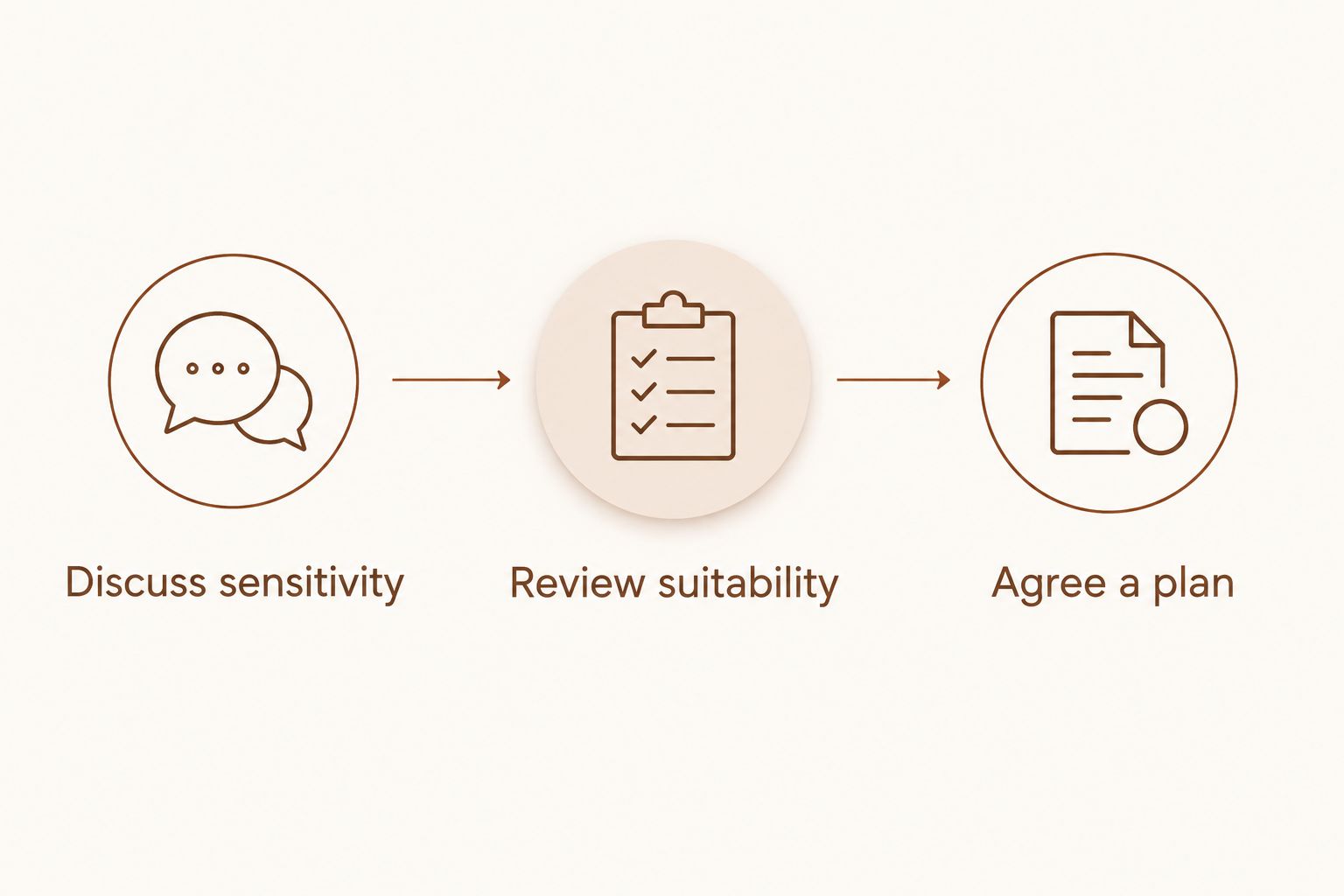
- Discuss sensitivity. Explain previous difficult treatment experiences and any concerns about pain. Ask how to signal that you need a pause.
- Review suitability. Share your medical history, medicines, previous procedures and any current skin problems. Ask whether these change the recommendation.
- Agree a plan. Confirm the intended benefit, likely limitations, comfort measures and aftercare before deciding.
The practical goal is a clear conversation, not a test of your pain tolerance. You should understand what will happen if you find treatment uncomfortable.
What side effects should you know about?
Published microfocused ultrasound research reports redness, swelling, tenderness and bruising. Temporary changes in sensation have also been reported.[1] These effects deserve discussion even when treatment does not involve surgery.
The same review describes less common complications, including temporary nerve-related effects.[1] Ask your clinician which symptoms require prompt assessment and how to contact the clinic afterwards. Do not assume that every new symptom is an expected part of recovery.
Results vary between individuals. Evidence from a particular device and treatment protocol cannot guarantee your outcome or recovery experience.[1]
Who might HIFU not suit?
Ultrasound skin tightening is not a substitute for surgical lifting, and the reviewed evidence mainly concerns selected patients seeking improvement in skin laxity.[1] If you want a substantial change, discuss whether the likely benefit matches your expectations.
Open wounds, active skin problems and implanted devices also need assessment before treatment.[1] Tell your clinician about them rather than deciding suitability yourself. Choosing not to treat is a valid outcome of a consultation.
Does more pain mean better HIFU results?
More pain is not a treatment goal. The reviewed research does not establish discomfort as a reliable way for you to judge the eventual result.[1] Ask about the treatment plan rather than trying to tolerate more.
Can you ask to pause HIFU?
Ask about pauses before treatment starts. Agree on a clear signal and ask how your clinician will reassess unexpected or difficult discomfort. You should not feel pressured to continue.
FAQ
Is HIFU painful for everyone?
HIFU discomfort varies, and a pain-free experience cannot be guaranteed. Research on microfocused ultrasound reports treatment discomfort, but it cannot predict your individual experience.[1]
Will my face feel tender after HIFU?
Tenderness is a reported effect after microfocused ultrasound treatment. Ask your clinician what aftercare applies to the specific treatment proposed for you.[1]
Can HIFU cause swelling or bruising?
Swelling and bruising have been reported after microfocused ultrasound treatment. Discuss these effects before booking, especially if you have an upcoming event.[1]
Does HIFU work like a surgical facelift?
HIFU is not a substitute for a surgical facelift. Published ultrasound skin-tightening research concerns improvement in skin laxity, not an equivalent surgical result.[1]
Should I mention dental work or implants before HIFU?
Yes, tell your clinician about dental work and implanted devices before treatment. Suitability requires an individual assessment rather than a general online answer.
Can I discuss pain concerns before deciding on HIFU?
Yes, discuss pain concerns before deciding. LLC Cosmetic Laser Clinics offers clinician-reviewed plans, and your consultation is the place to ask about comfort, limitations and suitability.
One last thing
A useful consultation can end with no treatment. LLC Cosmetic Laser Clinics is a medical physicist-led option for people seeking HIFU advice without pressure to proceed.
If you would like personal advice, Book your HIFU consultation and bring your questions about discomfort.
Related guides from the Skin Journal
References
[1] Fabi SG. 2015. Noninvasive skin tightening: focus on new ultrasound techniques. Clinical, Cosmetic and Investigational Dermatology. DOI: 10.2147/CCID.S69118. This review concerns microfocused ultrasound; it does not validate every device marketed as HIFU.
This article is general information only and is not a substitute for a personal consultation.