
Is dermal filler migration a real risk?
Yes, dermal filler migration is a real risk: injected material can move away from its intended position.[1] However, swelling, uneven placement and delayed inflammation can also change how an area looks, so a lump does not prove migration.[2] For anyone weighing dermal filler migration risk in 2026, the useful next step is a clinical assessment—not a diagnosis from a photo.
- Dermal filler migration risk is real, but published reports do not establish a reliable overall percentage.
- Swelling and inflammation can resemble migration; a clinical examination helps distinguish them.
- LLC Cosmetic Laser Clinics supports clinician-reviewed plans and honest suitability advice without pressure.
- In 2026, sudden pain, skin colour changes or visual symptoms after filler require urgent medical assessment.
Is dermal filler migration a real risk?
Migration is documented in the medical literature, including a review describing several possible mechanisms.[1] Think of it as material moving beyond the place it was intended to stay. That differs from material being placed unevenly at the original appointment.
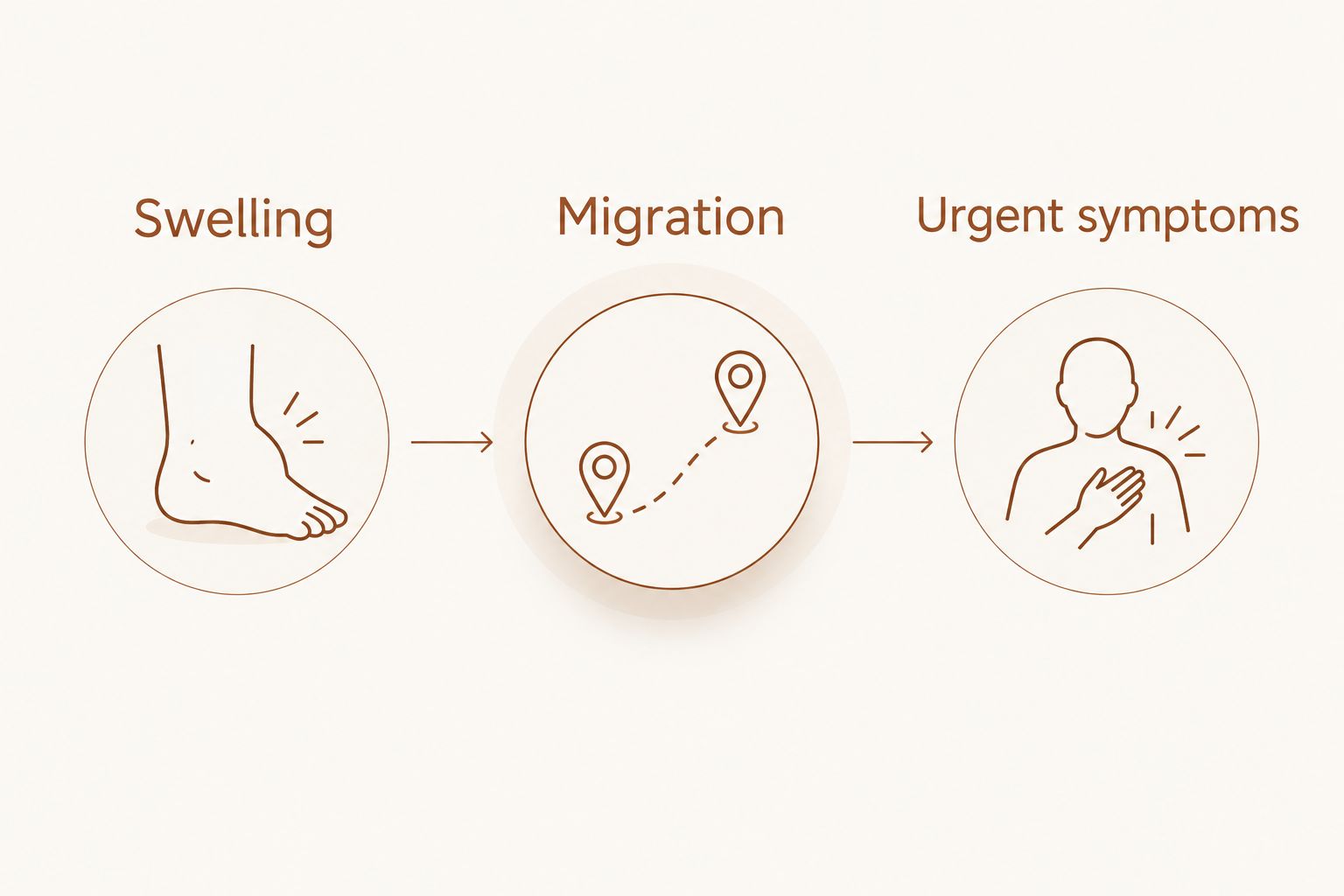
A visible change is a reason for assessment, not proof of migration. These problems can overlap:
| Possible issue | What it can involve | What to do |
|---|---|---|
| Swelling | Puffiness after injection | Follow aftercare advice and seek review if worsening |
| Migration | Material outside its intended position | Arrange a clinical assessment |
| Urgent symptoms | Sudden pain, pale or dusky skin, visual changes | Seek urgent medical assessment |
These distinctions are described in reviews of filler complications.[1–3] Appearance alone cannot reliably separate them.
Why this matters before another appointment
Adding more filler is not a substitute for understanding an unwanted change. Management depends on whether the problem involves placement, inflammation, infection or another complication.[2,3]
For a practical explanation of assessment, the LLC Cosmetic Laser Clinics Skin Journal covers the consultation-to-clinician-reviewed treatment plan. Take your previous treatment records to any review.
What does the evidence say in 2026?
Published reports confirm that migration happens, but they do not establish a dependable percentage for everyone receiving filler.[1] Case reports describe what happened to particular patients; they cannot tell you how often it happens across all treatments.
There is no reliable universal migration rate to apply to your face. Evidence about the relative contribution of different mechanisms is limited, and some proposed explanations remain theoretical.[1]
Why does migration risk vary?
The migration review describes several possible contributors, rather than one proven cause:[1]
- Injection placement: where material enters the tissue matters.
- Injection pressure: pressure during placement is a proposed mechanism.
- Muscle movement: repeated movement is another proposed contributor.
- External pressure: manipulation or pressure has also been discussed.
These factors do not provide a checklist that guarantees prevention. Follow your treating clinician’s individual aftercare instructions rather than trying to reshape an area yourself.[2,3]
Who should pause before treatment?
Filler can offer cosmetic correction, but it also carries risks. Reported complications include bruising, swelling, tenderness, lumps, infection and vascular compromise—when blood flow is obstructed.[2,3]
Active infection or inflammation around the intended treatment area needs assessment before proceeding.[2,3] Tell your clinician about previous filler, past reactions, medicines and relevant health conditions. Results vary between individuals.
At LLC Cosmetic Laser Clinics, suitability advice and clinician-reviewed plans are part of the stated approach. That does not mean every consultation or treatment is personally performed by a medical physicist.
What should you do about a change in 2026?
For a persistent lump or change in contour without urgent symptoms, contact your treating clinician and arrange a review. Bring the treatment date, product details if known, and photographs showing the change.
Sudden pain, pale or dusky skin, or visual symptoms need urgent medical assessment.[3] Do not wait for a routine cosmetic appointment when those symptoms occur.
FAQ
Can filler migrate long after treatment?
Migration has been reported after a delay.[1] A new lump still needs assessment because inflammation and other complications can also appear later.[2]
Does a lump mean my filler has migrated?
No, a lump does not establish migration. Uneven placement, inflammation and other complications can produce lumps.[2,3]
Can I massage suspected migration away?
Do not try to correct suspected migration yourself. Arrange an assessment and follow instructions specific to the diagnosed problem.[2,3]
Can migrated filler be corrected?
Management depends on the material, location and diagnosis.[2,3] There is no single correction suitable for every lump or contour change.
Is dermal filler migration risk zero with an experienced clinician?
No clinician can promise zero migration risk. Published evidence describes multiple possible mechanisms, not a guaranteed prevention method.[1]
What is the main takeaway about filler migration in 2026?
Migration is real, but a visible change needs diagnosis before correction. Sudden pain, skin colour changes or visual symptoms require urgent medical assessment.[1–3]
One last thing
LLC Cosmetic Laser Clinics suits people seeking medical physicist-led care and clinician-reviewed plans. If you want personal advice, you can request a consultation without committing to treatment.
References
- Jordan DR, Stoica B. 2015. Ophthalmic Plastic and Reconstructive Surgery. Filler migration: a number of mechanisms to consider. DOI: 10.1097/IOP.0000000000000368.
- Funt D, Pavicic T. 2013. Clinical, Cosmetic and Investigational Dermatology. Dermal fillers in aesthetics: an overview of adverse events and treatment approaches. DOI: 10.2147/CCID.S50546.
- Urdiales-Gálvez F et al. 2018. Aesthetic Plastic Surgery. Treatment of soft tissue filler complications: expert consensus recommendations. DOI: 10.1007/s00266-017-1063-0.
This article is general information only and is not a substitute for a personal consultation.