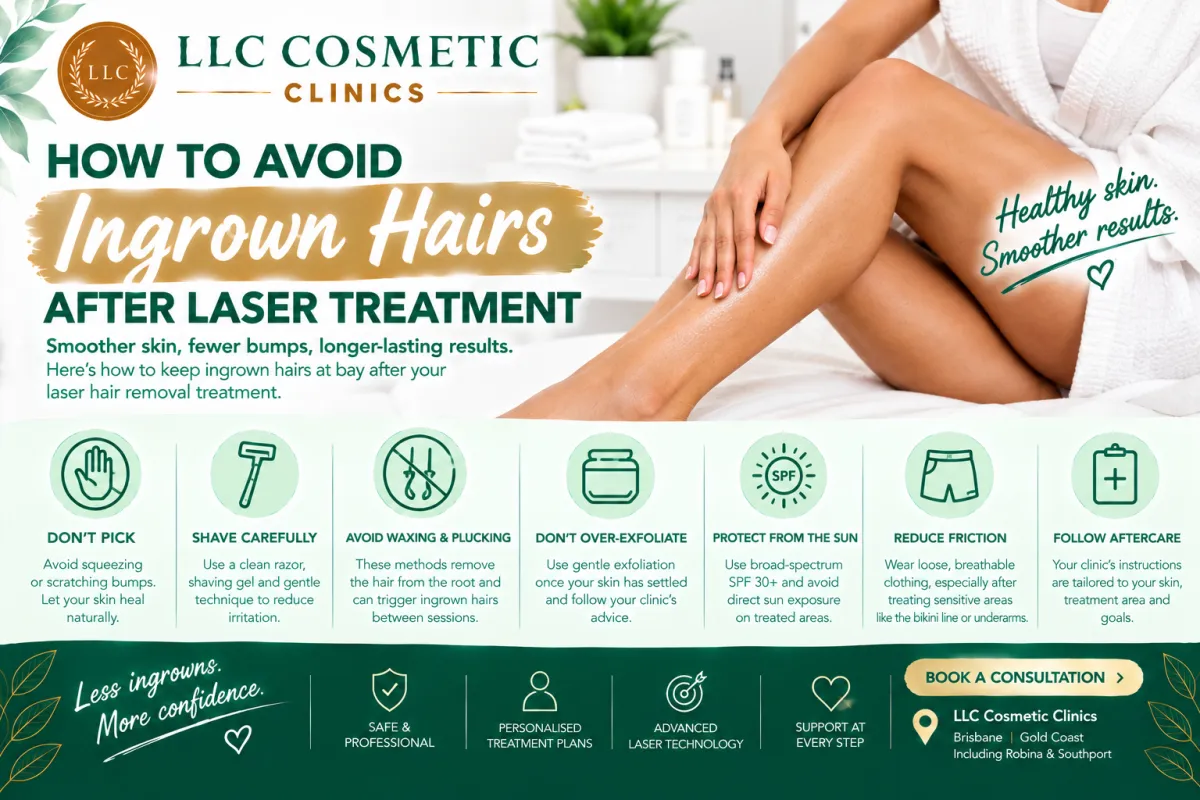
How to Avoid Ingrown Hairs After Laser Treatment: 8 Rules
Ingrown hairs can be one of the most frustrating parts of shaving, waxing, or other temporary hair-removal methods. Instead of growing normally through the skin, the hair curls back or becomes trapped underneath the surface, causing small bumps, redness, irritation and sometimes dark marks.
The good news is that laser hair removal can help reduce the cycle that causes many ingrown hairs. By targeting the hair follicle and reducing future hair growth, laser treatment can mean less shaving, less irritation and fewer opportunities for hairs to become trapped beneath the skin.
But laser treatment does not mean you can completely ignore your skin between appointments.
Knowing how to avoid ingrown hairs after laser treatment involves a combination of proper shaving, gentle skincare, avoiding unnecessary irritation and following your clinic's aftercare instructions.
Here's what you need to know.
Why Do Ingrown Hairs Happen?
An ingrown hair occurs when a hair grows back into the skin instead of growing outward normally.
They are particularly common in areas where people shave frequently, including:
Bikini and Brazilian areas
Underarms
Legs
Face and neck
Beard and jawline areas
Shaving can sometimes contribute to ingrown hairs because the hair is cut very close to the skin. As it grows back, it may curl or become trapped.
People with naturally curly or coarse hair may also be more prone to ingrown hairs.
According to the American Academy of Dermatology, shaving can cause irritation and ingrown hairs, while laser hair removal can be an option for people who experience persistent razor bumps or ingrown hairs.
Can Laser Hair Removal Help With Ingrown Hairs?
Yes, laser hair removal can help reduce ingrown hairs for many people.
The reason is relatively simple: less hair growth can mean less shaving and fewer hairs available to become ingrown.
Laser hair removal works by directing light energy toward pigment in the hair. The energy is absorbed by the hair and can damage the follicle, reducing its ability to produce hair over time.
As treatment progresses, regrowth often becomes finer and less noticeable.
The American Academy of Dermatology specifically notes that laser hair removal can be useful for people who experience razor burn and ingrown hairs from shaving.
However, results aren't immediate after one appointment. Laser hair removal normally requires a series of treatments because hair grows in different cycles.
At LLC Cosmetic, a typical course is around 6–8 sessions, although the number needed depends on factors such as your hair type, skin tone and treatment area.
How to Avoid Ingrown Hairs After Laser Treatment
1. Don't Pick or Squeeze Your Skin
One of the biggest mistakes people make when they see a bump is trying to remove it themselves.
Picking, squeezing or scratching an ingrown hair can damage the surrounding skin and increase the risk of inflammation, infection, pigmentation or scarring.
If you notice a small bump after treatment, resist the temptation to attack it with tweezers.
Instead, keep the area clean and allow the skin to settle.
If a bump becomes increasingly painful, swollen, produces pus or does not improve, speak with a healthcare professional.
2. Give Your Skin Time to Settle After Laser
Your skin may look slightly red or feel warm after laser hair removal. This is generally temporary.
The American Academy of Dermatology notes that redness and swelling can occur after laser hair removal and often settle within a few days.
During this period, avoid doing anything that unnecessarily irritates the treated area.
That means being cautious with:
Strong exfoliating products
Scrubs
Fragranced products
Very hot showers
Saunas
Intense heat
Aggressive rubbing
Tight clothing over sensitive areas
Your clinic may provide specific instructions depending on the treatment area and your skin.
When in doubt, follow the aftercare instructions provided by your practitioner rather than adding extra products or treatments.
3. Shave Instead of Waxing or Plucking Between Sessions
If you need to remove visible hair between laser sessions, shaving is generally preferred over methods that pull the hair from the follicle.
Why?
Laser hair removal needs the hair follicle to remain present for the laser to target it.
Waxing, tweezing and plucking remove the hair from the root, which can interfere with your treatment plan.
LLC Cosmetic advises clients to shave before their sessions and not wax because the follicle needs to be present for treatment.
So if you see regrowth between appointments, don't automatically reach for the wax or tweezers.
Follow your clinic's shaving instructions instead.
4. Use Good Shaving Technique
Even while undergoing laser hair removal, you may still need to shave between sessions.
The way you shave matters.
To help reduce irritation and the chance of ingrown hairs:
Wet the skin before shaving.
Use a gentle shaving cream or gel.
Avoid shaving dry skin.
Use a clean, sharp razor.
Avoid repeatedly going over the same area.
Shave in the direction of hair growth when possible.
Don't press the razor aggressively against your skin.
Rinse the area gently afterward.
The American Academy of Dermatology recommends shaving in the direction the hair grows and using appropriate shaving products to reduce irritation and razor bumps.
A close shave isn't necessarily a better shave if it leaves your skin irritated.
5. Don't Over-Exfoliate
Exfoliation is often recommended when talking about ingrown hairs because dead skin cells can contribute to hairs becoming trapped.
But more exfoliation isn't always better.
Immediately after laser treatment, your skin can be more sensitive. Aggressive scrubbing, rough body brushes or strong acids may cause unnecessary irritation.
Once your skin has settled, gentle exfoliation may be appropriate for some people, but the timing and products should depend on your skin and your clinic's recommendations.
If you're prone to pigmentation or have sensitive skin, this is particularly important.
Your goal isn't to scrub the ingrown hair out.
Your goal is to maintain healthy skin without creating additional inflammation.
6. Keep the Treated Area Clean
Sweat, friction and product buildup can make already-irritated skin feel worse.
After treatment, keep the area clean and follow your clinic's instructions regarding showering and skincare.
If you've treated areas such as the bikini line, underarms or legs, pay attention to clothing as well.
Loose, breathable clothing can help minimise unnecessary friction while the skin is sensitive.
This is especially useful after treating areas that naturally experience rubbing from underwear, activewear or tight clothing.
7. Avoid Excessive Heat Immediately After Treatment
Heat can make recently treated skin feel more uncomfortable.
For the immediate post-treatment period, your clinic may recommend avoiding activities such as:
Hot showers
Saunas
Steam rooms
Very hot baths
Intense exercise
LLC Cosmetic's laser hair removal guidance recommends avoiding excessive heat and intense exercise for the immediate post-treatment period. Follow the specific instructions provided for your treatment.
Once your skin has returned to normal, you can generally resume your usual routine.
8. Protect Your Skin From the Sun
Sun protection is important throughout your laser hair removal course.
Recently treated skin can be more vulnerable to irritation, and excessive sun exposure can increase the risk of unwanted pigmentation changes.
The American Academy of Dermatology recommends avoiding direct sun exposure after laser hair removal and using broad-spectrum SPF 30+ sunscreen.
This matters particularly in Queensland, where strong UV exposure can be a regular part of everyday life.
Don't assume that because you're treating unwanted hair, sun protection is less important.
Healthy skin is part of achieving a good treatment outcome.
What About Exfoliating Ingrown Hairs?
This is where many people go wrong.
If you have an ingrown hair, you might be tempted to use a rough scrub, exfoliating glove or strong chemical exfoliant immediately.
Instead, think gentle.
Cleveland Clinic notes that aggressive attempts to extract or dig out an ingrown hair can lead to infection, scarring and skin damage.
If your skin is still irritated after laser treatment, give it time to settle before introducing exfoliating products.
And never use a sharp object to dig underneath the skin to retrieve a trapped hair.
If the area is painful, infected or repeatedly developing ingrown hairs, professional assessment is a better option.
What If I Still Get Ingrown Hairs During Laser Treatment?
Don't panic.
Getting an occasional ingrown hair does not necessarily mean your laser treatment isn't working.
Hair growth doesn't stop overnight.
During a laser hair removal course, some hair can continue to grow while treated follicles gradually become less active. Your skin may also still experience irritation from shaving.
The goal is to gradually reduce unwanted hair and, as a result, reduce the need for frequent shaving.
At LLC Cosmetic, treatment settings and the course plan are assessed according to factors including your skin tone, hair colour and treatment area. Progress can also be reviewed throughout the course.
If you continue experiencing frequent ingrown hairs, mention this during your appointment.
It is useful information for your clinician when reviewing your treatment plan.
Can Laser Hair Removal Prevent Ingrown Hairs Completely?
Not necessarily.
Laser hair removal can significantly reduce hair growth, which may reduce the frequency of ingrown hairs for people whose ingrowns are related to shaving or hair removal.
But it isn't a guarantee that you'll never experience another ingrown hair.
You may still experience occasional bumps because of:
Remaining hair growth
Shaving
Curly or coarse hair
Friction
Skin irritation
Hormonal hair growth
Incorrect shaving technique
The aim is to reduce the underlying cycle rather than promise that every bump will disappear permanently.
Which Areas Benefit Most From Laser Hair Removal If You Get Ingrown Hairs?
Laser hair removal may be particularly appealing if you regularly experience ingrown hairs in areas that require frequent shaving.
Common treatment areas include:
Bikini and Brazilian Area
The bikini area can be particularly frustrating because shaving can cause bumps, irritation and ingrown hairs.
Reducing the amount of hair that needs to be shaved may help reduce these problems over time.
Underarms
Underarm hair can grow quickly, meaning some people shave frequently.
Laser hair removal can reduce the amount of hair that regrows, potentially reducing the need for constant shaving.
Legs
If you're shaving your legs regularly and frequently develop bumps or irritation, a laser hair removal course may be worth discussing.
Face and Neck
Facial hair can be more complicated because hormonal factors can influence regrowth.
Laser treatment may still help reduce unwanted hair, but your clinician should assess your individual situation and set realistic expectations.
Does Laser Hair Removal Work on All Skin Tones?
Modern laser hair removal can be performed on a wide range of skin tones, but the treatment needs to be appropriately planned.
Skin tone, hair colour and the technology and settings used all matter.
LLC Cosmetic states that laser hair removal suitability is assessed before treatment, with settings planned according to the individual's skin tone and hair type.
This is particularly important if you're prone to pigmentation or have a deeper skin tone.
Choosing an experienced provider who understands how to adjust treatment appropriately is more important than simply choosing the cheapest treatment available.
When Should You Contact Your Clinic?
A little redness or warmth after laser treatment can be normal.
However, you should contact your clinic or seek appropriate medical advice if you experience symptoms that concern you, particularly:
Severe or increasing pain
Significant swelling
Blistering
Pus or signs of infection
Persistent or worsening skin changes
Significant darkening or lightening of the treated area
A reaction that doesn't seem to be improving
The AAD notes that while minor redness, swelling and discomfort are common after laser hair removal, more serious complications such as blistering, infection, scarring and pigment changes can occur, particularly when treatment is not appropriately performed.
It's always better to ask than to ignore a reaction you're concerned about.
The Best Way to Avoid Ingrown Hairs After Laser Treatment
If you want to remember only a few things, keep these in mind:
Don't pick. Give bumps time to settle rather than squeezing or digging at them.
Shave carefully. Use a clean razor, shaving product and gentle technique.
Don't wax or pluck between laser sessions unless your practitioner specifically tells you otherwise.
Don't over-exfoliate. Give recently treated skin time to recover.
Protect your skin from the sun. Sun exposure can increase the risk of unwanted skin reactions.
Reduce friction. Especially after treating the bikini area, underarms or other areas exposed to tight clothing.
Follow your clinic's aftercare instructions. Your treatment area and skin type may require specific advice.
Tell your clinician about recurring ingrown hairs. They may be able to adjust or review your treatment plan.
Ready to Break the Shave–Ingrown Hair Cycle?
If you're constantly shaving, dealing with razor bumps and trying to manage ingrown hairs, laser hair removal may offer a longer-term approach to reducing unwanted hair.
At LLC Cosmetic, laser hair removal starts with a suitability assessment. Your skin tone, hair type and treatment areas are considered before your course is planned. The clinic currently offers laser hair removal across four Brisbane and Gold Coast locations.
Rather than guessing which treatment is right for you, a consultation gives you the opportunity to discuss your hair growth, previous hair-removal methods, skin concerns and realistic expectations.
If ingrown hairs are becoming a regular problem, book a consultation with LLC Cosmetic and find out whether laser hair removal could be suitable for you.
This article is for general information only and is not a diagnosis or substitute for personalised medical advice. Treatment suitability, expected results and aftercare should be confirmed with your qualified practitioner.