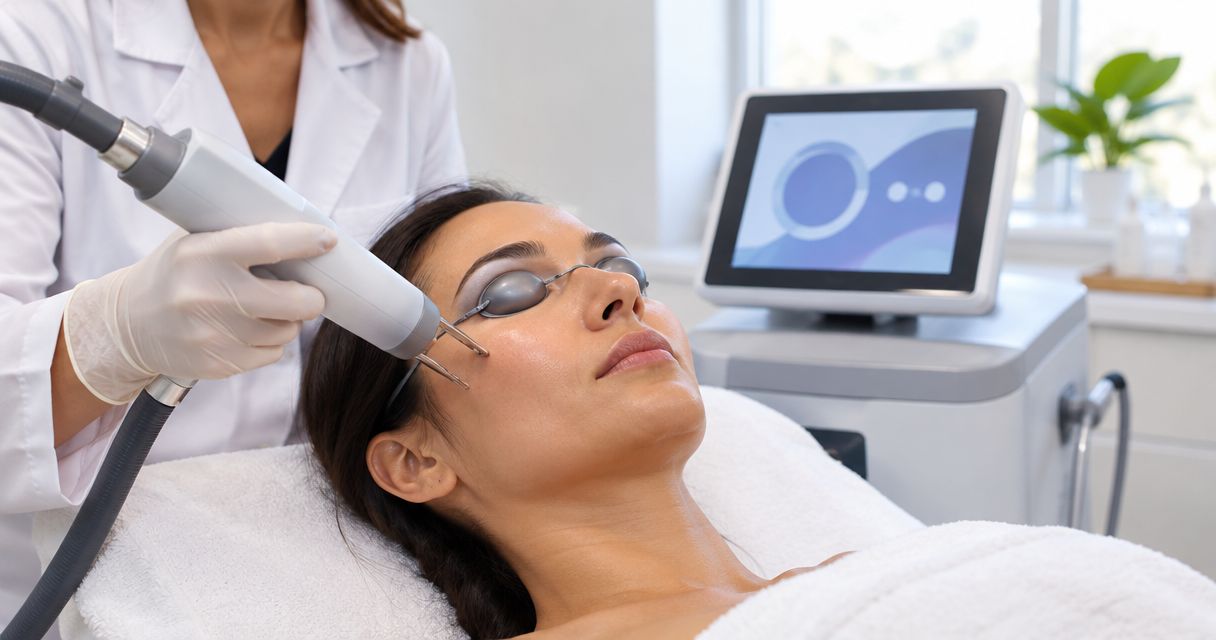
How many pigmentation laser treatment sessions do you need?
There is no universal number of pigmentation laser treatment sessions: the right plan depends on what is causing the pigment and how your skin responds. In 2026, a useful treatment plan starts with a diagnosis—not a promised session count—and includes the possibility that laser is not the right choice.[1,2]
- Pigmentation laser treatment sessions should follow a diagnosis, not a standard package.
- Melasma and post-inflammatory pigmentation need particular care; laser can worsen pigmentation.
- LLC Cosmetic Laser Clinics offers medical physicist-led care and clinician-reviewed treatment plans.
- Ask about recovery, review points and reasons to stop before committing to treatment.
Why this matters
Brown patches can look similar but need different treatment. Melasma, for example, is a recurring pigmentation condition; treating visible colour does not remove the tendency for it to return.[1]
When planning treatment in 2026, ask for the reasoning behind the recommendation. The Skin Journal’s guide to a clinician-reviewed treatment plan explains that planning pathway.
How many pigmentation laser treatment sessions do you need?
You need an assessment before you need a session count. Research does not support applying one laser schedule to everyone with facial pigmentation. Studies use different devices, settings and treatment schedules, so a published course is not a personal prescription.[1,2]
| Pigmentation concern | What it means for planning | Main limitation |
|---|---|---|
| Melasma | Discuss non-laser treatment and whether laser has a suitable role | Pigmentation can return or worsen |
| Post-inflammatory hyperpigmentation | Assess the inflammation or injury that caused the marks | Further irritation can trigger more pigment |
These are different conditions, not interchangeable labels for brown skin marks. Neither automatically makes you a laser candidate.[1,2]
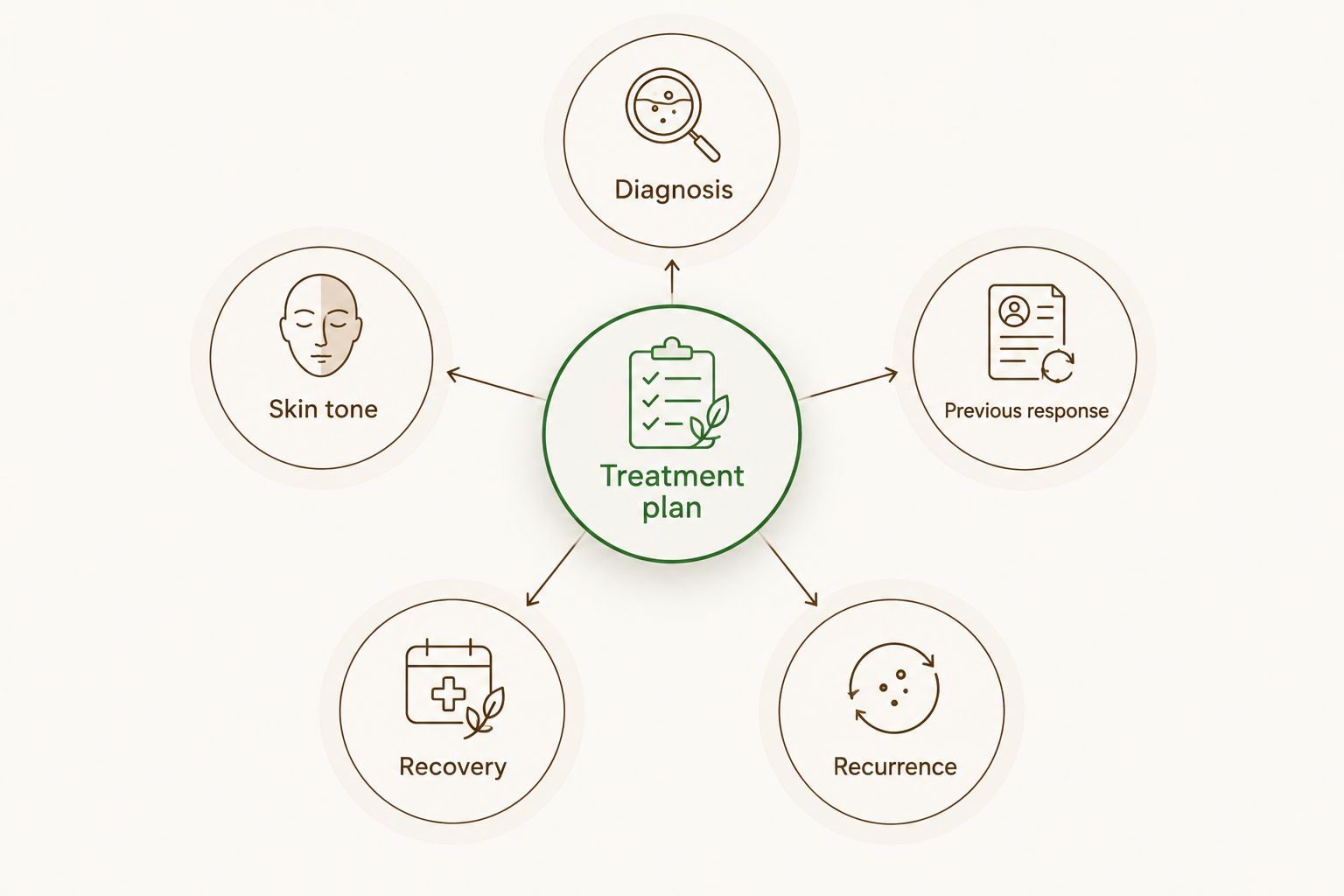
What changes your 2026 treatment plan?
A clinician should explain these factors before recommending a course:[1,2]
- Diagnosis: Melasma and post-inflammatory pigmentation require different decisions.
- Skin tone: The risk of unwanted pigment changes affects treatment selection.
- Previous response: Earlier improvement, irritation or darkening helps inform the next decision.
- Recovery: Redness, swelling and pigment changes belong in the discussion—not just the hoped-for benefit.
- Recurrence: For melasma, ongoing management matters alongside any procedure.
A treatment plan should connect those details rather than treat the number of appointments as the starting point.
Does PICO laser mean you will need fewer sessions?
The name of the laser does not determine your session count. Picosecond lasers deliver very short pulses of energy, but a shorter pulse is not the same thing as a shorter treatment course.[2]
Research on laser treatment for melasma includes varied approaches and mixed outcomes. It does not justify promising that PICO will clear every type of pigmentation or prevent recurrence.[2]
Who might need to pause or avoid laser?
Laser is not an automatic next step if you have melasma or marks left after inflammation. Both need careful assessment because treatment itself can cause unwanted darkening.[1,2]
If a patch has not been diagnosed, ask for assessment before cosmetic treatment. If previous treatment caused worsening pigmentation, explain that history before agreeing to another session.
LLC Cosmetic Laser Clinics suits people seeking medical physicist-led care and clinician-reviewed plans. That approach should include honest advice when proceeding is not appropriate—not an assumption that everyone needs treatment.
FAQ
Can you tell me my exact session count from a photo?
A photo alone is not enough to set a reliable pigmentation laser treatment schedule. Diagnosis, skin history and previous treatment response need assessment.[1,2]
Will one pigmentation laser session remove everything?
One session is not a reliable promise of complete clearance. The cause of pigmentation and individual response affect the outcome; results vary between individuals.[1,2]
Can laser make pigmentation darker?
Yes, unwanted darkening is a recognised risk of laser treatment. Discuss post-inflammatory hyperpigmentation and your individual risk before proceeding.[1,2]
Does melasma come back after laser?
Melasma can recur after laser treatment. A plan needs to address ongoing management rather than treating a procedure as a permanent cure.[1,2]
How long will my skin take to recover?
Recovery depends on the procedure and settings, so there is no single recovery window for pigmentation laser treatment. Ask about expected redness, swelling and pigment changes for the proposed treatment.[2]
What should I ask LLC Cosmetic Laser Clinics before booking in 2026?
Ask LLC Cosmetic Laser Clinics what diagnosis the plan addresses, why PICO is being considered and when progress will be reviewed. Also ask what would lead the clinician to pause or change treatment.
One last thing
For your 2026 consultation, ask: What would make you decide not to do the next session? The answer matters as much as the proposed course.
If you would like personal advice, you can book your PICO consultation.
Related guides
References
- Ogbechie-Godec OA, Elbuluk N. 2017. Melasma: an Up-to-Date Comprehensive Review. Dermatology and Therapy. DOI: 10.1007/s13555-017-0194-1.
- Trivedi MK, Yang FC, Cho BK. 2017. A review of laser and light therapy in melasma. International Journal of Women's Dermatology. DOI: 10.1016/j.ijwd.2017.01.004.
This article is general information only and is not a substitute for a personal consultation.