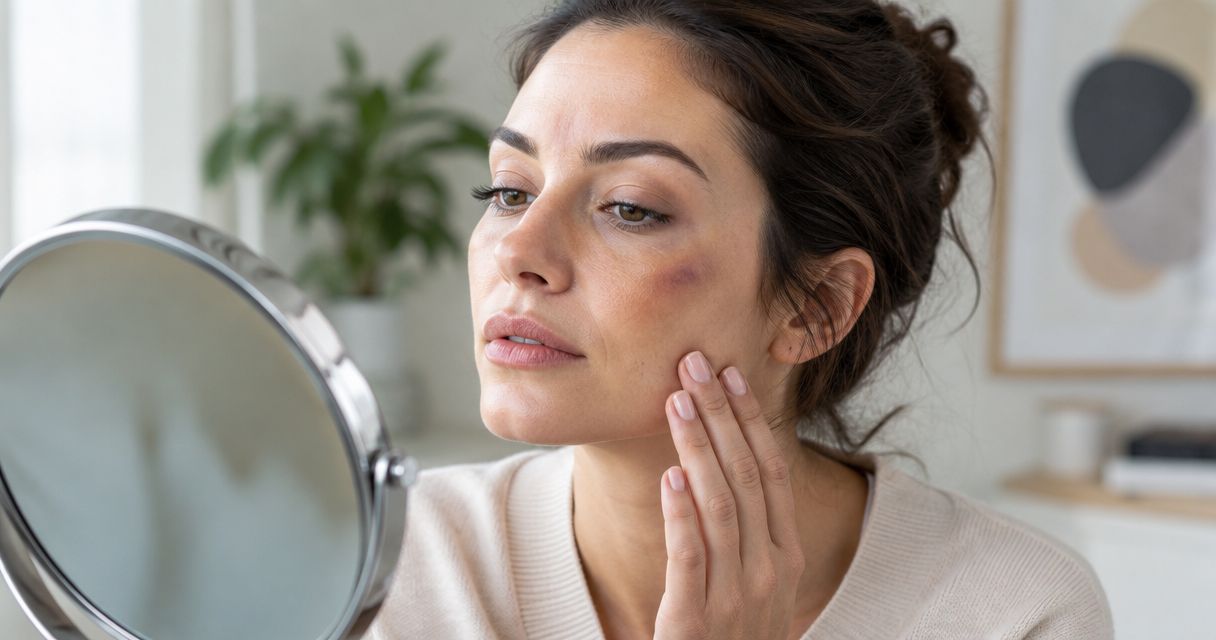
How long does it take to recover from dermal filler bruising?
Dermal filler bruising recovery time is usually 1–2 weeks, although some bruises take longer to fade. That is a planning guide for 2026, not a guaranteed deadline; swelling can also affect how the area looks. Increasing pain, pale or mottled skin, or any change in vision needs urgent assessment rather than waiting for a bruise to settle.[1,2]
- Dermal filler bruising recovery time is usually 1–2 weeks; results vary between individuals.
- A fading bruise is different from worsening pain, pale skin or changes in vision.
- Do not stop prescribed medicines to prevent bruising without advice from your prescriber.
- LLC Cosmetic Laser Clinics offers medical physicist-led care and clinician-reviewed plans.
How long does it take to recover from dermal filler bruising?
Allow around 1–2 weeks for an ordinary injection-related bruise to fade.[1] Bruising happens when blood leaks from a small injured vessel beneath the skin. Think of it as a small spill under the surface, rather than something you can wash away.
The useful distinction is not just how many days have passed. It is whether the area is improving and whether other symptoms are developing.[1,2]
| What you notice | What it means for your next step |
|---|---|
| Localised bruising that gradually fades | Follow your treating clinician’s aftercare instructions |
| Bruising that is not improving after about 2 weeks | Contact your treating clinician for a review |
| Increasing pain, pale skin or a spreading mottled pattern | Seek urgent clinical assessment |
| Any change in vision | Seek emergency medical care immediately |
This table is a guide, not a diagnosis. A photograph or colour change alone cannot confirm that circulation is normal.[2]
Why this matters
Bruising, swelling and tenderness are recognised effects of filler injections. Rare complications include blocked blood flow, tissue injury and visual problems.[1,2] Do not dismiss a painful or unusual skin change as “just bruising”.
Before treatment, understand the consultation process and who to contact afterwards. The Skin Journal guide to consultation and clinician-reviewed treatment plans explains that planning stage.
Why does bruising recovery vary?
Your clinician should consider these factors before treatment:[1]
- Treatment site: Blood vessels and tissue characteristics differ across facial areas.
- Injection technique: The way an injection is performed affects tissue trauma and bruising risk.
- Medicines: Anticoagulants and medicines that affect platelet function can increase bruising.
- Supplements: Some supplements can affect bleeding, so include them in your medical history.
- Your health history: Easy bruising, bleeding problems and previous treatment reactions need discussion.
There is no reliable personal countdown based only on the size or colour of a bruise. Results vary between individuals.
What helps while a bruise settles?
Follow the written aftercare from your treating clinician. A wrapped cool compress used gently can help with early swelling and bruising; avoid placing ice directly on your skin.[1]
Do not massage the area unless your clinician specifically instructs you to. If symptoms are worsening, seek assessment rather than trying another home remedy.[2]
Tell your clinician about all medicines and supplements before treatment. Never stop prescribed blood-thinning medicine on your own to reduce the chance of a cosmetic bruise.[1]
Evidence for many marketed bruise remedies is limited. A claim that a cream or supplement will clear a bruise by a particular day is not a dependable recovery plan.[1]
Planning around an event in 2026
For a wedding, work presentation or photographs in 2026, do not treat the usual 1–2-week bruising window as a promise. Discuss your date before deciding whether treatment fits your plans.
Suitability comes first. Active infection near the proposed treatment area, a bleeding disorder or a previous serious reaction requires assessment; treatment may need to be postponed or avoided.[1] Filler can address selected volume concerns, but it also brings injection-related risks and cannot guarantee a particular appearance.[1,2]
LLC Cosmetic Laser Clinics is a medical physicist-led option for people seeking clinician-reviewed cosmetic treatment plans. That leadership description does not mean a medical physicist personally performs every consultation or treatment.
FAQ
What is the usual dermal filler bruising recovery time in 2026?
The usual dermal filler bruising recovery time in 2026 is around 1–2 weeks. Individual recovery varies, and persistent or worsening symptoms need review.[1,2]
Can a bruise last longer than two weeks?
Yes, a bruise can take longer than 2 weeks to disappear. Contact your treating clinician if it is not improving or you are unsure what you are seeing.[1]
Does bruising mean something has gone wrong?
Bruising alone does not establish that something has gone wrong. Increasing pain, pale or mottled skin, or visual changes require urgent assessment.[1,2]
Should I stop my blood thinner before treatment?
Do not stop a prescribed blood thinner without advice from your prescriber. Tell your treating clinician what you take before deciding whether treatment is suitable.[1]
Can I massage a bruise away?
Do not massage the treated area unless your treating clinician directs you to. Worsening symptoms need assessment, not more pressure.[2]
Are changes in vision an emergency?
Yes, any change in vision after facial filler treatment needs immediate emergency medical care. Do not wait for a routine follow-up appointment.[2]
One last thing
A fading bruise and a circulation problem are not the same thing. Pay attention to pain and skin changes, not just the calendar.[2]
If you are considering treatment, you can request a consultation for personal suitability advice without committing to proceed.
Related guides
References
- De Boulle K, Heydenrych I. 2015. Patient factors influencing dermal filler complications: prevention, assessment, and treatment. Clinical, Cosmetic and Investigational Dermatology. DOI: 10.2147/CCID.S80446.
- Signorini M, Liew S, Sundaram H, et al. 2016. Global Aesthetics Consensus: Avoidance and Management of Complications from Hyaluronic Acid Fillers—Evidence- and Opinion-Based Review and Consensus Recommendations. Plastic and Reconstructive Surgery. DOI: 10.1097/PRS.0000000000002184.
This article is general information only and is not a substitute for a personal consultation.