How long after CO2 laser resurfacing can you wear makeup?
Wait until the treated skin has healed and your treating clinician confirms you can restart makeup after CO₂ laser resurfacing. Do not use a calendar date alone: redness can remain after the surface closes, while raw, weeping or crusted areas still need wound care rather than coverage.[1]
- How long after CO2 laser can you wear makeup? Wait for healed skin and your clinician’s clearance.
- Do not cover raw, weeping or crusted skin with makeup.
- Persistent redness does not tell you whether the skin surface has healed.
- LLC Cosmetic Laser Clinics provides medical physicist-led care and clinician-reviewed treatment plans.
How long after CO2 laser resurfacing can you wear makeup?
The useful milestone is skin healing, not a universal makeup day. CO₂ resurfacing settings and the extent of treatment affect recovery. Advice for someone else’s treatment is not a substitute for your own aftercare instructions.[1]
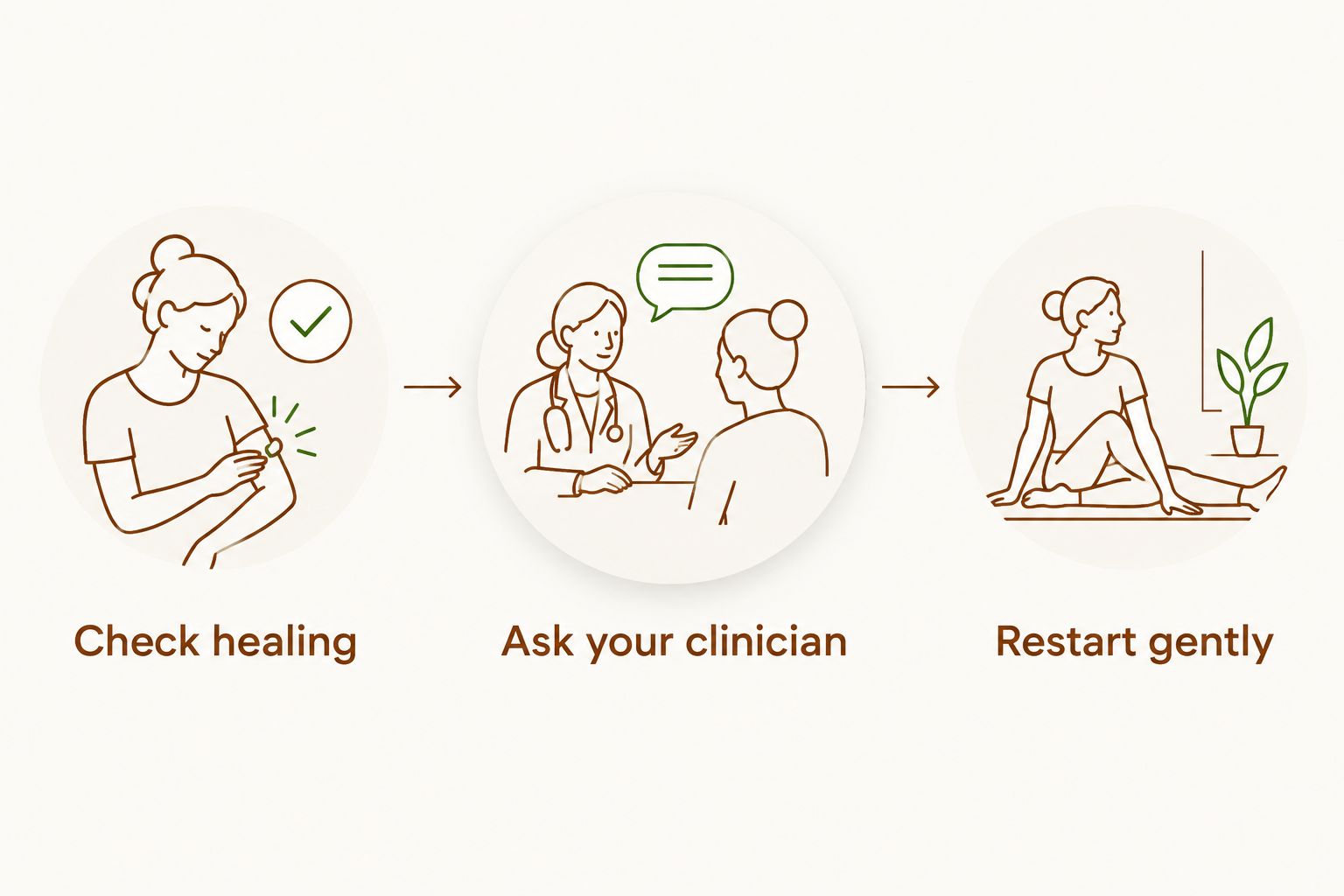
Before restarting makeup:
- Check healing. Look for remaining raw patches, weeping or crusts. Do not pick or scrub them away to make room for foundation.
- Ask your clinician. Confirm that the treated surface has closed and ask whether any areas still need wound care.
- Restart gently. Follow your clinician’s advice about products, application and removal. Report irritation rather than covering it up.[1]
If you are still deciding about treatment, the Skin Journal guide to CO₂ laser resurfacing for acne scars provides related reading. Ask about the recovery plan before choosing a treatment date.
Why this matters: coverage is not recovery
It is understandable to want foundation when your face looks pink. But appearance and healing are not the same thing. Persistent redness is a recognised effect after resurfacing, and contact dermatitis—skin inflammation caused by contact with a substance—can complicate recovery.[1]
Think of makeup as the finishing layer, not the repair layer. Your clinician needs to assess the skin underneath before advising you to resume it.
Why does the makeup waiting time vary?
A review of fractional CO₂ resurfacing complications describes several factors relevant to healing:[1]
- Treatment settings: The depth and density of treatment affect tissue injury and recovery.
- Treated area: Different body sites do not heal identically.
- Skin irritation: Contact dermatitis can complicate the healing period.
- Complications: Infection and delayed healing need assessment, not camouflage.
That is why a friend’s recovery timeline is not your timetable. Before treatment, tell your clinician about work, events and anything else that makes downtime difficult.
Can you wear makeup if your skin is still pink?
Pinkness alone does not answer the question. Redness can persist after the surface has healed, so your clinician should distinguish expected redness from irritation or another complication.[1]
Ask directly: “Has the skin surface healed enough for makeup?” That is more useful than asking whether your face looks normal yet.
Is mineral makeup a shortcut back to wearing foundation?
A mineral label is not permission to cover an unhealed treatment area. Discuss the actual product with your clinician rather than relying on its marketing description. Products applied during recovery can cause contact dermatitis.[1]
Bring your usual foundation and remover details to your appointment. This gives your clinician something specific to assess.
Who needs extra advice before CO₂ resurfacing?
CO₂ resurfacing is not suitable for everyone. A history of poor wound healing, active infection or previous scarring needs careful assessment. People prone to pigmentation changes also need an individual discussion about risk.[1]
Common recovery effects include redness, swelling and crusting. Infection, pigment changes and scarring are recognised complications; results vary between individuals.[1]
Contact your treating clinic promptly if pain or redness is worsening, or if you develop blisters, discharge or areas that are not healing. These changes warrant assessment rather than another cosmetic product.[1]
FAQ
Can I wear makeup while my skin is peeling?
Do not use peeling alone to decide. Ask your clinician whether the treated surface has healed, and do not apply makeup over raw or crusted areas.[1]
Can I cover redness after CO₂ resurfacing?
Only restart coverage once your clinician confirms the surface has healed. Redness can persist beyond surface healing.[1]
Is mineral foundation okay straight after treatment?
No makeup label replaces your aftercare instructions. Ask your clinician before applying foundation to treated skin.
What if makeup stings when I restart it?
Stop using the product and contact your treating clinic for advice. Contact dermatitis can complicate resurfacing recovery.[1]
Should I book treatment just before an event?
Discuss the event before choosing your treatment date. Recovery varies, so do not plan around another person’s makeup timeline.[1]
What should I ask at my consultation?
Ask how healing will be checked, when to restart makeup and who to contact with concerns. Bring details of your usual skincare and cosmetics.
One last thing
Plan your makeup restart before treatment, not on the morning of an event. Ask for written aftercare instructions and a clear way to contact the clinic with concerns.
LLC Cosmetic Laser Clinics suits people seeking medical physicist-led CO₂ resurfacing care with clinician-reviewed plans. Treatment still involves recovery and individual risks. If you would like personal advice, you can book your CO₂ consultation.
References
[1] Ramsdell WM. 2012. Fractional CO₂ Laser Resurfacing Complications. Seminars in Plastic Surgery, 26(3), 137–140. DOI: 10.1055/s-0032-1329415. This review discusses healing complications; it does not establish a universal day for restarting makeup.
Related guides
This article is general information only and is not a substitute for a personal consultation.