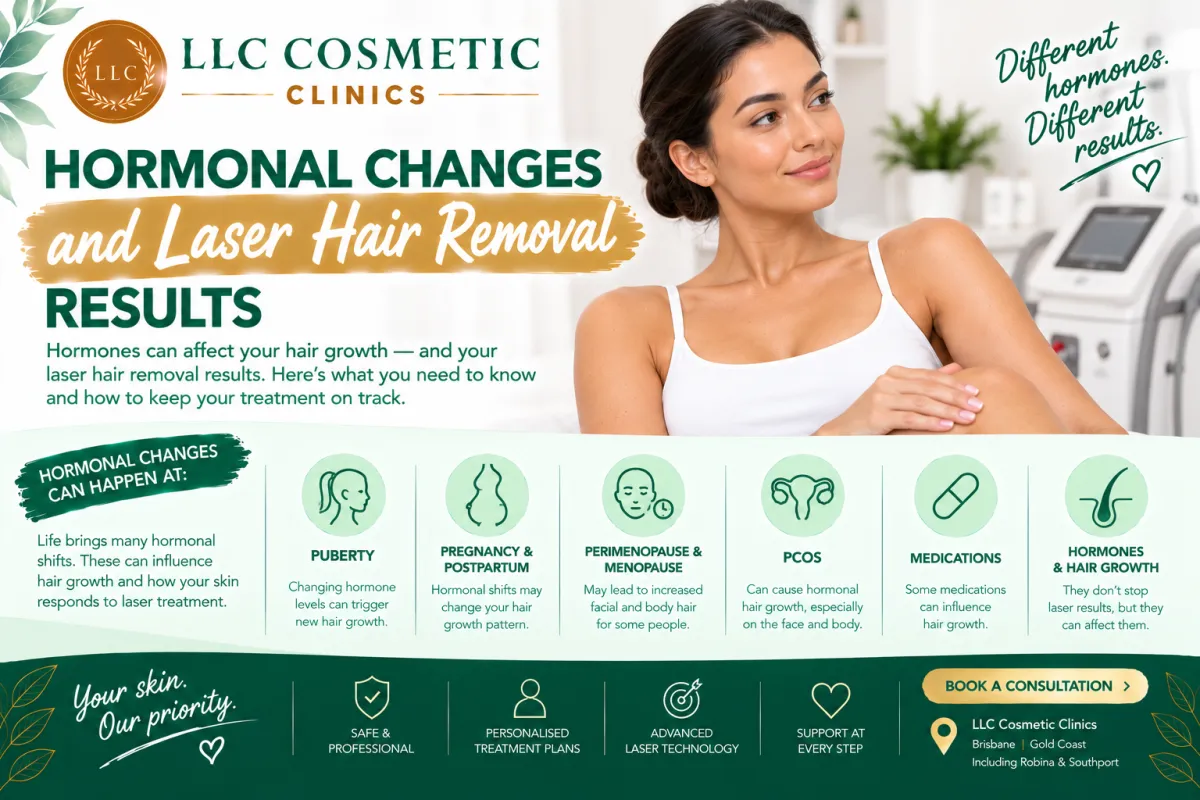
Hormonal Changes and Laser Hair Removal Results
You’ve been consistent with your laser hair removal appointments. Your hair is growing back finer, shaving is becoming less frequent, and your skin is looking smoother.
Then suddenly, you notice new hair growth.
Maybe you're seeing more hair around your chin or jawline. Perhaps your underarms or bikini area seem to be growing hair again. Or you’ve completed several treatments and are wondering why you're still getting regrowth.
Before assuming that your laser treatment has stopped working, there is another factor worth considering: hormonal changes.
Hormones can influence hair growth, which means changes in your hormonal environment may affect how your body responds to laser hair removal.
This doesn't necessarily mean laser hair removal isn't working. In many cases, it means your treatment plan may need to be adjusted or supplemented with maintenance treatments.
Let's look at the connection between hormonal changes and laser hair removal results, what can cause new hair growth and when you should speak with your practitioner.
Can Hormones Affect Laser Hair Removal Results?
Yes.
Laser hair removal works by targeting pigment in the hair and damaging the follicle so it becomes less capable of producing hair.
However, laser treatment doesn't control the hormones that influence hair growth.
This distinction is particularly important for areas such as the face, chin and neck, where hormonal changes can stimulate new or thicker hair growth.
The American Academy of Dermatology notes that laser hair removal can provide long-lasting hair reduction, but hormonal influences can make facial hair in women more likely to regrow and require maintenance treatments.
So if you notice some new growth months or years after completing a treatment course, it doesn't automatically mean the original treatment failed.
Your hormones may have changed.
What Hormonal Changes Can Affect Hair Growth?
Hormonal changes can happen at many stages of life.
Some common situations include:
Puberty
Pregnancy and the postpartum period
Perimenopause
Menopause
Changes associated with the menstrual cycle
Polycystic ovary syndrome (PCOS)
Certain endocrine conditions
Some medications that influence hormones
These situations don't affect everyone in the same way.
Some people may notice very little difference in their hair growth, while others may experience noticeably darker, thicker or more persistent hair.
This is why laser hair removal results can vary significantly from one person to another.
PCOS and Laser Hair Removal
Polycystic ovary syndrome, commonly called PCOS, is one hormonal condition that can be associated with unwanted facial or body hair.
If you have PCOS, you can still have laser hair removal.
However, hormonal hair growth can be more persistent, meaning you may require more sessions or periodic maintenance treatments compared with someone whose hair growth is less hormonally influenced.
LLC Cosmetic specifically notes that clients managing PCOS or other hormonal conditions can undergo laser hair removal, while also explaining that hormonal hair may require additional sessions or maintenance.
This is an important expectation to have before starting treatment.
Laser hair removal can reduce unwanted hair, but it doesn't treat the underlying hormonal condition.
If your hormones continue stimulating new hair growth, new follicles may become active even after you have successfully treated existing hair.
Why Does Hormonal Hair Often Affect the Face?
The face is one of the areas where hormonal changes can be particularly noticeable.
You might start noticing:
New chin hairs
Darker upper-lip hair
Jawline hair
Sideburn growth
Neck hair
Coarser facial hair
This can happen because androgen-sensitive hair follicles may respond to hormonal changes.
The AAD specifically points out that laser hair removal is not considered permanently effective on a woman's face in the same way it can be on many other body areas because hormones can stimulate additional facial hair growth.
That's why someone can complete a successful facial laser course and still need occasional maintenance treatments later.
Does This Mean My Laser Hair Removal Has Stopped Working?
Not necessarily.
This is one of the most important things to understand.
Imagine you treated 100 existing hair follicles.
Laser treatment may successfully reduce the ability of many of those follicles to produce hair.
But if hormonal changes later stimulate other follicles that weren't producing noticeable hair before, you may suddenly see new growth.
From your perspective, it can look like:
“My laser stopped working.”
But what's actually happening may be:
“My hair growth pattern has changed.”
Those are two very different situations.
The AAD explains that results vary depending on factors including hair colour and thickness, the treatment area, the laser used and skin colour, and that maintenance treatments may be needed when hair regrows.
Hormonal Changes During Different Life Stages
Puberty
Puberty brings significant hormonal changes.
As androgen levels change, new hair may appear in areas where it wasn't previously noticeable.
If laser hair removal is performed during or around this stage, future hormonal changes may still influence hair growth.
Pregnancy
Pregnancy causes major hormonal changes throughout the body.
If you're pregnant or planning pregnancy, it's important to discuss laser treatment with your healthcare provider and treating clinic before proceeding.
Don't assume that because you have had laser treatments previously, it is automatically appropriate to continue during pregnancy.
Your practitioner can advise you based on your individual circumstances.
After Pregnancy
Hormonal changes don't necessarily stop immediately after giving birth.
Your body can continue adjusting during the postpartum period, and hair growth patterns may change.
If you notice new facial or body hair after pregnancy, it doesn't necessarily mean your previous laser treatments were unsuccessful.
Your practitioner can assess the new growth and determine whether maintenance treatment may be appropriate.
Perimenopause and Menopause
Hormonal changes during perimenopause and menopause can also alter hair growth.
Some women notice changes such as:
More chin hairs
Coarser facial hair
Increased upper-lip hair
Changes in body hair
Hair becoming more noticeable in previously treated areas
If this happens, your practitioner can reassess the area rather than simply repeating your old treatment schedule.
Can Hormonal Medication Affect Laser Hair Removal?
Hormonal medications can influence hair growth patterns in some people.
If you have started, stopped or changed medication and subsequently notice changes in hair growth, tell your practitioner.
This doesn't mean you should stop medication because of laser hair removal.
Instead, make sure your treating clinician knows about relevant medications and health changes so they can properly assess your treatment plan.
Your medication history is part of the bigger picture when trying to understand why your hair growth has changed.
How Many Laser Sessions Will You Need?
There isn't one number that works for everyone.
Laser hair removal requires multiple treatments because hair follicles are in different stages of the growth cycle.
The AAD notes that many patients require multiple treatments, commonly around 2–6 sessions, with maintenance treatments potentially needed when hair regrows.
At LLC Cosmetic, the clinic commonly recommends around 6–8 treatments, depending on the individual, with hormonal hair potentially requiring additional sessions or maintenance.
The important point is that your treatment plan should be based on your hair growth rather than simply following a fixed number of appointments.
What If My Hair Comes Back After Laser?
Some regrowth doesn't necessarily mean you need to start from the beginning.
Your practitioner may look at:
How much hair has returned
Whether the hair is finer or thicker
Which areas are affected
Whether the new growth is hormonal
How long it has been since your last treatment
Your skin tone
Your current hair colour
Your previous response to treatment
You may only need a maintenance session rather than another complete treatment course.
This is one reason follow-up assessments can be useful.
What Can You Do to Maintain Your Results?
If hormonal changes are affecting your hair growth, you can't necessarily prevent every new hair from appearing.
But you can help make your laser treatment more effective by staying consistent with your treatment plan.
Keep Your Appointments Consistent
Don't expect one laser session to permanently eliminate every hair follicle.
Hair grows in cycles, which is why treatments are spaced apart.
Your clinic can recommend the appropriate interval based on your hair growth and treatment area.
Avoid Waxing and Plucking Between Sessions
Waxing and plucking remove the hair from the root.
Laser hair removal needs the follicle and hair target present for treatment.
Shaving is generally the preferred method between sessions when hair removal is needed.
LLC Cosmetic advises clients not to wax, thread or pluck for at least four weeks before treatment because these methods remove the hair root that the laser needs to target.
Protect Your Skin From the Sun
Sun exposure is important to consider throughout your laser hair removal journey.
Your practitioner needs to take your current skin condition and sun exposure into account when planning treatment.
The AAD recommends avoiding tanning and using broad-spectrum SPF 30+ sunscreen as part of laser hair removal preparation.
This is especially relevant in Queensland, where strong UV exposure can be part of everyday life.
Follow Your Clinic's Aftercare Instructions
Don't assume that the same aftercare applies to every person.
Your skin tone, treatment area, laser technology and individual response can all affect the advice you're given.
Follow the specific instructions provided by your treating clinician.
What If I Have Hormonal Hair Growth But Want Laser?
You don't necessarily need to rule laser hair removal out.
In fact, laser may still be a useful option for reducing unwanted hair even when hormones are contributing to the growth.
The key is having realistic expectations.
You may need:
More treatment sessions
A longer treatment plan
Periodic maintenance
Treatment of new areas as they develop
Medical assessment if hormonal symptoms are significant
Laser hair removal can address the hair follicle, but it does not correct an underlying hormonal disorder.
If you have suddenly developed substantial new facial or body hair, particularly alongside other hormonal symptoms, it's worth discussing this with your doctor.
When Should You Talk to Your Doctor?
New or rapidly increasing unwanted hair can sometimes be associated with an underlying hormonal or medical issue.
Consider speaking with your GP or appropriate healthcare professional if you notice significant changes such as:
Sudden increase in facial hair
Rapidly increasing coarse body hair
Significant changes in your menstrual cycle
New acne alongside increased facial hair
Other symptoms that make you concerned about a hormonal imbalance
A healthcare professional can determine whether further assessment is appropriate.
Laser hair removal can manage unwanted hair, but it isn't a diagnostic test or treatment for the underlying cause.
How to Tell If Your Laser Treatment Is Still Working
One of the easiest mistakes is judging your treatment based only on whether you see hair.
Instead, look at the bigger picture.
Ask yourself:
Is the hair finer?
Is there less of it?
Does it take longer to grow back?
Are you shaving less often?
Are some areas staying hair-free for longer?
Is the regrowth concentrated in areas affected by hormonal changes?
These details can give your practitioner a much better understanding of your progress.
Laser hair removal results are not always an all-or-nothing situation.
You may still see hair while experiencing a significant overall reduction.
Hormonal Changes Don't Mean Laser Hair Removal Was a Failure
If you notice new hair growth after laser treatment, don't immediately assume you've wasted your time or money.
Hormones can change the way your hair grows.
This is especially relevant for facial hair, PCOS-related hair growth and different stages of life such as pregnancy, postpartum changes, perimenopause and menopause.
Laser hair removal can provide long-term hair reduction, but some people will need maintenance treatments as their hair growth changes over time.
The goal should be realistic, personalised hair reduction rather than the promise that you'll never see another hair again.
The Bottom Line
Hormonal changes and laser hair removal results are closely connected for some people.
If your hormones stimulate new hair growth, you may notice regrowth even after completing a successful laser hair removal course.
That doesn't automatically mean your treatment didn't work.
You may simply need a revised treatment plan or occasional maintenance sessions.
If you have PCOS, are experiencing hormonal changes or have noticed unexpected new hair growth, tell your practitioner before continuing treatment. Understanding what's causing the change can help your clinic create a more realistic and personalised approach.
At LLC Cosmetic, laser hair removal is planned around individual factors including skin tone, hair characteristics and hormonal considerations. The clinic offers laser hair removal at Brisbane CBD, Sunnybank, Southport and Robina, with consultations available to discuss your goals and suitability.
If you're wondering whether hormonal changes are affecting your laser hair removal results, book a consultation with LLC Cosmetic to have your current hair growth and treatment plan assessed.
This article is for general educational purposes only and is not a diagnosis or substitute for personalised medical advice. Laser hair removal results vary between individuals. If you have concerns about hormonal changes or sudden changes in hair growth, speak with an appropriate healthcare professional.