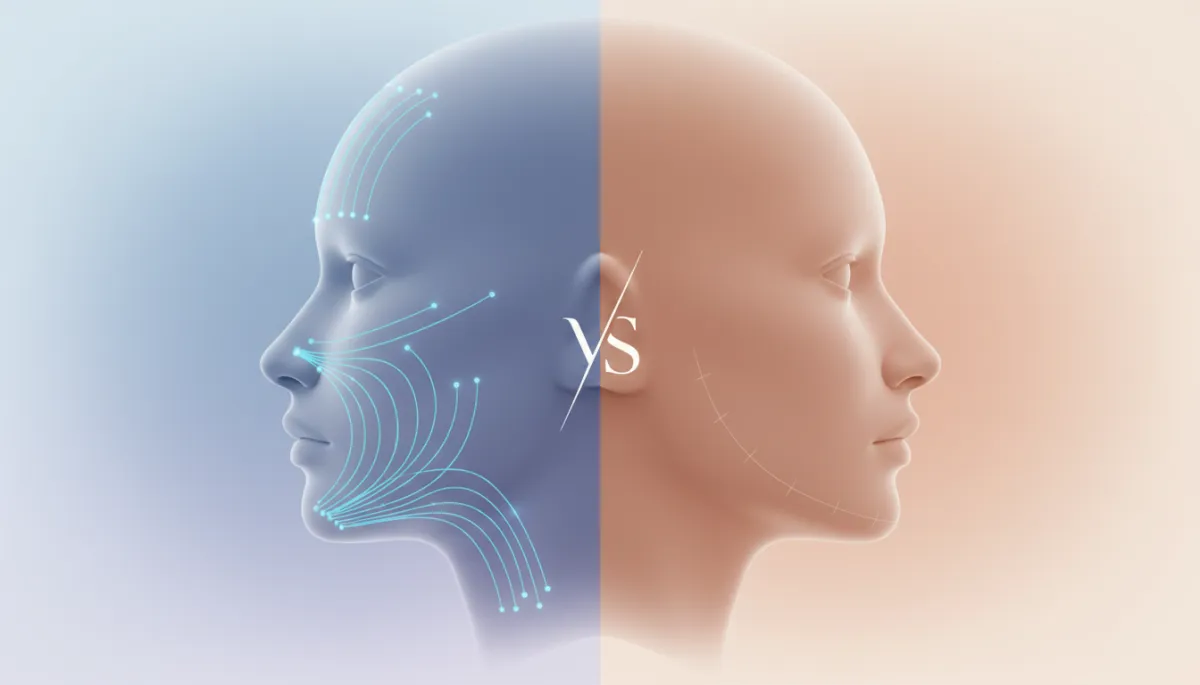
HIFU vs Facelift: Key Differences Explained
Skincare, Anti-Ageing, Cosmetic Procedures
HIFU vs Surgical Facelift: The Honest Difference for Real People
Thinking about tightening sagging skin but not sure whether to choose HIFU or a surgical facelift? You’re not alone. Both promise a younger, fresher look, but they’re very different experiences with very different results. This guide breaks down the honest differences in simple, consumer-friendly terms so you can make a choice that actually fits your life, your budget, and your expectations.
First Things First: What Exactly Is HIFU?
HIFU stands for High-Intensity Focused Ultrasound. In simple terms, it uses focused ultrasound energy (the same kind of sound waves used in pregnancy scans, but much more concentrated) to heat specific layers under your skin. That heat triggers your body to produce more collagen, which gradually tightens and lifts the skin over time.
Non-surgical, non-invasive: No cuts, no stitches, no general anaesthetic.
Minimal downtime: Most people go straight back to work or errands the same day.
Gradual results: Your skin slowly tightens over 2–6 months as collagen builds.
As of 2026, HIFU devices have become more precise and efficient, with some systems using AI-guided targeting to deliver energy more evenly and safely. Reviews and clinical data show it can be a solid option for mild to moderate sagging, especially if you’re not ready for surgery or simply don’t want it. If you’re considering a treatment, you can also explore more details about how it works in a clinical setting on this dedicated HIFU treatment page.
What Is a Surgical Facelift, Really?
A surgical facelift (also called a rhytidectomy) is a fully invasive operation. A plastic surgeon makes discreet incisions around the ears and sometimes under the chin, lifts and tightens the deeper facial tissues, removes or repositions fat, and trims excess skin before closing everything with sutures. The goal is to restore a firmer, smoother facial contour—not just tighten the surface.
Invasive surgery: Requires anaesthesia, incisions, and a proper recovery period.
More dramatic results: Can address deeper sagging, jowls, and heavy neck laxity that non-surgical treatments simply can’t fix to the same degree.
Longer-lasting: Results often last 5–10 years, depending on your skin, lifestyle, and surgical technique.
Facelift techniques are also evolving. By 2026, there is a strong trend towards more natural-looking results, using personalised 3D imaging to plan surgery and combining facelifts with fat grafting, lasers, or regenerative treatments for smoother texture and better healing. The days of the “wind-tunnel” look are largely behind us when you choose a skilled, board-certified surgeon.
The Honest Difference: How They Compare in Real Life
1. Invasiveness and Downtime
If you hate the idea of surgery, this is where HIFU shines. It’s done in a clinic, usually in under two hours, and you walk out with maybe some temporary redness or mild swelling. You can usually wear makeup the next day and carry on with your life. According to health sources like Healthline and RealSelf, most people describe HIFU downtime as “socially acceptable” within 24 hours—meaning you’re not hiding at home for weeks.
A surgical facelift, on the other hand, is a major procedure. Expect bruising, swelling, and tightness for at least 2–3 weeks, with final results taking a few months to fully settle. You’ll need time off work, help at home in the first days, and you’ll have to follow strict aftercare instructions. For some people, that level of disruption is a deal-breaker; for others, it’s a worthwhile trade for stronger, longer-lasting results.
2. Results: Subtle Lift vs. Major Makeover
This is where honesty really matters. HIFU will not give you facelift-level results. It can:
Soften early jowls and mild sagging along the jawline
Gently lift the brows or mid-face
Improve skin firmness and texture over time
The change is often described as looking like a fresher, better-rested version of yourself—not a totally reshaped face. Clinical reviews suggest results typically last around 1–2 years, especially with occasional maintenance sessions as recommended by your practitioner.
A surgical facelift can:
Sharply redefine the jawline and neck
Remove deeper folds and heavier sagging in the lower face
Turn back the clock by 7–10 years in many patients, with effects lasting 5–10 years
The trade-off is clear: HIFU offers subtle, low-commitment improvement; a facelift offers more dramatic, structural change at the cost of surgery and recovery.
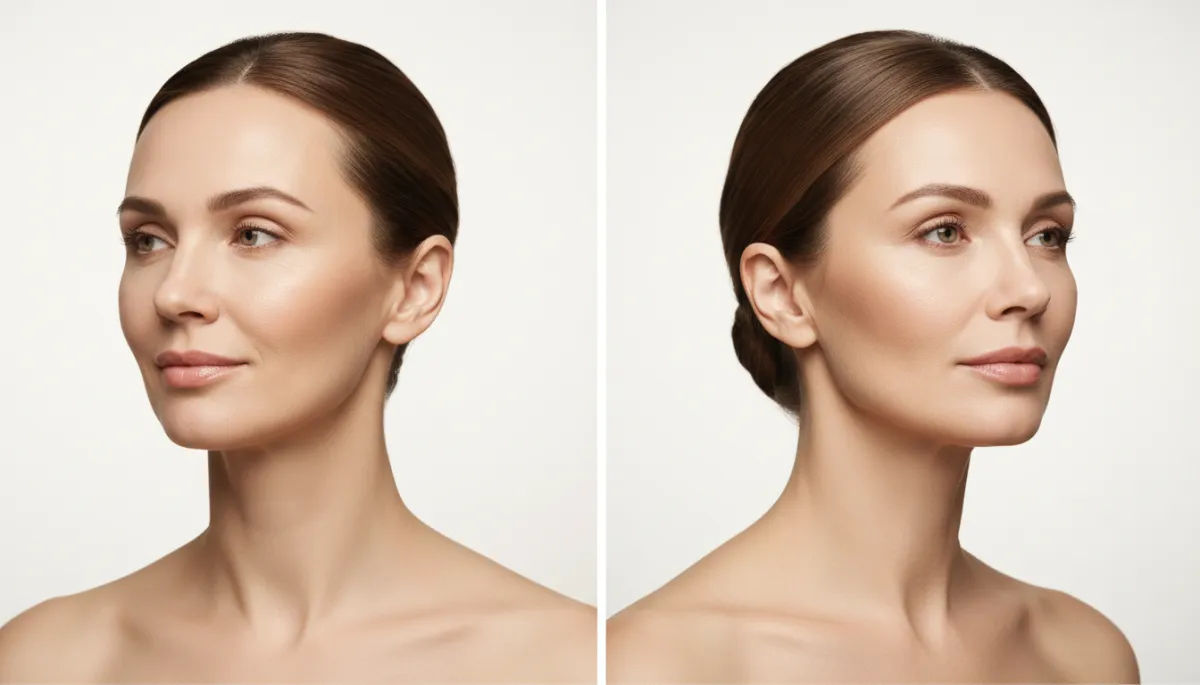
HIFU refines mild sagging, while a facelift can reshape more advanced ageing.
3. Risks and Side Effects: How Safe Are They?
No cosmetic procedure is completely risk-free, but the type and level of risk are very different between HIFU and surgery.
HIFU risks: Usually limited to temporary redness, swelling, tenderness, or tingling. Rarely, there can be minor bruising or temporary nerve irritation. Choosing an experienced practitioner and a medical-grade device is crucial, especially as home-use devices start to appear on the market.
Facelift risks: Because it’s surgery, risks include infection, bleeding, scarring, prolonged swelling, nerve injury, and complications from anaesthesia. These are uncommon with a qualified plastic surgeon, but they are real and must be taken seriously.
💡 Honest tip: If you have major health issues, smoke, or cannot safely undergo anaesthesia, non-surgical options like HIFU may be the safer path—though you’ll need realistic expectations about what they can achieve.
4. Cost and Maintenance: One Big Spend vs. Ongoing Upkeep
Prices vary widely by country and clinic, but in general:
HIFU is cheaper per session than a facelift, but you may need repeat treatments every 12–24 months to maintain results. Think of it like regular high-end skincare or hair colouring: smaller, repeated investments over time.
A facelift is a larger one-time cost, but it can last many years without needing the same level of ongoing intervention, aside from normal skin care and possibly smaller touch-up treatments.
When you add up years of non-surgical treatments, some people eventually realise they’ve spent close to what a surgical facelift would have cost—without ever achieving the same level of lifting. That doesn’t mean HIFU is a bad choice; it just means you should be clear about your long-term plan and budget.
5. Who Is Each Option Best For?
HIFU: Ideal Candidates
Late 30s to 50s with mild to moderate sagging, not severe jowls or heavy neck bands yet
People who want a subtle refresh, not a dramatic transformation
Those who can’t take much time off work or family duties
Individuals who are nervous about surgery, anaesthesia, or scars
Surgical Facelift: Ideal Candidates
Usually 50s–70s, or younger if ageing is more advanced, with moderate to severe sagging, jowls, and neck laxity
People who want a noticeable, long-lasting improvement and are prepared for downtime
Those in generally good health who can safely undergo anaesthesia and recovery
📌 Key takeaway: HIFU is best seen as a “pre-emptive” or maintenance treatment for earlier ageing, while a facelift is more of a reset button for advanced sagging.
Trends to Know in 2026: It’s Not Either/Or Anymore
One of the biggest shifts in 2026 is that aesthetic medicine is moving away from “one big procedure fixes everything” and towards custom combinations. Many people now:
Use HIFU and other non-surgical treatments in their 40s and early 50s to delay the need for surgery.
Opt for a facelift later on, then maintain the results with gentle treatments like HIFU, lasers, or injectables rather than repeated major surgeries.
At the same time, there’s a rising emphasis on natural-looking outcomes. Surgeons and aesthetic doctors increasingly use 3D imaging and augmented reality to show you likely results before you commit, helping align expectations with reality. This benefits both HIFU and facelift patients, because you can see the level of change each option is likely to deliver.
How to Decide: A Simple, Honest Checklist
Look in the mirror with good lighting. If your main concern is early sagging and loss of firmness, HIFU may be enough. If you’re seeing deep jowls and heavy neck sagging, a facelift is more likely to match your goals.
Be honest about downtime. Can you realistically take 2–3 weeks off from being fully “public-facing”? If not, HIFU or staged non-surgical treatments might be more practical for now.
Consider your risk comfort level. Are you okay with the risks of anaesthesia and surgery for a bigger reward, or do you prefer lower-risk, lower-impact options even if results are milder?
Think long-term financially. Would you rather invest in one major procedure or smaller, repeat treatments? There’s no right answer; there’s only what fits your life and priorities.
💬 Final honest advice: Book consultations with both a reputable aesthetic doctor (for HIFU) and a board-certified plastic surgeon (for facelift). Ask each what they wouldn’t recommend for you and why. The way they answer is often as revealing as the treatment itself.
The Bottom Line: HIFU vs Surgical Facelift in Plain Language
HIFU and surgical facelifts are not rivals so much as they are tools for different stages and expectations of ageing. HIFU is your low-commitment, low-downtime option for gentle lifting and prevention. A surgical facelift is your high-commitment, high-impact choice when you’re ready to tackle more advanced sagging and want results that last years, not months.
The honest difference comes down to this: if you expect a non-surgical treatment like HIFU to do what only surgery can do, you’ll be disappointed. But if you use each option for what it’s truly designed for—and work with qualified professionals who are transparent about limitations—you can create a treatment plan that respects both your face and your lifestyle.
Your face, your timeline, your tolerance for risk and downtime: those are the factors that matter most. Use them as your guide, not trends or pressure, and you’re far more likely to end up with results you genuinely feel good about.