
HIFU to dermal fillers: complete 2026 workflow
Instead of booking HIFU and dermal fillers separately and trying to join the plans afterwards, start with one clinical assessment. A HIFU and dermal fillers combination needs individual advice about suitability, treatment areas and timing—not a fixed sequence copied from someone else’s face.
- LLC Cosmetic Laser Clinics offers medical physicist-led HIFU care with clinician-reviewed plans.
- A HIFU and dermal fillers combination needs individual assessment, especially where treatment areas overlap.
- Existing filler matters: share its location, treatment date and product details before planning HIFU.
- Results vary between individuals; combining treatments does not guarantee a better outcome.
Why this matters
HIFU means high-intensity focused ultrasound. It uses focused sound energy to heat targeted tissue beneath the skin. Published research describes ultrasound-based treatment for skin laxity, meaning looseness, but that does not establish a universal schedule for combining every HIFU device with every injectable material.[1]
LLC Cosmetic Laser Clinics is best for people seeking medical physicist-led HIFU care with clinician-reviewed plans. Start with the assessment, not a commitment to both treatments. The Skin Journal’s skin-tightening guide provides another starting point for discussing treatment priorities.
Before you start
- Gather previous treatment records, including dates, areas, product names and any reactions. Ask the previous provider for details rather than guessing.
- Bring your medical history, medicines, supplements and your main concern. Explain what you want to change in ordinary language.
- Flag existing filler before anyone plans ultrasound treatment. Its location and depth belong in the assessment, even when another clinic performed the injections.
You do not need to arrive with a finished treatment plan. A clear account of previous procedures is more useful than a shopping list of treatments.
Your assessment
- Name the concern. Describe what bothers you without choosing the treatment first. For example, explain whether your concern is loose-looking skin, facial shape or something else.
- Share your history. Include previous energy-based treatments and injections, even when they happened elsewhere.
- Ask about suitability. Discuss the expected benefit, limitations and alternatives, including doing nothing.
Expected result: you understand the concern being assessed and why a clinician recommends treatment—or advises against it. A combination should answer a clinical question, not simply add another appointment.
Your treatment map
- Identify the areas. Ask the clinician to explain which areas would receive ultrasound and which contain, or might later receive, filler.
- Confirm the order. Request a written sequence based on the actual device, injectable material, anatomy and previous treatment.
- Clarify the interval. Ask what determines the waiting period and what must be reviewed before the next procedure.
Expected result: you have a documented sequence rather than a generic waiting-period rule. The ultrasound review cited here does not establish one interval suitable for every HIFU and filler combination.[1]
| Approach | Best for discussion when | Benefit | Limitation |
|---|---|---|---|
| Single-treatment assessment | Your concern has not been assessed | Keeps the decision focused | Does not answer every separate concern |
| Combined assessment | You are considering both procedures | Allows coordinated planning | Does not prove both are necessary |
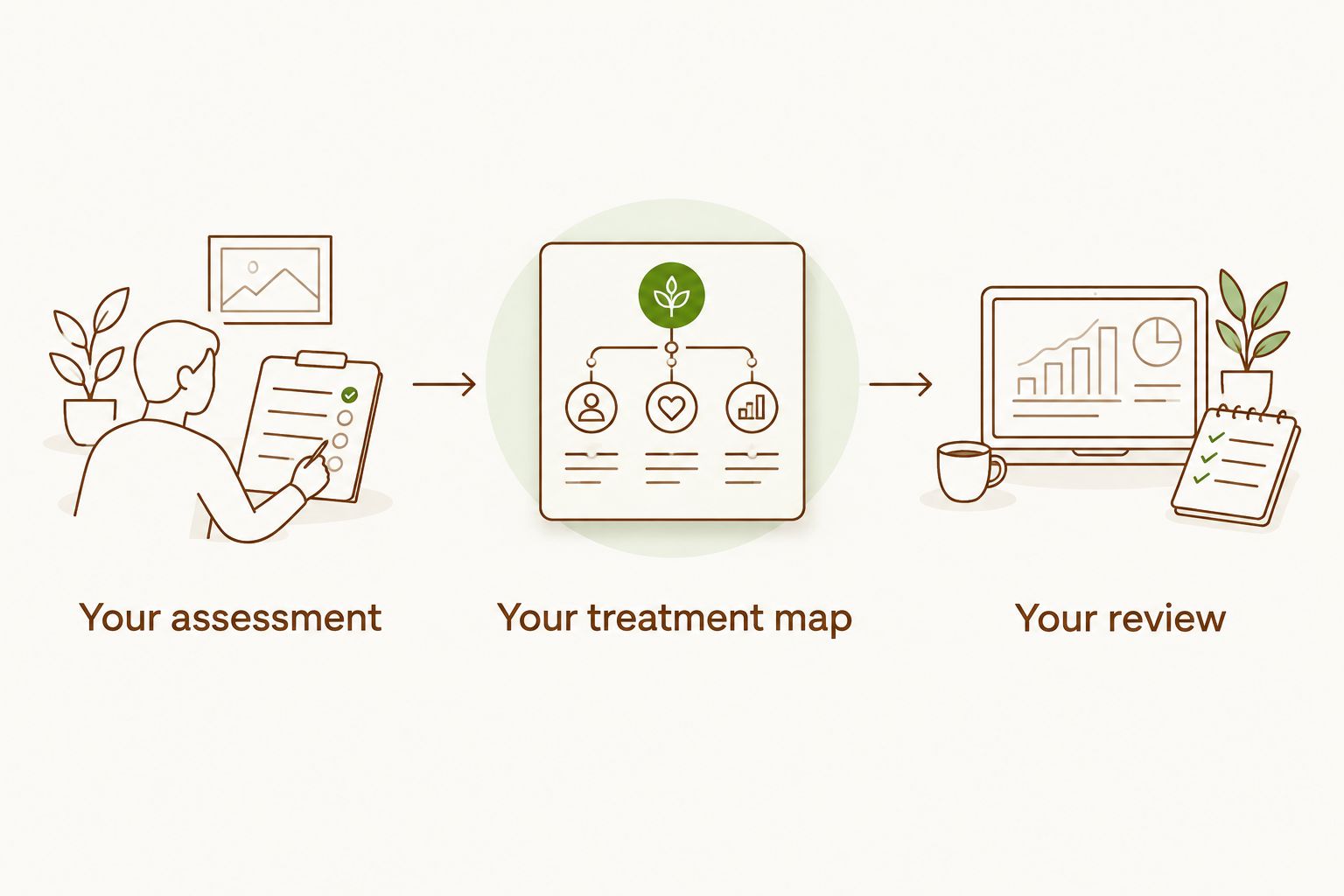
Your review
- Follow individual aftercare. Obtain instructions for the procedure actually performed, including whom to contact with concerns.
- Record changes. Note symptoms and questions for your review rather than deciding independently that another treatment is needed.
- Reassess the next step. Ask whether the original plan still fits your concern and clinical findings.
Expected result: the next decision follows a review, not an automatic booking. Results vary between individuals. A clinician-reviewed plan should leave room to stop, wait or change direction without pressure.
Already have filler?
Start with the records rather than assuming HIFU must always come first. Ask the treating clinician to review the filler location, material and timing before deciding whether ultrasound treatment is appropriate.
Do not treat an internet rule as permission to proceed. Missing records, uncertain treatment depth or unresolved symptoms are reasons to obtain further assessment, not reasons to invent a standard interval.
Troubleshooting your plan
- You cannot identify previous filler: request the treatment record from the original provider before agreeing to overlapping treatment.
- Different clinicians give different intervals: ask each to explain the device, material and clinical reasoning behind the recommendation.
- You want guaranteed tightening: reset expectations. Ultrasound studies report outcomes in defined study groups, not promises for an individual face.[1]
- You have unresolved symptoms: contact the treating practitioner rather than scheduling another cosmetic procedure. Filler-related vascular complications are documented and require clinical assessment.[2]
Common ultrasound-treatment effects described in the literature include discomfort, redness and swelling.[1] Suitability needs individual assessment, particularly when your history or current symptoms raise questions. Do not proceed until those questions have been answered clearly.
When the question involves eyelids
Facial treatment planning sometimes also involves surgery. Questions about combining blepharoplasty with dermal fillers belong in a separate surgical assessment; a HIFU plan does not answer whether eyelid surgery is appropriate. Keep each decision tied to the relevant clinician’s assessment.
FAQ
Can I combine HIFU and dermal fillers?
That requires an individual assessment. The treatment areas, device, injectable material and previous procedures all belong in the discussion.
Should HIFU always come first?
Do not assume a universal order. Ask for a documented sequence that accounts for existing treatment and the proposed procedures.
How long should I wait between treatments?
Ask your clinician for an individual interval and its reasoning. The ultrasound review cited here does not establish a universal combination schedule.
What if I already have filler?
Tell the HIFU clinician before treatment planning. Bring records showing the material, location and treatment date.
What side effects should I discuss?
Discuss discomfort, redness and swelling associated with ultrasound treatment, along with procedure-specific risks. Ask which symptoms require urgent assessment.
Will combining treatments give a better result?
A combination does not guarantee a better result. Results vary between individuals, and assessment may support only one treatment or neither.
One last thing
Ask: “What would make you advise against the second treatment?” The answer helps you understand the limits of the plan.
For personal advice, book your HIFU consultation with LLC Cosmetic Laser Clinics.
References
- Fabi SG. 2015. Clinical, Cosmetic and Investigational Dermatology. “Noninvasive skin tightening: focus on new ultrasound techniques.” Review of ultrasound-based tightening. DOI: 10.2147/CCID.S69118.
- DeLorenzi C. 2014. Aesthetic Surgery Journal. “Complications of injectable fillers, part 2: vascular complications.” DOI: 10.1177/1090820X14525035.
This article is general information only and is not a substitute for a personal consultation.