
HIFU Treatment: Realistic Results for Jawline & Neck
Skin Tightening, Non-Surgical Facelift, HIFU Treatment
HIFU for Jawline, Neck & Décolletage: What Results Are Realistic?
High-Intensity Focused Ultrasound (HIFU) promises a firmer jawline, a smoother neck and a more youthful décolletage without surgery. But what can you genuinely expect from this treatment, and where do marketing claims go a little too far?
What Is HIFU and How Does It Work?
HIFU is a non-surgical skin-tightening treatment that uses focused ultrasound energy to heat targeted layers of the skin. Unlike many surface-level treatments, HIFU can reach deeper structures, including the same layer surgeons manipulate during a facelift (often called the SMAS layer). By gently heating these tissues, HIFU triggers a controlled injury that stimulates your body to produce more collagen and elastin over time.
The result is a gradual tightening and lifting effect that develops over weeks to months. There are no incisions, no needles and typically minimal downtime, which is why HIFU has become popular among people who want visible improvement but are not ready for surgery or injectables.
💡 Key Point: HIFU encourages your skin to rebuild itself; it does not change your facial structure or replace a surgical facelift.
HIFU for the Jawline: Sharpening, Not Resculpting
The jawline is one of the most requested areas for HIFU because it is where early sagging and jowls often appear. By tightening the skin and deeper tissues along the lower face, HIFU can help create a cleaner, more defined jawline and soften the look of mild jowls.
What you can realistically expect for the jawline
Subtle to moderate tightening along the lower cheeks and jaw, particularly in people with mild laxity.
A gentler contour where the cheek meets the jaw, making the face appear slightly slimmer or more lifted in profile.
Improvement that becomes more noticeable between 8–12 weeks after treatment as collagen matures.
HIFU can be especially effective for people in their late 30s to early 50s with early signs of sagging. It is less likely to create dramatic change in more advanced jowling, where excess skin and heavier tissue are present.
📌 Reality Check: HIFU can sharpen a jawline; it will not give you the bone structure of someone else or fully replace a lower facelift.
HIFU for the Neck: Smoother, Firmer, but Not a Neck Lift
The neck often reveals age even faster than the face. Fine lines, crepey texture and a “turkey neck” appearance are common concerns. HIFU can target both the superficial skin and deeper layers to support a firmer, smoother neck, especially when laxity is mild to moderate rather than severe.
Realistic neck improvements with HIFU
Softening of horizontal neck lines (sometimes called “tech lines”) as collagen production improves skin density.
A milder appearance of loose or crepey skin, especially under the chin and along the sides of the neck.
Some improvement in the angle between chin and neck, which can make the profile look more youthful when sagging is not advanced.
However, HIFU has limitations. It cannot remove significant excess skin or large fat deposits under the chin. Prominent vertical neck bands (caused by the platysma muscle) may improve slightly but often respond better to other treatments such as muscle-relaxing injections or surgery. Think of HIFU as a way to tighten what you have, not to remove or reposition large amounts of tissue.
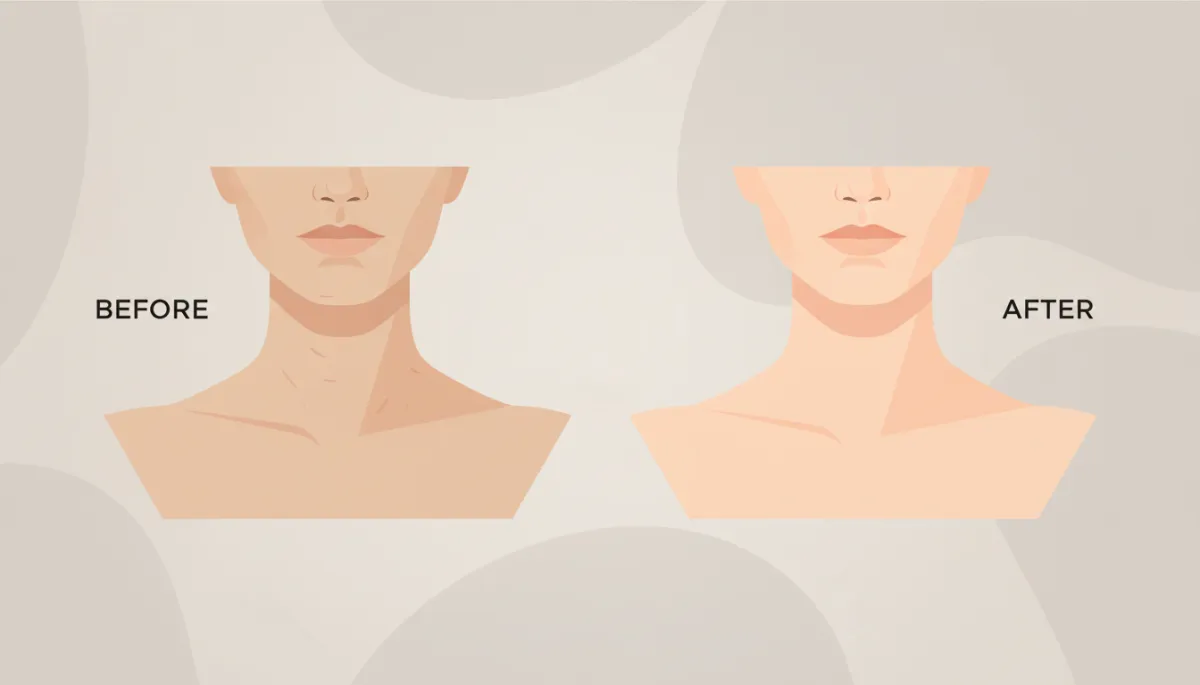
HIFU works best on mild to moderate laxity, gradually refining contours over months.
HIFU for the Décolletage: Smoothing Fine Lines and Crepey Skin
The décolletage (the upper chest and cleavage area) is highly exposed to sun and movement, which can lead to fine lines, wrinkles and a crinkled texture. Many people feel their chest gives away their age even when their face looks refreshed. HIFU can be used across the chest to improve skin thickness and elasticity, making this area appear smoother and more even.
What HIFU can realistically do for the décolletage
Softening of fine lines that appear from side-sleeping or sun exposure, especially in early stages.
A more uniform texture, with skin looking less crepey and slightly plumper over time.
Subtle improvement in overall tone and firmness, which can make low-cut tops feel more flattering.
Deep, long-standing chest wrinkles or heavily sun-damaged skin may need a combination approach, such as medical-grade skincare, microneedling, chemical peels or laser alongside HIFU. On its own, HIFU is best at refining and strengthening the area rather than erasing every line.
What Results Are Realistic Overall?
Degree of improvement you can expect
Most people experience a 10–30% visible improvement in skin tightness and contour after a well-performed HIFU treatment for the jawline, neck and décolletage. That might sound modest, but on the face and neck, even a 20% lift can translate into a fresher, more rested look that others notice without being able to pinpoint why.
Some people see an immediate mild tightening from initial tissue contraction, but the real change develops gradually over 2–6 months.
Results typically last 12–18 months, depending on age, lifestyle, skin quality and how quickly you naturally lose collagen.
Who is most likely to be happy with HIFU?
People with mild to moderate laxity, usually in their late 30s to early 50s, though biologic age matters more than numbers.
Those who are comfortable with gradual change and do not expect a “new face” overnight.
Individuals who prefer non-invasive options and are willing to maintain results with good skincare and occasional top-up treatments.
When HIFU may not meet your expectations
Advanced sagging with heavy jowls, very loose neck skin or large skin folds: surgery may offer more predictable, dramatic improvement.
If you expect “filter-like” perfection or to look 20 years younger, HIFU alone is unlikely to deliver that level of change.
Very thin, fragile skin may need gentler settings or alternative treatments to avoid overstimulation or discomfort.
⚠️ Important: The quality of the device and the skill of the practitioner have a huge impact on both safety and results. Always choose a reputable clinic with medical oversight.
Treatment Experience, Safety and Aftercare
What does HIFU feel like?
During treatment, you may feel brief tingling, heat or sharp zaps as the ultrasound energy is delivered. Most people describe it as uncomfortable but tolerable, especially with numbing cream or oral pain relief if recommended by the clinic. The jawline and bony areas can be more sensitive than the décolletage.
Side effects and downtime
Common, short-term effects include redness, mild swelling, tenderness or a “tight” feeling in the treated area, usually resolving within a few days.
Bruising is less common but can occur, particularly around the jawline or where the skin is thin.
Serious complications are rare when performed correctly, but can include nerve irritation or uneven results; this reinforces the need for an experienced practitioner.
Supporting and maintaining your results
Protect your skin with daily SPF, especially on the neck and décolletage, to prevent collagen breakdown from UV exposure.
Use collagen-supporting skincare (such as retinoids, peptides and antioxidants) if appropriate for your skin type and recommended by your practitioner.
Maintain a healthy lifestyle—smoking, excessive sun and poor sleep all accelerate collagen loss and can shorten the lifespan of your results.
Is HIFU Right for Your Jawline, Neck and Décolletage?
If you are noticing early sagging, softening of your jawline, fine neck lines or a crepey chest and you prefer a non-surgical, minimal-downtime option, HIFU can be a valuable tool. The key is to approach it with clear, grounded expectations: expect refinement and gentle lifting, not a complete transformation.
A thorough consultation with a qualified practitioner is essential. They should assess your skin quality, degree of laxity, medical history and lifestyle, then explain how much improvement is realistic for your jawline, neck and décolletage. In some cases, they may recommend combining HIFU with other treatments—or suggest that surgery would be more appropriate for your goals.
Used thoughtfully, HIFU can help you look like a fresher, more supported version of yourself, while still looking entirely natural. Understanding what it can and cannot do is the first step to feeling confident in your choice and satisfied with your results.