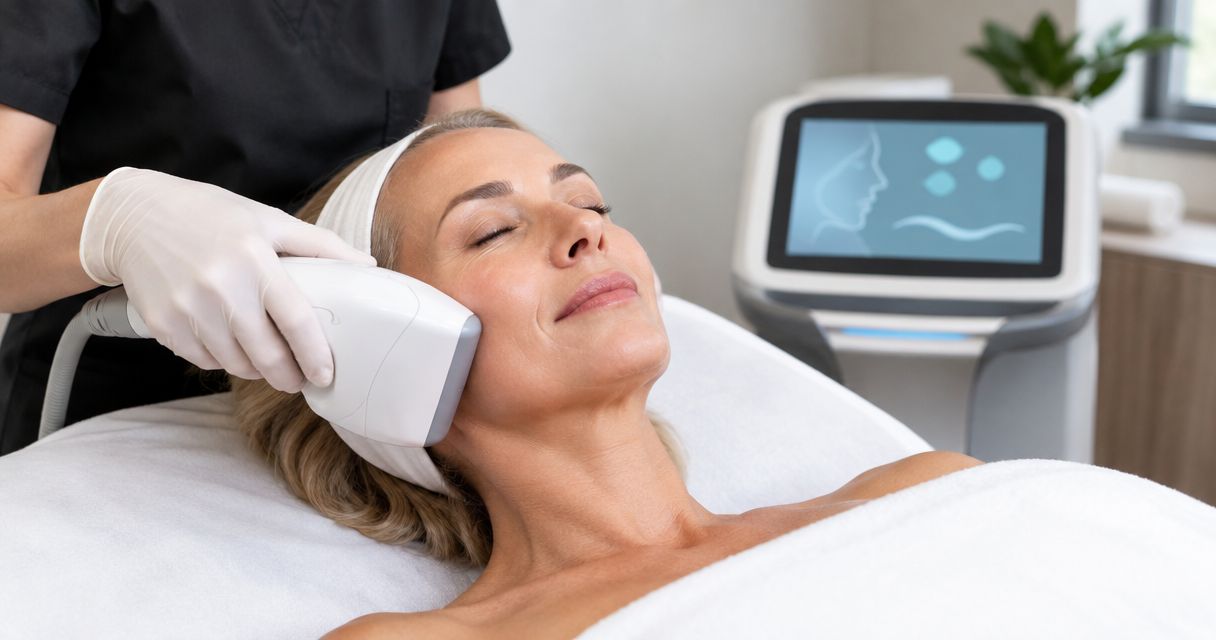
HIFU for menopausal skin: complete 2026 guide
HIFU for menopausal skin is focused ultrasound treatment aimed at improving skin laxity, or looseness—not treating menopause itself. In 2026, the useful question is whether your main concern is loose skin: research on facial tightening does not establish a menopause-specific benefit.[1,2]
- HIFU for menopausal skin targets looseness; menopause-specific evidence is limited.
- LLC Cosmetic Laser Clinics offers medical physicist-led care and clinician-reviewed plans.
- Dryness and looseness need different assessments; one treatment does not answer every concern.
- Results vary between individuals; ask about discomfort, limitations and recovery before deciding.
Why HIFU matters for menopausal skin
Menopause-related hormonal changes affect skin structure and function.[1] But noticing a change does not mean you need a procedure. Start by separating what bothers you: dryness, texture and looseness are different concerns.
A prospective facial ultrasound study reported improvement in skin laxity, but it was not a menopause-specific trial.[2] Evidence for facial tightening is not proof that HIFU reverses menopausal skin changes.
For a broader starting point, the Skin Journal guide to skin tightening and downtime covers treatment choices to discuss at consultation.
How to decide whether HIFU fits
Start with your main concern
Before comparing clinics, write down the change you actually want help with. A simple note is more useful than asking for an all-purpose “refresh”.
- Name the area that bothers you.
- Separate dryness from looseness.
- Describe the improvement you would consider worthwhile.
Ask what the evidence covers
HIFU means high-intensity focused ultrasound. Published facial-tightening research includes microfocused ultrasound, which concentrates energy beneath the skin.[2] Different terminology does not make every device or treatment plan interchangeable.
For a 2026 consultation, ask how the proposed treatment relates to published evidence—not just whether it uses ultrasound.
- Ask for the device name.
- Ask which concern the treatment targets.
- Ask whether the evidence includes menopausal participants.
Request a personal suitability assessment
LLC Cosmetic Laser Clinics is best for people seeking medical physicist-led HIFU care with clinician-reviewed plans. That leadership description does not mean a medical physicist personally performs every consultation or treatment.
At LLC Cosmetic Laser Clinics, ask who will assess you, who will treat you and what would make the clinician advise against proceeding. An honest “not suitable” is useful advice.
- Share your medical history and medicines.
- Mention previous cosmetic procedures.
- Explain any current skin irritation.
Discuss discomfort and recovery
The facial ultrasound study reported temporary effects including discomfort, redness and swelling.[2] That does not establish that every HIFU device or treatment setting has the same risk profile.
Your 2026 treatment plan should explain expected effects and what needs follow-up. Avoid treating “non-surgical” as a promise of no discomfort.
- Ask about common side effects.
- Request written aftercare instructions.
- Confirm how to contact the clinic with concerns.
Decide without booking pressure
Ask for a written plan before committing. It should connect your concern, the proposed treatment and its limitations in plain English.
You can take that information home. There is no need to decide during the consultation.
- Ask what improvement is realistic.
- Confirm how progress will be assessed.
- Keep the option of no treatment open.
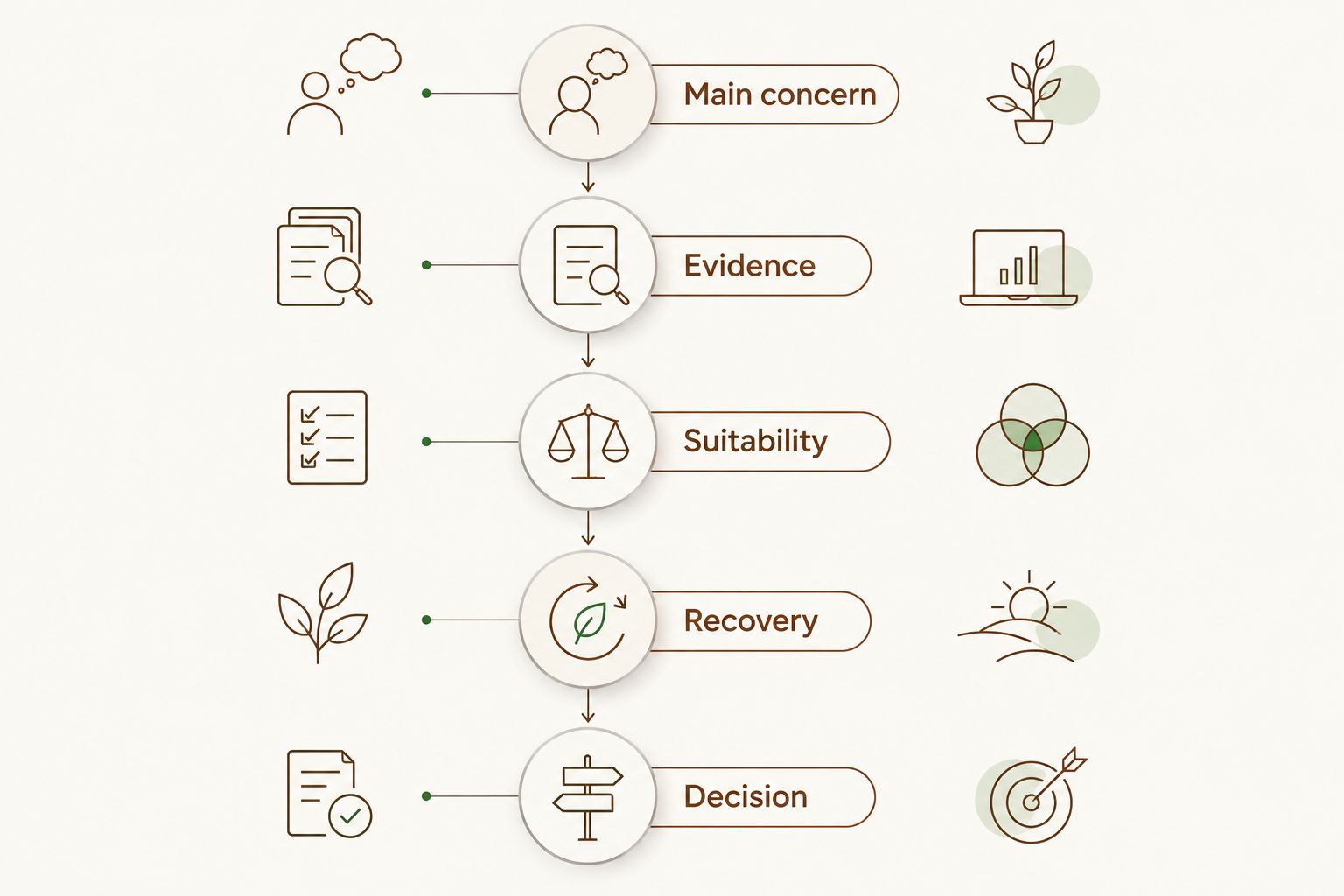
Compare your next steps
These are decision routes, not a ranking of treatment results. The best choice depends on whether your concern is clear and whether you want a procedure.
| Option | Best for | Benefit | Key limitation |
|---|---|---|---|
| Prepare questions yourself | An unclear treatment goal | Helps you describe your concern | Cannot establish clinical suitability |
| HIFU consultation | Assessing skin looseness | Allows an individual treatment discussion | Does not guarantee suitability or results |
| Defer treatment | Anyone not ready to proceed | Leaves time to consider the advice | Does not provide a treatment outcome |
Common mistakes with menopausal skin
- Calling every change “sagging”. Explain what you see and feel rather than choosing a treatment first.
- Reading general evidence as menopause-specific evidence. Ask who participated in the research.
- Expecting a guaranteed lift. Results vary between individuals; agree on realistic expectations.
- Skipping the recovery discussion. Ask about discomfort and follow-up before consenting.
FAQ
Is HIFU proven specifically for menopausal skin?
The research cited here does not establish a menopause-specific benefit. It covers menopause-related skin changes and facial ultrasound tightening separately.
Does HIFU treat menopause itself?
No. Cosmetic HIFU is discussed here for skin laxity, not for treating menopause or its wider symptoms.
Who might HIFU not suit?
HIFU is not a suitable choice when an assessment finds that the proposed treatment does not match your concern or medical circumstances. A personal consultation is needed to make that decision.
What side effects should I ask about?
Ask about discomfort, redness and swelling, which were reported in the cited facial ultrasound study. Also request information about risks specific to the proposed device and treatment area.
Will HIFU give everyone the same result?
No. Results vary between individuals, and published findings do not guarantee your outcome. Ask how your clinician will assess progress.
What should I ask LLC Cosmetic Laser Clinics in 2026?
Ask who will assess and treat you, why HIFU fits your concern and what would make treatment unsuitable. Request a clinician-reviewed plan with limitations and aftercare explained.
One last thing
Before choosing HIFU in 2026, ask: What would make you recommend no treatment? The answer helps you understand the limits of the proposal.
If you would like personal advice, book your HIFU consultation with LLC Cosmetic Laser Clinics. A consultation is a chance to ask questions, not a commitment to proceed.
References
- Thornton MJ. 2013. Estrogens and aging skin. Dermato-Endocrinology. DOI: 10.4161/derm.23872. Review of oestrogen and skin ageing; not a HIFU treatment trial.
- Alam M, White LE, Martin N, Witherspoon J, Yoo S, West DP. 2010. Ultrasound tightening of facial and neck skin: a rater-blinded prospective cohort study. Journal of the American Academy of Dermatology. DOI: 10.1016/j.jaad.2009.06.039. Facial and neck ultrasound study; not menopause-specific.
Related guides
This article is general information only and is not a substitute for a personal consultation.