Fractional CO2 Laser: Skin Renewal Guide
Skincare, Fractional CO2 Laser Resurfacing
Fractional CO2 Laser Resurfacing: Complete Guide to Skin Renewal
Considering a powerful treatment to smooth wrinkles, fade scars, and refresh tired-looking skin? Fractional CO2 laser resurfacing is one of the most effective in-clinic options available today, but it can also sound intimidating if you are new to aesthetic procedures. This complete guide walks you through exactly what it is, how it works, what to expect at different treatment levels, and how to decide if it is right for you as a consumer.
What Is Fractional CO2 Laser Resurfacing?
Fractional CO2 laser resurfacing is an advanced skin treatment that uses a carbon dioxide (CO2) laser to create thousands of tiny, controlled micro-injuries in the skin. Unlike older, fully ablative lasers that removed the entire top layer of skin, fractional lasers treat only a “fraction” of the skin at a time, leaving surrounding tissue intact. This design speeds up healing while still delivering impressive results for texture, tone, and firmness.
When the laser energy reaches the deeper layers of your skin, it stimulates a powerful wound-healing response. Your body responds by producing more collagen and elastin, the proteins that keep skin smooth, plump, and resilient. Over the following weeks and months, this new collagen helps soften lines, refine pores, and improve scars and pigmentation issues, revealing fresher-looking skin.
What Skin Concerns Can It Treat?
Fractional CO2 laser resurfacing is considered a “heavy hitter” in aesthetic dermatology because it addresses multiple concerns at once. It is commonly recommended for individuals who want noticeable improvement in:
Fine lines and deeper wrinkles, especially around the eyes and mouth
Sun damage and uneven skin tone, including sun spots and rough patches
Acne scars and other textural scars (such as from chickenpox or injury)
Enlarged pores and overall rough, uneven skin texture
Mild skin laxity and crepiness, especially on the lower face and around the eyes
While the face is the most common area treated, fractional CO2 lasers can also be used on the neck, chest, and sometimes the hands, where sun damage and aging often show first. Your provider will recommend suitable areas based on your skin type and goals.
How Does the Treatment Work, Step by Step?
Understanding the process can make the idea of laser resurfacing much less intimidating. Here is what a typical fractional CO2 session looks like from a consumer’s perspective:
Consultation and assessment: A dermatologist or qualified aesthetic doctor evaluates your skin, medical history, and medications. They will check for conditions like active acne, recent isotretinoin use, or a tendency to form keloid scars, which may affect your suitability for treatment.
Pre-treatment preparation: You may be advised to stop certain skincare products, such as strong retinoids or acids, a few days before your appointment. If you are prone to cold sores, an antiviral medication might be prescribed to minimize the risk of a flare-up after treatment.
Numbing and comfort: On the day of the procedure, a topical numbing cream is applied and left on for 30–60 minutes to reduce discomfort. Some clinics also offer cooling devices, oral pain relief, or mild sedatives for additional comfort, depending on the intensity of the treatment.
The laser session: During the treatment, the doctor passes the laser handpiece over your skin in a systematic pattern. You will likely feel a warm, prickling, or snapping sensation as the laser pulses. Treatment time varies, but a full face usually takes around 20–40 minutes once numbing is complete.
Cooling and soothing: Immediately afterwards, your skin will feel hot and look very red, similar to a strong sunburn. Cooling packs, soothing gels, or thermal water sprays are often applied to ease the heat and calm the skin.
Aftercare instructions: Before you leave, you will receive detailed instructions on how to care for your skin in the days and weeks ahead, including which products to use, what to avoid, and how to protect your skin from the sun.
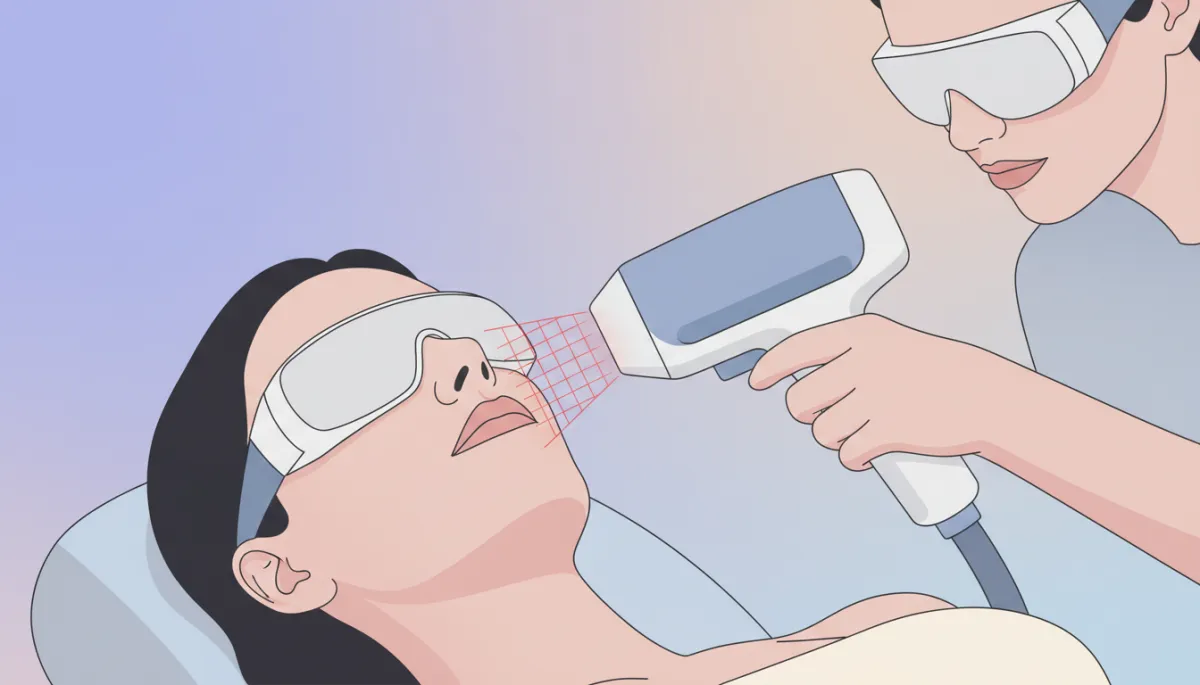
A skilled provider can tailor laser intensity to your skin type and goals.
Treatment Levels: Mild to Intensive CO2 Resurfacing
Not every fractional CO2 treatment is the same. Clinics often use different levels of intensity to match your skin concerns and how much downtime you can realistically manage. At many practices, this is described as Level 2 (mild), Level 3 (moderate), and Level 4 (intensive) CO2 resurfacing.
Mild CO2 – Level 2: Often chosen for early signs of aging, mild texture issues, or as a “refresh” between stronger treatments. Typical downtime is around 3–5 days, with redness and flaking that can often be camouflaged with makeup once the surface has healed.
Moderate CO2 – Level 3: Targets more noticeable wrinkles, sun damage, and acne scarring. Expect up to 7 days of downtime, with more pronounced redness, swelling, and peeling, but also more dramatic improvement.
Intensive CO2 – Level 4: Reserved for significant wrinkles, deeper scars, or advanced sun damage, and usually performed by very experienced providers. Downtime can range from 2 up to 4 weeks, with a longer healing curve but the most powerful skin-renewing effect.
📌 Key Point: Higher levels mean deeper treatment and longer recovery—but also greater potential change. Your provider will help you balance results with your work, family, and social commitments.
What Does Recovery Really Look Like?
Fractional CO2 laser resurfacing is not a “lunchtime facial.” It is a powerful treatment that requires real downtime, especially in the first few days. Knowing what to expect makes it easier to plan your schedule and avoid surprises. Keep in mind that recovery will vary slightly depending on whether you have a Level 2, Level 3, or Level 4 treatment—the stronger the level, the more intense and prolonged these stages can be.
Day 1–2: Intense redness, swelling, and a hot, sunburn-like sensation. Oozing or pinpoint bleeding can occur depending on the depth of treatment. You will need to gently cleanse and apply a healing ointment several times a day, and you may prefer to stay home.
Day 3–5: The skin begins to bronze and feel tight, then gradually forms tiny grid-like scabs or “microscopic treatment zones.” Peeling and flaking follow as new skin emerges underneath. It is crucial not to pick at the skin, even if it feels rough or itchy. (For Level 2, many people feel presentable again toward the end of this window.)
Day 6–10: Most scabbing and heavy peeling have resolved. Your skin may still look pink or flushed, similar to a mild sunburn, but makeup can usually be worn once the surface is fully healed (your provider will tell you when it is safe). After a Level 3 treatment, this is typically when you start to feel comfortable returning to normal routines.
Weeks 2–6 and beyond: Pinkness gradually fades, and your skin continues to remodel from the inside out. Texture, tone, and firmness typically keep improving for three to six months as new collagen forms. Following a Level 4 treatment, visible redness and sensitivity can last for several weeks, so planning 2–4 weeks of social downtime is wise.
💡 Pro Tip: Plan your treatment at least two weeks before any major event or photos, and ideally longer if you tend to flush easily or have sensitive skin—or if you and your provider are considering a more intensive Level 3 or Level 4 session.
Essential Aftercare for the Best Results
Your post-treatment routine plays a huge role in how well you heal and how good your final results look. Think of it as partnering with your provider: the laser starts the process, but your daily care helps complete it. Most individuals are advised to:
Use a gentle, fragrance-free cleanser and lukewarm water to wash the skin without scrubbing.
Apply a rich, non-irritating moisturizer or healing ointment as often as needed to keep the skin from drying out or cracking.
Avoid active ingredients like retinoids, vitamin C serums, exfoliating acids, scrubs, and strong anti-aging products until your provider gives the all-clear.
Protect your skin from the sun every single day with a broad-spectrum SPF 30 or higher, reapplying as directed. A wide-brimmed hat and seeking shade are just as important as sunscreen during the healing phase.
Skip saunas, hot yoga, intense workouts, and swimming pools until your skin has fully re-epithelialized (the surface has healed over).
Following these guidelines helps minimize complications like infection, prolonged redness, or unwanted pigmentation changes, and supports the skin’s natural renewal process triggered by the fractional CO2 laser.
How Many Sessions Will You Need?
One of the appeals of fractional CO2 resurfacing is that it can deliver dramatic improvement in just one session, especially when compared to milder treatments like chemical peels or non-ablative lasers. However, the exact number of sessions depends on your starting point and goals:
Mild aging and texture issues: Many people are happy with a single, moderately aggressive treatment, followed by maintenance with lighter procedures or skincare. This may be done at a Level 2 or conservative Level 3 setting, depending on your tolerance for downtime.
Moderate to severe acne scarring or deep wrinkles: A series of 2–3 sessions spaced several months apart may be recommended to gradually build results while keeping downtime manageable. In these cases, your provider may suggest a combination of Level 3 and, where appropriate, Level 4 treatments over time.
Your provider can adjust the depth and density of the laser to balance improvement with healing time. It is helpful to be honest about how much downtime you can realistically take, so your treatment plan—and chosen level of CO2 intensity—fits your lifestyle.
Who Is a Good Candidate—and Who Should Be Cautious?
Fractional CO2 laser resurfacing is best suited to individuals who are in generally good health, willing to follow aftercare instructions, and looking for significant improvement in wrinkles, scars, and sun damage. It is especially popular among people in their 30s to 60s who feel their skin looks older or more tired than they feel inside.
However, some situations call for extra caution or an alternative treatment. These include very dark skin tones with a high risk of post-inflammatory hyperpigmentation, a history of abnormal scarring, certain autoimmune conditions, recent use of oral isotretinoin, or unrealistic expectations of “perfect” skin. A thorough consultation is essential to weigh the benefits and potential risks in your specific case.
📌 Key Takeaway: The safest and most satisfying results come from a personalized plan created by an experienced, medically qualified provider who understands your skin type, your lifestyle, and how to match the right CO2 level to your goals.
What About Results, Risks, and Cost?
Most people start noticing smoother, brighter skin as soon as the initial healing phase ends, usually within 1–2 weeks. Over the next several months, continued collagen remodeling can further soften lines, refine pores, and improve scars. Results can last for years, especially when you protect your skin from the sun and maintain a consistent skincare routine.
As with any medical procedure, there are potential side effects and risks. Temporary redness, swelling, and peeling are expected. Less common but more serious complications include infection, prolonged redness, changes in skin color (either darker or lighter), and scarring. Higher-intensity Level 3 and Level 4 treatments require especially careful aftercare and should always be performed by highly experienced professionals. Choosing a reputable clinic, disclosing your full medical history, and following aftercare closely all help minimize these risks.
Costs vary widely depending on your location, the expertise of your provider, the size of the area treated, and the level of CO2 resurfacing you choose. More intensive levels (with longer downtime) are often priced higher because they are more complex and time-consuming. Fractional CO2 laser resurfacing is generally considered a premium procedure, but for many individuals, the investment feels worthwhile because a single well-planned session can create visible, long-lasting changes that are difficult to achieve with topical products alone.
Making an Informed Decision About Your Skin Renewal
Fractional CO2 laser resurfacing is not a casual spa treatment—it is a powerful, medical-grade procedure designed for people who are serious about renewing their skin. When performed by a qualified professional, it can dramatically improve wrinkles, scars, and sun damage, helping your skin look smoother, clearer, and more youthful for years to come.
As a consumer, your role is to gather information, ask questions, and choose a provider you trust. Schedule a consultation, bring photos of your skin goals if helpful, and be open about your concerns, health history, and lifestyle. Together, you and your practitioner can decide whether fractional CO2 laser resurfacing at a reputable clinic is the right path for your personal skin renewal journey—and which CO2 level (mild Level 2, moderate Level 3, or intensive Level 4) best matches your goals and downtime.
With realistic expectations, thoughtful planning, and diligent aftercare, this treatment can be a transformative step toward the smoother, more radiant skin you have been hoping for.