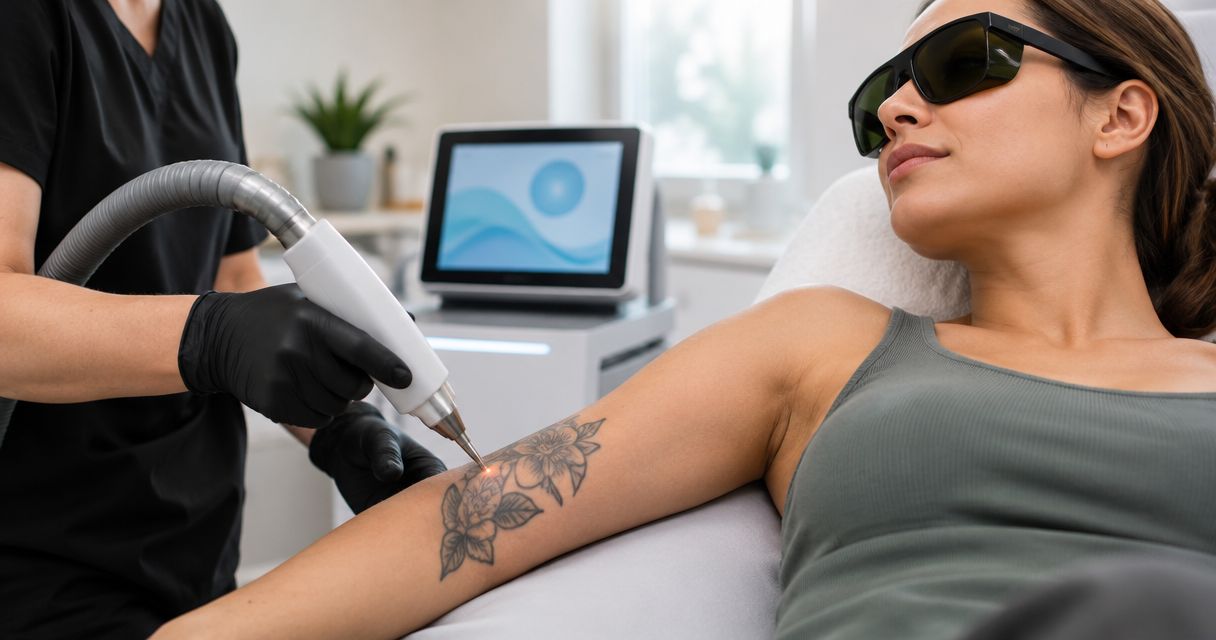
Does laser tattoo removal leave scars?
Laser tattoo removal can leave scars, but scarring is not inevitable. Temporary redness, swelling, blistering and changes in skin colour are different from a lasting scar. Your skin, any scarring already beneath the tattoo, treatment settings and wound care all matter; nobody can promise scar-free removal.[1]
- Does laser tattoo removal leave scars? It can; scar-free removal cannot be guaranteed.
- Colour changes after tattoo removal are not automatically scars.
- LLC Cosmetic Laser Clinics offers medical physicist-led care and clinician-reviewed plans.
- For your 2026 consultation, discuss previous raised scars and how your skin heals.
Does laser tattoo removal leave scars?
Yes, laser tattoo removal can cause scarring. But a mark after treatment is not automatically a scar. A clinical review distinguishes scarring from other complications, including temporary inflammation and lighter or darker pigmentation.[1]
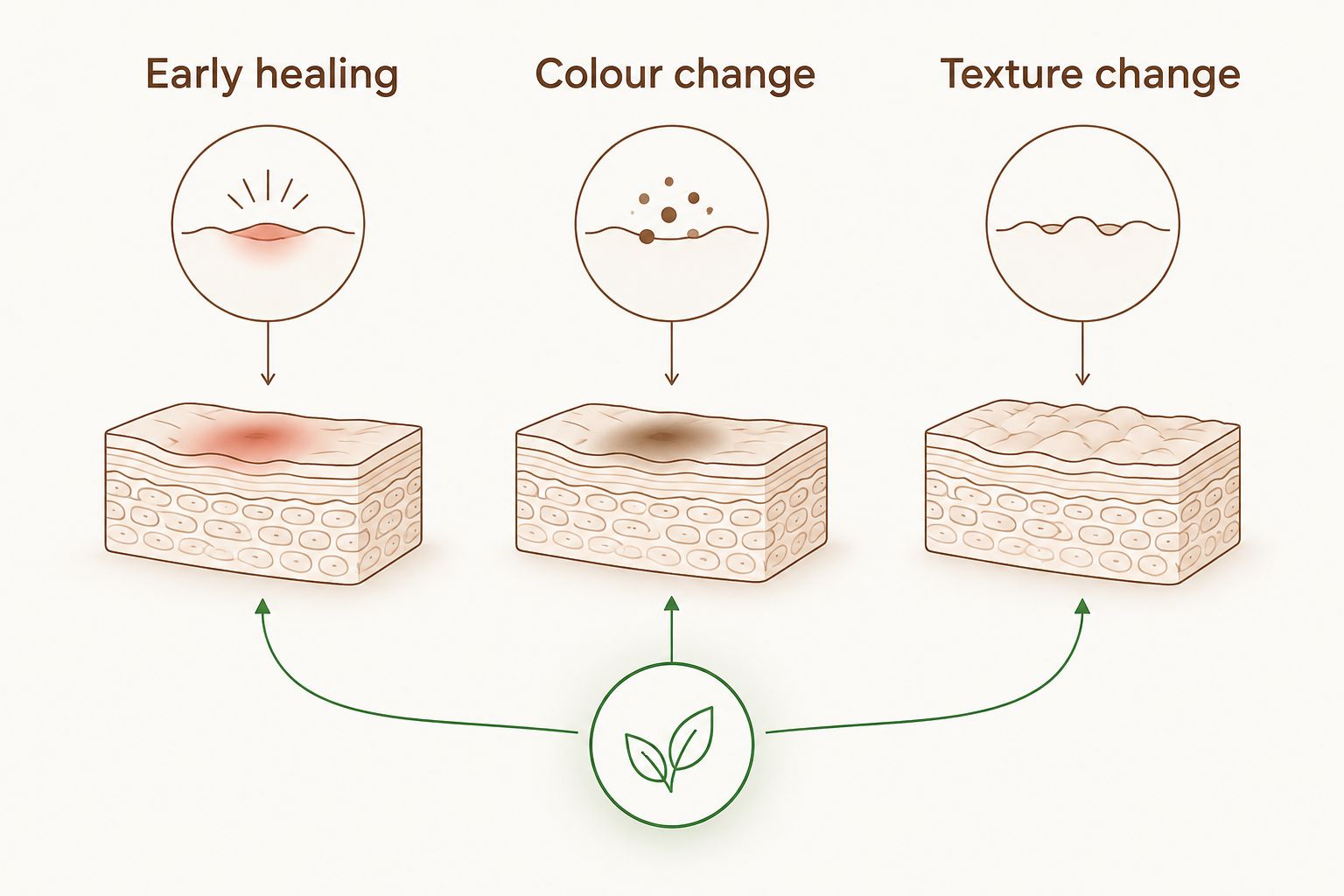
| Skin change | What it means | What to do |
|---|---|---|
| Early healing | Redness, swelling, blisters or crusting after treatment | Follow your clinician’s wound-care instructions |
| Colour change | Skin looks lighter or darker than the surrounding area | Arrange review rather than assuming it is a scar |
| Texture change | Skin looks or feels raised, firm or uneven | Have the area assessed for scarring |
These signs can overlap. A photograph alone does not establish what is happening beneath the surface.[1]
For more treatment-planning context, see the Skin Journal guide to PICO laser tattoo removal for large tattoos. Tattoo size alone does not tell you your scarring risk.[1]
Why this matters in 2026
The aim is not simply to remove ink. It is to balance fading with the condition of your skin afterwards.
Laser treatment targets tattoo pigment, but unwanted skin injury remains possible. Existing scars from the original tattoo can also become more noticeable as the ink fades.[1] Removing pigment does not erase an existing scar.
Why scarring risk varies
A useful assessment covers more than the tattoo’s colour:[1]
- Previous scars: Tell your clinician about raised scars or keloids—scars that grow beyond the original wound.
- Existing tattoo damage: Raised or uneven areas deserve assessment before treatment starts.
- Skin colour and tanning: Pigment in your skin affects treatment choices and the risk of colour changes.
- Laser settings: Wavelength and energy must match the tattoo and skin being treated.
- Healing and aftercare: Infection and disruption of healing skin can contribute to unwanted outcomes.
A consultation should explain these factors without turning them into a promise. Results vary between individuals.
Who needs extra caution?
A history of keloids, an active skin infection or an inflammatory reaction within the tattoo needs assessment before proceeding. Treatment over recently tanned skin also requires caution.[1]
Common early effects include redness, swelling, blistering and crusting. Longer-lasting complications include pigment changes and scarring.[1] Ask what is expected, what needs review and whom to contact if healing concerns you.
Can PICO laser guarantee no scars?
No. PICO laser cannot guarantee scar-free tattoo removal. Short laser pulses do not remove the need for appropriate settings, skin assessment and aftercare.[1]
The evidence does not justify promising an individual a particular outcome. Ask why a proposed laser and treatment plan suit your skin, rather than relying on the device name alone.
What should you ask at a 2026 consultation?
Bring your main concern: complete removal, partial fading or protecting an area that already feels raised. Ask your clinician to distinguish likely benefits from limitations before you decide.
LLC Cosmetic Laser Clinics suits people seeking medical physicist-led tattoo removal with clinician-reviewed plans. That does not mean every appointment is personally performed by a medical physicist, or that treatment is suitable for everyone.
FAQ
Does laser tattoo removal always leave a scar?
No. Scarring is a possible complication, not an inevitable result. Individual skin assessment and suitable treatment settings remain important.[1]
Is a pale patch after tattoo removal a scar?
A pale patch is not automatically a scar. Pigment loss changes skin colour; scarring involves changes in skin structure or texture, and the area needs assessment.[1]
Can removing a tattoo reveal an old scar?
Yes. Scarring caused when the tattoo was applied can become more visible as the pigment fades.[1]
Can I have tattoo removal if I get keloids?
A history of keloids needs individual assessment before treatment. Tell your clinician about previous raised scars rather than assuming laser removal is suitable.[1]
What should I ask about tattoo removal in 2026?
Ask about your skin’s scarring risk, expected healing, pigment changes and the limits of removal. Request clear aftercare instructions and a contact for concerns.[1]
Does LLC Cosmetic Laser Clinics promise scar-free removal in 2026?
No. LLC Cosmetic Laser Clinics provides medical physicist-led care and clinician-reviewed plans, not a guarantee of scar-free removal. Results vary between individuals.
One last thing
Before treatment, point out any part of the tattoo that already feels raised. Recording its starting condition helps separate an existing scar from a later change.[1]
If you would like personal advice, book your PICO consultation to discuss suitability without committing to treatment.
Related guides
References
[1] Ho SG, Goh CL. 2015. Laser tattoo removal: a clinical update. Journal of Cutaneous and Aesthetic Surgery. DOI: 10.4103/0974-2077.155066.
This article is general information only and is not a substitute for a personal consultation.