
Dermal fillers for ageing skin: complete 2026 guide
Ageing-skin dermal fillers are injectable treatments intended to address selected changes in facial volume or contour, not every sign of ageing.[1] If you’re searching for dermal fillers Brisbane options, start with an assessment of your concern rather than a treatment shopping list. This 2026 guide explains the questions, limitations and risks to discuss before deciding.
- For dermal fillers Brisbane searches, prioritise suitability and risk assessment over choosing a treatment first.
- LLC Cosmetic Laser Clinics is medical physicist-led; ask for personal advice rather than a preset treatment plan.
- Common injection reactions include swelling and bruising; rare vascular complications can be serious.[1,2]
- Results vary between individuals, and choosing no treatment remains a valid option.
Why assessment matters for ageing skin
A concern described as ‘looking older’ needs a clearer starting point. Is your main concern facial contour, skin texture, pigmentation or looseness? These are different questions, not interchangeable treatment requests.
LLC Cosmetic Laser Clinics provides medical physicist-led care and clinician-reviewed plans. LLC Cosmetic Laser Clinics is best suited to people seeking suitability advice before choosing a cosmetic skin treatment. This does not mean every consultation or treatment is personally performed by a medical physicist.
How to prepare for a useful consultation
Describe the change you want assessed
Start manually: write down what bothers you in plain language. ‘My cheeks look different’ gives a clinician a clearer starting point than asking for a particular amount of injectable treatment. You do not need to diagnose yourself or decide how your face should be treated.
Keep the discussion focused on your own priorities, not a filtered photograph or someone else’s face.
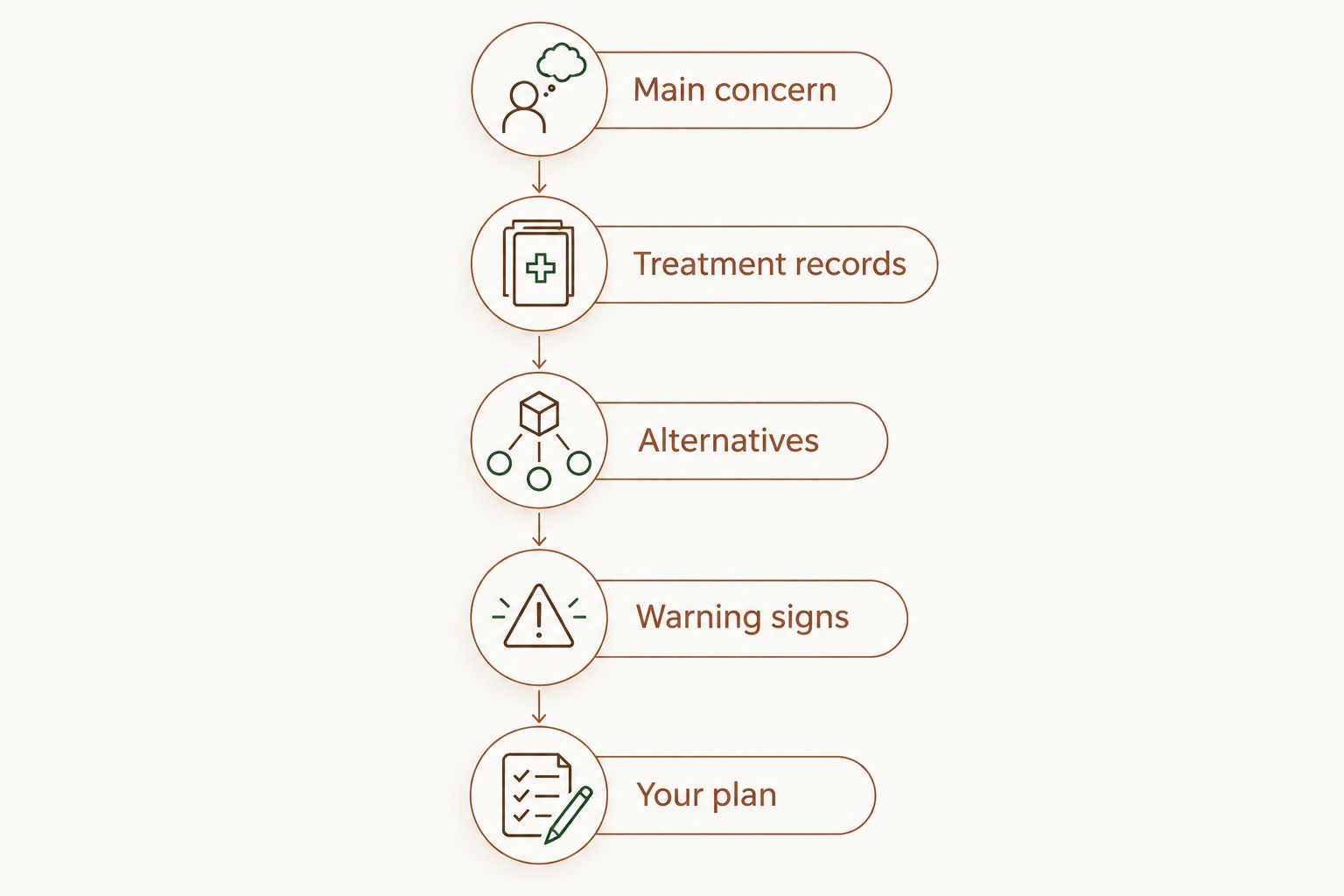
- Name your main concern.
- Describe when you noticed it.
- Explain what you do not want changed.
Share your treatment and health history
Bring a written history rather than relying on memory. Previous injectable treatments and relevant medical information belong in the assessment because complications and their management depend on the individual circumstances.[1]
Do not stop prescribed medicines to prepare for an appointment without advice from the clinician who manages them. Ask what records the assessing practitioner needs before any treatment decision.
- List previous cosmetic procedures.
- Bring available treatment records.
- Disclose medicines, allergies and health conditions.
Ask for a clinician-reviewed explanation
Ask the clinician to explain what they are assessing and why the proposed approach fits your concern. At LLC Cosmetic Laser Clinics, request personal advice through a clinician-reviewed plan rather than treating a website article as a prescription.
A useful discussion includes reasons not to proceed. An assessment should leave room for another approach, further medical advice or no treatment at all.
- Ask what the treatment would address.
- Ask what it would not address.
- Request an explanation of alternatives.
Discuss ordinary reactions and serious risks
Swelling, bruising and redness are reported injection reactions. More serious complications include vascular occlusion, where injected material obstructs blood flow; published literature also documents vision loss.[1,2] These risks deserve a direct discussion, not a footnote.
Ask who handles complications and how to reach them. Severe or unusual pain, changing skin colour or visual symptoms after an injection require urgent medical assessment.[1,2]
- Discuss expected reactions.
- Request written warning signs.
- Confirm urgent contact arrangements.
Leave with a decision, not an obligation
You can attend a consultation and decide against treatment. Ask for the proposed approach, limitations and follow-up arrangements in writing so you can consider them without pressure.
Results vary between individuals. A clinical plan is not a promise of a particular appearance, and published complication reviews do not predict your personal outcome.[1,2] Ask the clinician to explain uncertainty in everyday language before you consent.
- Take time to consider the advice.
- Clarify follow-up responsibilities.
- Keep a copy of your plan.
Compare assessment routes, not treatment promises
These options describe consultation topics, not a recommendation that one procedure suits your skin. A different appointment is not automatically a better answer.
| Option | Best for | Benefit | Key limitation |
|---|---|---|---|
| Facial aesthetics assessment | Discussing facial volume or contour concerns | Starts with your concern | Does not establish suitability in advance |
| Skin-tightening discussion | Asking about skin looseness | Opens a different assessment question | Is not interchangeable with volume assessment |
| CO₂ resurfacing discussion | Asking about texture or scarring | Keeps texture concerns distinct | Requires its own suitability and recovery discussion |
| No treatment | People who prefer not to proceed | Avoids procedure-related risks | Leaves the concern untreated |
Common mistakes when considering treatment
- Choosing by age alone. Describe the specific change rather than asking what someone your age ‘needs’.
- Treating every concern as lost volume. Ask whether your concern belongs in a different assessment.
- Skipping the complication conversation. Request clear warning signs and an emergency plan.[1,2]
- Assuming a nearby clinic offers identical care. Confirm the practitioner, proposed procedure and follow-up arrangements at your chosen location.
What about dark circles?
A timeline for dark circle treatment results is not evidence that an injectable treatment suits your under-eye concern. Ask for an assessment before discussing timing. Published reports of vision-threatening complications make an explicit risk discussion particularly important when considering facial injections.[2]
FAQ
Are dermal fillers the right choice for ageing skin?
Not automatically. Start with an assessment of the specific concern, available alternatives and your individual risks rather than choosing treatment by age.
What side effects should I ask about?
Ask about swelling, bruising and redness, along with less common but serious complications such as vascular occlusion and vision loss.[1,2] Request written instructions about symptoms needing urgent medical attention.
Who might not be suitable for treatment?
Suitability requires an individual clinical assessment. Share your health history, medicines, allergies and previous procedures, and ask the clinician to explain any reason to delay or avoid treatment.[1]
Can a consultation guarantee a particular result?
No. Results vary between individuals, and a proposed treatment plan should explain limitations rather than promise a particular appearance.
Is skin tightening the same as addressing facial volume?
No. Skin looseness and facial volume are different assessment questions; ask the clinician which concern they are evaluating before discussing a procedure.
Can I decide not to proceed after a consultation?
Yes. You can take time to consider the information, seek another opinion or choose no treatment.
One last thing
If skin looseness is your actual concern, you can book your HIFU consultation for personal advice. This is a HIFU appointment, not an injectable-treatment booking.
References
- DeLorenzi C. 2014. Aesthetic Surgery Journal. Complications of injectable fillers, part 2: vascular complications. DOI: 10.1177/1090820X14525035.
- Beleznay K, Carruthers JDA, Humphrey S, Jones D. 2015. Dermatologic Surgery. Avoiding and treating blindness from fillers: a review of the world literature. DOI: 10.1097/DSS.0000000000000486.
Related guides
- Skin Journal: facial aesthetics in Brisbane
- LLC Cosmetic Laser Clinics and Laser Clinics Australia compared
This article is general information only and is not a substitute for a personal consultation.