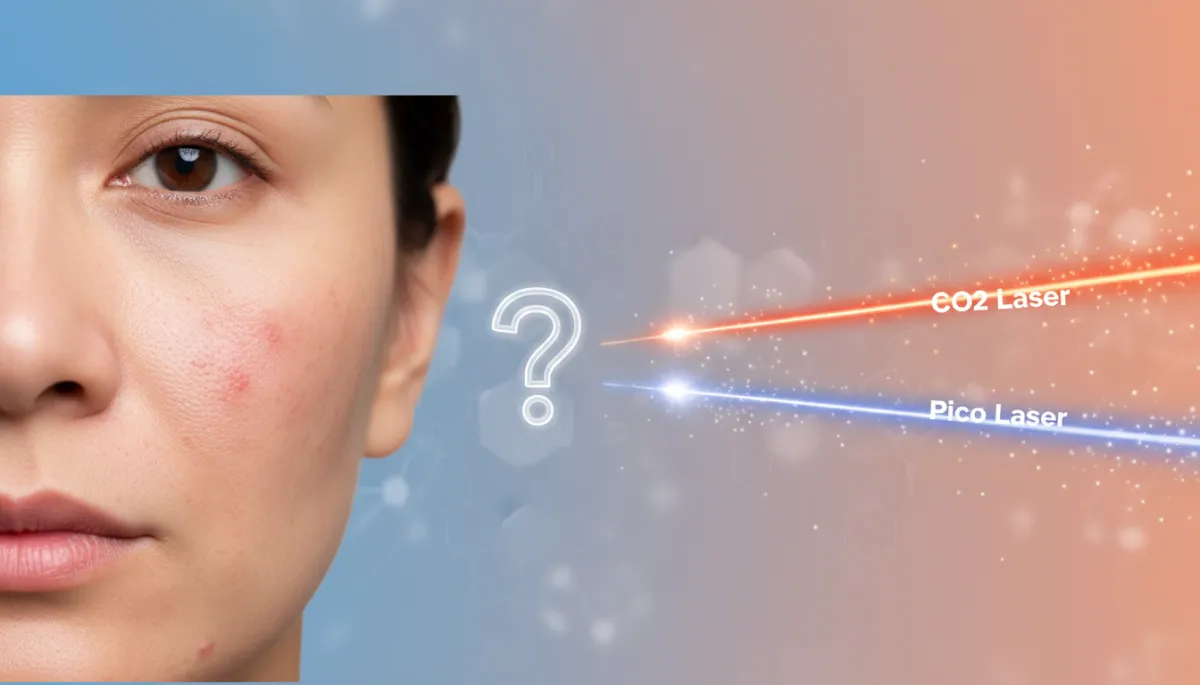
CO2 vs Pico Laser: Best for Acne Scars & Texture?
Skin Care, Acne Scars, Laser Treatments
CO2 vs Pico Laser for Acne Scars & Texture: Which Is Better?
If you’ve been left with stubborn acne scars or uneven skin texture, you’ve probably come across two buzzworthy options: CO2 laser and Pico laser. Both promise smoother, clearer skin—but they work differently, feel different, and come with different levels of downtime and risk. So how do you know which one is actually better for you?
Understanding Acne Scars and Texture Problems
Before comparing CO2 and Pico lasers, it helps to understand what you’re actually treating. Acne scars are not all the same, and that matters when choosing a laser. Common scar types include:
Rolling scars: shallow, wave-like depressions that make the skin look uneven or “bumpy.”
Boxcar scars: wider, more defined indentations with sharper edges, often on the cheeks and temples.
Ice pick scars: small but deep “pits” that look like tiny holes in the skin.
On top of scars, many people also struggle with texture issues: enlarged pores, rough patches, and dull, uneven skin. Lasers target these concerns by stimulating collagen—the protein that keeps skin firm and smooth—and by resurfacing the outer layers of skin.
💡 Key idea: The deeper and more “structural” your acne scars are, the more powerful and invasive the treatment usually needs to be to make a noticeable difference.
What Is a CO2 Laser and How Does It Work?
A CO2 laser (carbon dioxide laser) is a classic, time-tested option for acne scars and texture. It’s considered an ablative laser, which means it removes very thin layers of skin in a controlled way. Modern CO2 devices are often “fractional,” meaning they treat tiny columns of skin while leaving surrounding areas intact, which helps the skin heal faster overall.
During treatment, the laser creates microscopic zones of damage in the skin. This triggers your body’s natural healing response, boosting collagen production and encouraging fresh, smoother skin to form. According to sources like Healthline and dermatology reviews, CO2 lasers have long been considered highly effective for boxcar, rolling, and even some ice pick scars when performed by experienced dermatologists (Healthline; Dermatology Times).
If you’re considering this option, you can learn more about how it’s performed in a clinical setting by visiting our dedicated CO2 resurfacing treatment page.
Benefits of CO2 Laser for Acne Scars & Texture
Powerful resurfacing: Excellent for moderate to severe acne scars and significant texture irregularities.
Fewer sessions: Because it’s more aggressive, you may need fewer treatments for visible results compared with milder technologies.
Collagen boost: Strong stimulation of collagen can continue to improve skin texture for months after a session.
Downtime and Risks of CO2 Laser
The trade-off for its power is downtime and side effects. After CO2 laser resurfacing, you can expect:
Redness, swelling, and “raw” skin for about 7–14 days, sometimes longer.
Peeling and crusting as the outer layers of skin shed and new skin forms.
A strict aftercare routine, including gentle cleansing, moisturising, and very diligent sun protection.
There is also a risk of infection, prolonged redness, hyperpigmentation (dark marks), or even new scarring if the treatment is too aggressive or aftercare is poor. These risks are higher for darker skin tones, which is why many dermatologists are cautious about using strong ablative CO2 lasers on deeper complexions.
⚠️ Important: CO2 laser is not a “lunchtime” procedure. You’ll likely need to plan time off work or social events while your skin recovers.
What Is a Pico Laser and How Does It Work?
Pico lasers are a newer generation of laser technology. “Pico” refers to picoseconds—extremely short bursts of energy. Unlike traditional lasers that rely heavily on heat, Pico lasers deliver ultra-fast pulses that create mechanical “shockwaves” in the skin. These break up pigment and stimulate collagen with minimal surrounding heat damage.
Pico lasers were first known for tattoo and pigmentation removal, but research and clinical experience now show they can also help with acne scars and texture by encouraging collagen remodelling (NCBI; Dermatology Times). Because they’re gentler on the surface of the skin, Pico treatments are often marketed as having less downtime and a lower risk of pigment changes, especially for darker skin types.
If you’d like to explore this option in more detail, you can read about how it’s used in our clinic on the dedicated Pico laser treatment page.
Benefits of Pico Laser for Acne Scars & Texture
Minimal downtime: Most people experience only mild redness or swelling for a day or two, sometimes less.
Gentler on the surface: Less risk of raw, oozing skin compared with ablative CO2 lasers.
Suitable for more skin tones: The reduced heat and precision can make Pico a safer choice for medium to darker complexions when performed correctly.
Limitations of Pico Laser
Pico lasers can definitely improve mild to moderate acne scars and overall texture, but they may be less dramatic for very deep or severe scarring compared with a strong CO2 resurfacing treatment. You’ll also typically need a series of sessions—often 3 to 6 or more, spaced weeks apart—to build up results gradually.
Multiple gentle sessions can steadily refine acne scars with less disruption to daily life.
CO2 vs Pico Laser: How They Compare for Acne Scars & Texture
1. Effectiveness on Different Types of Acne Scars
CO2 laser: Often considered the gold standard for deeper, more established scars, especially rolling and boxcar scars. Some ice pick scars may still need other treatments (like TCA CROSS or surgical techniques) in addition to CO2.
Pico laser: Good for mild to moderate scarring and overall texture improvement. It can soften the look of scars and refine pores, but may not fully correct very deep or severe indentations on its own.
2. Texture, Pores, and Overall Skin Quality
Both CO2 and Pico lasers can improve skin texture, but they do it in slightly different ways:
CO2 laser strongly resurfaces the top layers, leading to smoother skin and a more dramatic change in roughness and wrinkles in a single session.
Pico laser focuses more on collagen remodelling and pigment, gradually refining texture, brightening the skin, and improving fine irregularities over multiple sessions.
3. Downtime and Comfort
CO2 laser: Expect noticeable downtime—redness, swelling, and peeling for at least a week, sometimes longer. Numbing cream and sometimes additional pain management are used during the procedure.
Pico laser: Usually more comfortable, with a snapping or warm sensation. Most people can return to regular activities quickly, often the same or next day, with only mild redness.
4. Safety and Skin Tone Considerations
One of the biggest questions is: Is it safe for my skin tone? Ablative CO2 lasers carry a higher risk of post-inflammatory hyperpigmentation (dark marks after treatment), especially for medium to deep skin tones. While experienced dermatologists may still use fractional CO2 on darker skin with careful settings, many will lean toward Pico laser or other non-ablative options to reduce risk.
Pico lasers, with their ultra-short pulses and reduced heat, are often viewed as safer and more forgiving across a broader range of skin types when used correctly. That said, any laser can cause problems if used improperly, so practitioner skill is crucial.
5. Number of Sessions and Cost
CO2 laser sessions are usually more expensive per treatment but you may need only 1–3 sessions for noticeable improvement, depending on severity and goals.
Pico laser sessions tend to cost less individually but are done in a series. Over time, the total cost can be similar to or sometimes higher than CO2, depending on how many you need.
💡 Budget tip: Ask your clinic for a full treatment plan estimate, not just per-session pricing, so you can compare options fairly.
So… Which Is Better: CO2 or Pico Laser?
There’s no one-size-fits-all winner. The “better” choice depends on your scar type, skin tone, lifestyle, pain tolerance, and how much downtime you can accept. Here’s a simple way to think about it:
Choose CO2 laser if you have moderate to severe, deeper acne scars, lighter skin, and you’re willing to accept more downtime and short-term discomfort in exchange for more dramatic resurfacing in fewer sessions.
Choose Pico laser if your scars are mild to moderate, you’re focused on overall texture and pigmentation, you have a darker skin tone or are prone to hyperpigmentation, or you can’t take much time off for recovery and prefer a series of gentler treatments.
In many modern clinics, dermatologists don’t see it as CO2 versus Pico, but rather CO2 and Pico as tools in the same toolbox. Some people benefit from a combination approach over time—perhaps a CO2 session for deeper scars, followed by Pico treatments to refine texture and pigmentation.
How to Decide What’s Right for You
Because both CO2 and Pico lasers are powerful medical devices, the most important step is a thorough consultation with a qualified dermatologist or aesthetic doctor. During your visit, expect them to:
Examine your acne scars closely and classify their type and depth.
Consider your skin tone, medical history, and any tendency to develop dark marks or keloid scars.
Ask about your schedule, budget, and how much downtime you can realistically manage.
Don’t be afraid to ask direct questions: “Would you choose CO2 or Pico for my scars, and why?”, “How many sessions do you expect I’ll need?”, and “What are the realistic results I can expect?” A reputable practitioner will give balanced answers and may even suggest combining lasers with other treatments like microneedling, subcision, or chemical peels for the best outcome.
Final Thoughts: Setting Realistic Expectations
Whether you choose a CO2 laser, a Pico laser, or a combination, it’s important to go in with realistic expectations. No treatment can completely erase acne scars, but modern lasers can significantly soften, smooth, and blend them, often enough that they’re far less noticeable in everyday life.
Think of it as a journey rather than a single miracle session: proper skincare, sun protection, and sometimes multiple treatments work together over months to gradually transform your skin’s texture. With the right expert guidance, both CO2 and Pico lasers can be powerful allies in finally moving past acne—and feeling more confident in your own skin.