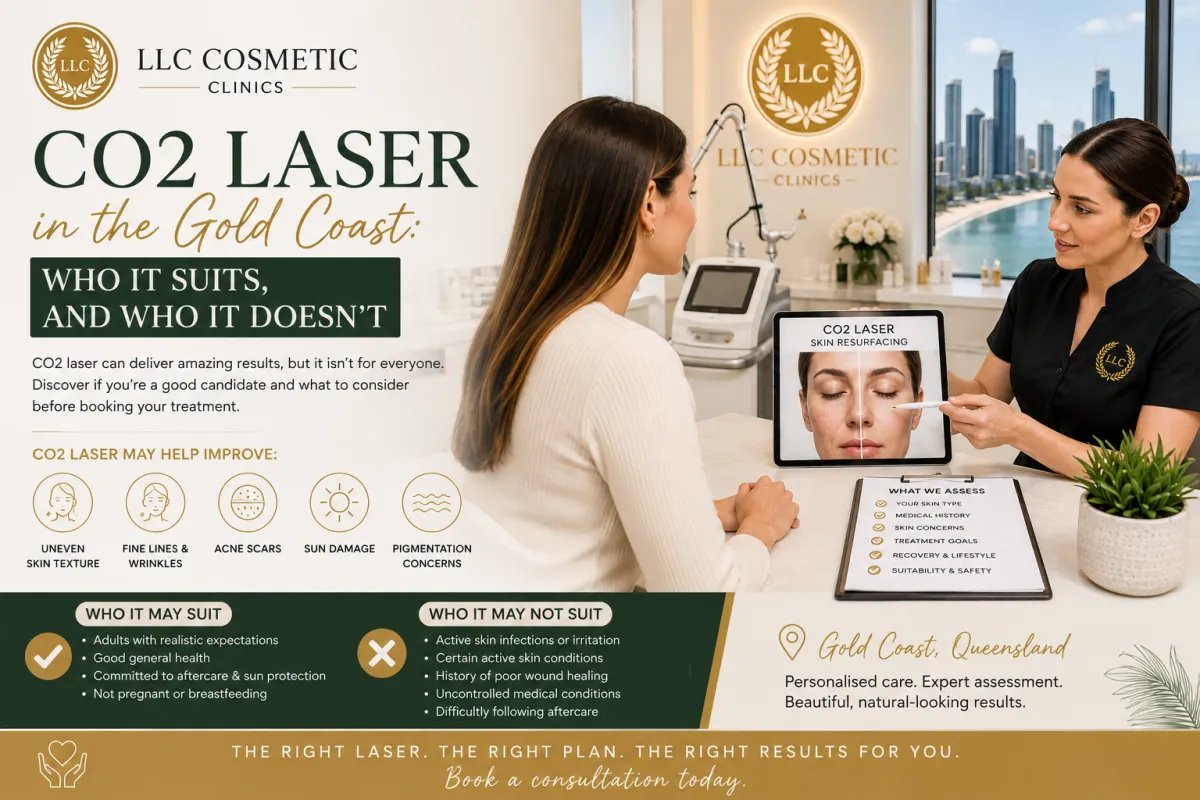
CO2 Laser in the Gold Coast: Who It Suits, and Who It Doesn't
If you're considering CO2 laser in the Gold Coast, one of the first questions you may have is whether the treatment is actually suitable for you.
CO2 laser resurfacing can be used to address certain skin concerns, but it isn't automatically the right treatment for everyone.
Your skin type, current skin condition, treatment goals, medical history and ability to follow aftercare instructions can all influence whether treatment is appropriate.
That's why a professional consultation should come before booking.
CO2 Laser Suitability: The Quick Answer
CO2 laser may be considered for people looking to improve the appearance of certain concerns such as:
Uneven skin texture
Fine lines and wrinkles
Certain types of acne scarring
Sun-damaged skin
Some pigmentation concerns
Overall skin resurfacing
However, suitability is individual.
Some people may need to postpone treatment, while others may be better suited to a different treatment altogether.
The goal isn't simply to find someone who can perform CO2 laser. It's to determine whether CO2 laser is appropriate for your particular skin and goals.
What Is CO2 Laser Resurfacing?
CO2 laser resurfacing uses concentrated laser energy to create controlled treatment zones in the skin.
Depending on the treatment approach, the laser can target selected layers of skin while stimulating a healing response.
As the skin heals, collagen remodelling can contribute to improvements in the appearance of texture and other skin concerns.
The intensity of treatment can vary considerably.
A more intensive treatment may involve more downtime, while a fractional approach can treat microscopic areas while leaving surrounding tissue untreated.
Your practitioner should explain which approach is being recommended and why.
Who May Be Suitable for CO2 Laser?
There isn't one specific profile that automatically makes someone suitable.
However, CO2 laser may be considered for adults who have appropriate treatment goals and are medically suitable following an assessment.
People Concerned About Skin Texture
If uneven skin texture is one of your main concerns, CO2 laser may be one treatment option worth discussing.
A practitioner can assess the type and severity of the texture changes and determine whether resurfacing is appropriate.
People With Certain Acne Scars
CO2 laser may be considered for some types of acne scarring.
However, different acne scars can respond differently to treatment.
Your practitioner should assess the scars rather than assuming that CO2 laser will produce the same result for everyone.
People Concerned About Fine Lines
CO2 laser resurfacing may be considered when fine lines and other signs of skin ageing are among the main concerns.
The expected level of improvement depends on factors such as treatment intensity, skin condition and individual healing.
People With Sun-Damaged Skin
Cumulative sun exposure can contribute to changes in skin texture, pigmentation and overall appearance.
CO2 laser may be considered as part of a treatment plan for certain forms of sun-damaged skin.
However, your practitioner should first assess the specific type of pigmentation or damage you're experiencing.
Who May Not Be Suitable for CO2 Laser?
This is where a professional consultation becomes particularly important.
Some circumstances may mean treatment needs to be delayed, modified or avoided.
Active Skin Infections or Significant Irritation
If the skin in the treatment area is actively infected, inflamed or significantly irritated, treatment may need to be postponed.
Your practitioner should assess the condition of your skin before proceeding.
Certain Active Skin Conditions
Some skin conditions may require assessment or management before resurfacing is considered.
Don't assume that a laser treatment is appropriate simply because the concern is cosmetic.
Tell your practitioner about any current skin conditions affecting the treatment area.
Difficulty Following Aftercare
CO2 laser recovery requires appropriate aftercare.
If you aren't able to follow instructions regarding skincare, sun protection, wound care or other recovery requirements, your practitioner may recommend postponing treatment.
Aftercare isn't an optional part of the procedure.
What About People With a History of Pigmentation?
Pigmentation deserves particular attention when considering laser resurfacing.
Some people may have a greater tendency toward pigmentation changes following skin injury.
This doesn't necessarily mean that laser treatment is impossible, but it does mean that individual assessment is important.
Your practitioner can discuss the potential risks and whether another treatment approach may be more appropriate.
Don't rely solely on another person's before-and-after photos to determine whether the treatment is suitable for you.
Does Skin Type Affect CO2 Laser Suitability?
Yes, your skin characteristics can be an important part of the assessment.
Laser treatments can interact differently with different skin types and pigmentation levels.
This is one reason why a practitioner should assess your skin rather than recommending exactly the same treatment settings to everyone.
During your consultation, ask:
“How does my skin type affect my treatment and recovery?”
This can help you understand both potential benefits and risks.
What If You Have Sensitive Skin?
Having sensitive skin doesn't automatically mean you cannot have CO2 laser.
However, your practitioner should know about your sensitivity before treatment.
Tell them if you frequently experience:
Burning
Irritation
Redness
Reactions to skincare products
Prolonged inflammation
They can then assess whether the treatment is appropriate and discuss what recovery may involve.
What If You Have Active Acne?
CO2 laser isn't necessarily the first treatment to consider when active acne is the main concern.
If you're experiencing significant active acne, discuss this with your practitioner before considering resurfacing.
The treatment plan may need to address the underlying acne first, particularly if the primary reason you're considering CO2 laser is acne scarring.
What If You're Pregnant or Breastfeeding?
If you're pregnant or breastfeeding, tell your practitioner before considering any cosmetic procedure.
Whether treatment should be postponed can depend on the procedure, products used and individual circumstances.
Your practitioner can advise whether it is appropriate to proceed or whether waiting is preferable.
What Should You Tell Your Practitioner?
A thorough consultation depends on you providing accurate information.
Before treatment, tell your practitioner about:
Current medications
Skincare products
Previous cosmetic procedures
Current skin conditions
Allergies or sensitivities
Previous reactions to treatments
Your history of pigmentation concerns
Upcoming events or travel
Your expectations for treatment
Don't leave out information because you think it isn't relevant.
Something that seems minor to you may be important when planning a cosmetic procedure.
What Should You Ask During a CO2 Laser Consultation?
If you're searching for CO2 laser suitability in the Gold Coast, take these questions with you:
1. Am I a suitable candidate?
Ask the practitioner to explain why they believe the treatment is or isn't appropriate for you.
2. What type of CO2 laser will be used?
Find out whether the proposed treatment is fractional, ablative or another approach.
3. What concern are we actually treating?
Make sure the treatment is targeted toward your specific concern.
4. What results are realistic?
Ask about expected improvement rather than expecting perfection.
5. How much downtime should I expect?
Understand what recovery may look and feel like.
6. What are the potential risks?
Ask specifically about risks relevant to your skin.
7. What aftercare will I need?
Understand what you'll need to do at home after treatment.
8. Are there alternatives?
If you're unsure about CO2 laser, ask whether another treatment could be more appropriate.
Why a Consultation Matters
Searching online for CO2 laser Gold Coast can give you plenty of treatment information, but online information can't determine whether a particular procedure is suitable for your skin.
A consultation allows the practitioner to consider your individual circumstances.
It also gives you an opportunity to discuss your expectations and understand the potential benefits, limitations, recovery and risks before making a decision.
Good cosmetic treatment planning starts with assessment—not assumptions.
CO2 Laser Isn't About Finding the Strongest Treatment
A common misconception is that a stronger laser treatment automatically produces better results.
That's not necessarily the case.
The appropriate treatment depends on what you're trying to improve, your skin and how much downtime is reasonable for you.
A more intensive treatment may involve more recovery and isn't automatically the best choice for every person.
The goal should be an appropriate treatment plan, not simply the most aggressive one.
Final Takeaway
If you're considering CO2 laser in the Gold Coast, don't ask only:
“Where can I get CO2 laser?”
Also ask:
“Is CO2 laser right for my skin?”
CO2 laser may be suitable for certain concerns such as uneven texture, fine lines, selected acne scars and some signs of sun damage. However, suitability varies from person to person.
Factors such as your skin condition, pigmentation history, treatment goals and ability to follow aftercare can all influence the decision.
A professional consultation is the best place to determine whether CO2 laser is appropriate for you and what treatment approach may be suitable.
The right treatment isn't necessarily the strongest treatment. It's the one that is appropriate for your individual skin and goals.