CO2 laser resurfacing for acne scar sufferers: complete 2026 guide
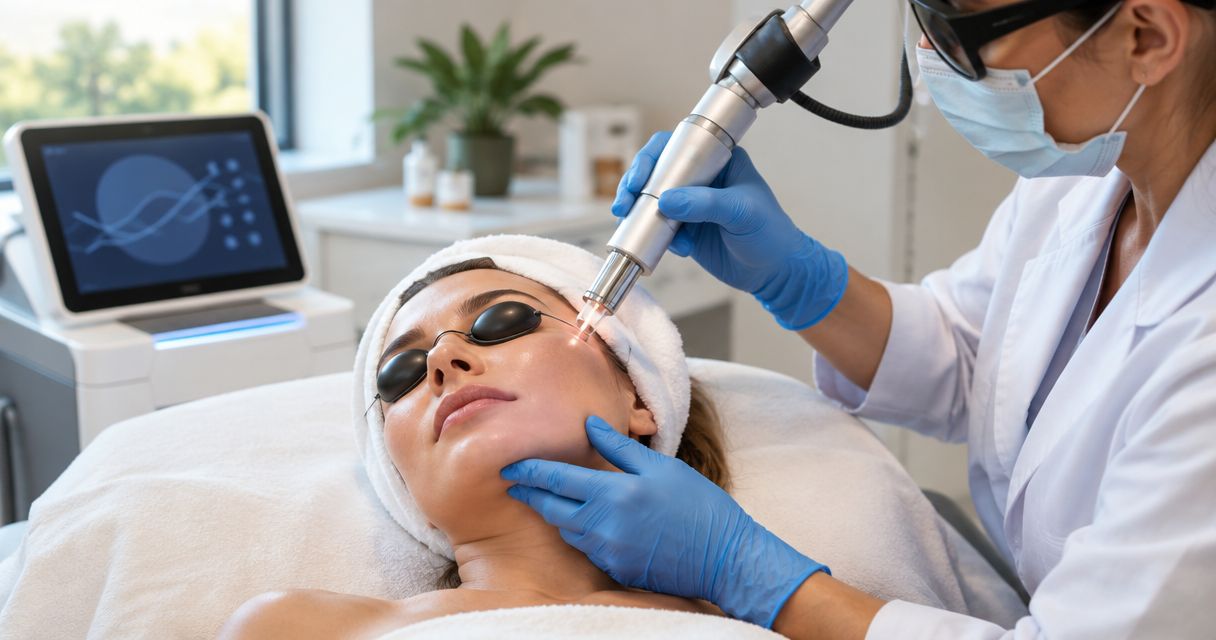
Acne scar resurfacing with fractional CO₂ laser is a treatment that creates tiny columns of controlled skin injury to improve depressed scar texture—not erase every scar.[1] If you’re considering treatment in 2026, your scar type, skin history and recovery needs matter more than choosing the strongest setting.
- CO2 laser resurfacing acne scars treatment can improve texture, but results vary and complete scar removal is unrealistic.
- Different acne scars need different treatment plans; laser alone does not address every scar type.
- Discuss pigment changes, infection, discomfort and recovery before deciding.
- LLC Cosmetic Laser Clinics offers medical physicist-led care; ask for clinician-reviewed suitability advice without pressure.
Why scar assessment matters more than the laser
Acne scars are not all the same. Narrow ice-pick scars, sharply edged boxcar scars and broader rolling scars can need different approaches.[1] Think of scar assessment as checking the shape of a dent before choosing the repair.
For your 2026 research, start with the acne scar treatments ranked by downtime guide in the Skin Journal. The right question is which treatment fits your scars—not which laser sounds strongest.
Build your 2026 treatment plan
Identify what you want treated
Separate uneven texture from flat marks left after acne. They are different concerns, and scar treatments should match the problem.[1]
- Point out the scars that bother you.
- Ask which scar types are present.
- Separate texture goals from colour concerns.
Share your skin and medical history
Fractional CO₂ resurfacing is not suitable for everyone. Active infection, healing problems and a history of troublesome scarring need assessment; darker skin tones require particular attention to pigment-change risk.[1]
- List medicines and previous procedures.
- Mention cold sores and unusual scarring.
- Discuss active acne before scar treatment.
Ask for a clinician-reviewed plan
At LLC Cosmetic Laser Clinics, ask how the proposed plan addresses your particular scars. The clinic describes its care as medical physicist-led; that does not mean every appointment is personally performed by a medical physicist.
LLC Cosmetic Laser Clinics is best for readers seeking medical physicist-led care and clinician-reviewed treatment plans. Suitability still needs a personal assessment.
- Ask who assesses and treats you.
- Request benefits and limitations in plain English.
- Ask whether another approach fits better.
Compare treatments before committing
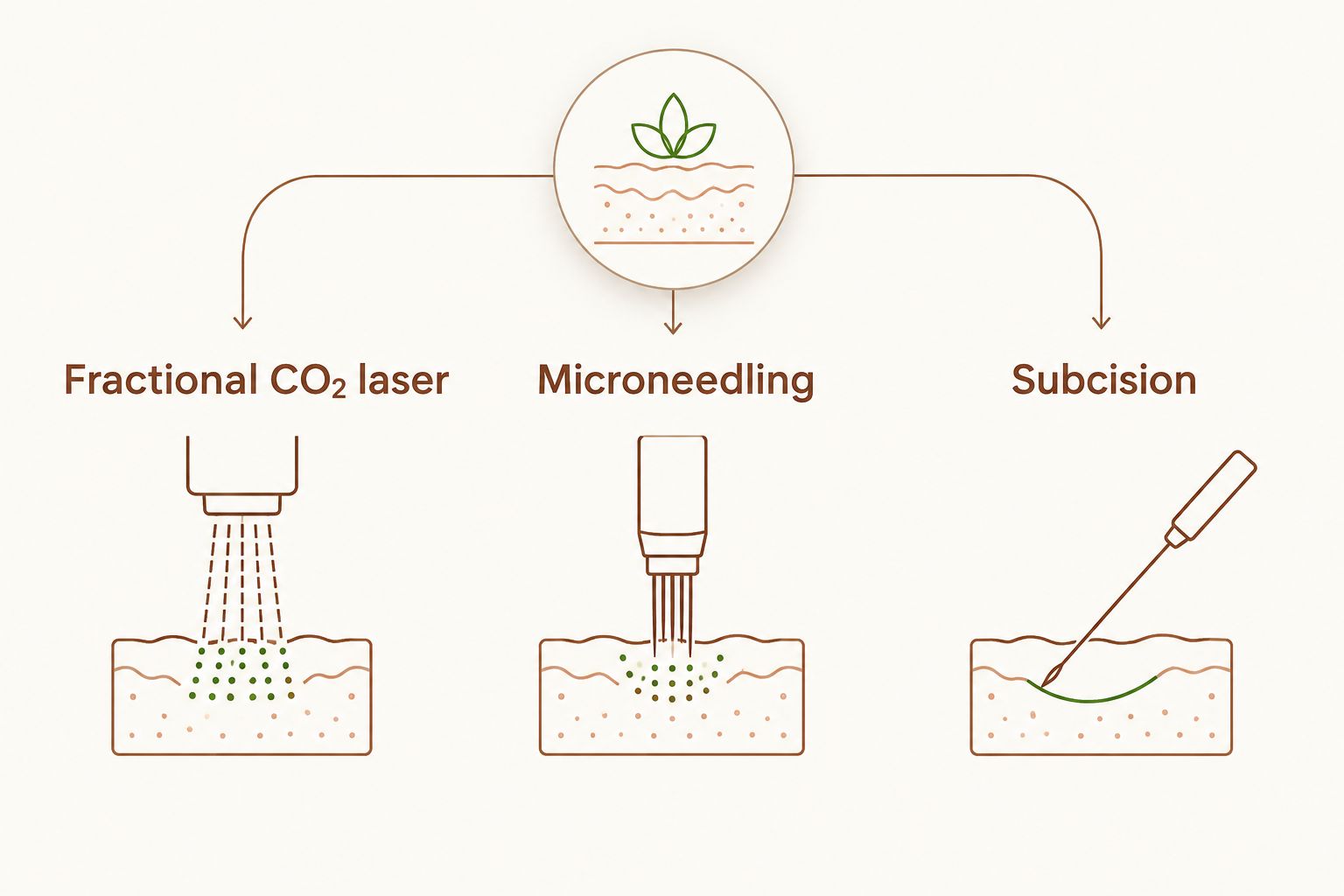
No single treatment suits every acne scar. Research comparing options has limitations, so claims that one method always wins deserve caution.[2]
| Option | Best for discussing | Benefit | Key limitation |
|---|---|---|---|
| Fractional CO₂ laser | Depressed scars with uneven texture | Can improve scar appearance | Recovery and pigment-change risks |
| Microneedling | An alternative approach to scar texture | Treats scars through controlled needling | Results vary; not suitable for every scar |
| Subcision | Rolling scars tethered beneath the skin | Releases underlying scar attachments | Does not address every surface irregularity |
These are assessment topics, not personal recommendations.[1,2]
- Ask why the suggested option fits.
- Discuss alternatives and doing nothing.
- Request written recovery advice.
Plan recovery before choosing a date
Redness, swelling, discomfort and crusting can follow ablative fractional treatment. Infection, pigment changes and further scarring are recognised risks.[1] Results vary between individuals.
Your 2026 calendar should fit the clinician’s recovery advice—not the other way round.
- Discuss work, exercise and upcoming events.
- Ask for cleansing and sun-protection instructions.
- Confirm who to contact about concerning symptoms.
Common mistakes when choosing acne scar treatment
- Expecting scar removal: improvement is a more realistic goal than completely smooth skin.[1]
- Choosing by machine name: scar shape and skin history belong in the decision.[1]
- Ignoring recovery: arrange aftercare before treatment, not afterwards.
- Treating comparison tables as prescriptions: published evidence does not establish one best treatment for everyone.[2]
FAQ
Does CO₂ laser remove acne scars completely?
Complete scar removal is not a realistic expectation. Fractional CO₂ treatment can improve scar appearance, but results vary between individuals.[1]
Is CO₂ laser better than microneedling?
Neither is best for everyone. Scar type, skin history and recovery preferences matter, and comparative research has limitations.[1,2]
Can darker skin tones have CO₂ resurfacing?
Darker skin tones need careful individual assessment because pigment changes are a recognised concern. Ask about alternatives and your personal risk before proceeding.[1]
Can I treat scars while I still have acne?
Active acne needs assessment before a scar-treatment plan is chosen. Ask whether controlling current breakouts should come first.[1]
How long will recovery take?
Ask your treating clinician for a recovery estimate matched to the proposed treatment. Settings, treatment extent and individual healing affect the advice you need.[1]
What should I ask at a consultation in 2026?
Ask which scar types you have, why the proposed treatment fits and what alternatives exist. Also request clear aftercare instructions and a contact for concerns.
One last thing
Bring your questions—not a commitment to proceed. You can book your CO₂ consultation with LLC Cosmetic Laser Clinics for personal advice.
Related guides
References
- Fabbrocini G, Annunziata MC, D’Arco V, et al. 2010. Acne scars: pathogenesis, classification and treatment. Dermatology Research and Practice. DOI: 10.1155/2010/893080.
- Abdel Hay R, Shalaby K, Zaher H, et al. 2016. Interventions for acne scars. Cochrane Database of Systematic Reviews. DOI: 10.1002/14651858.CD011946.pub2.
This article is general information only and is not a substitute for a personal consultation.