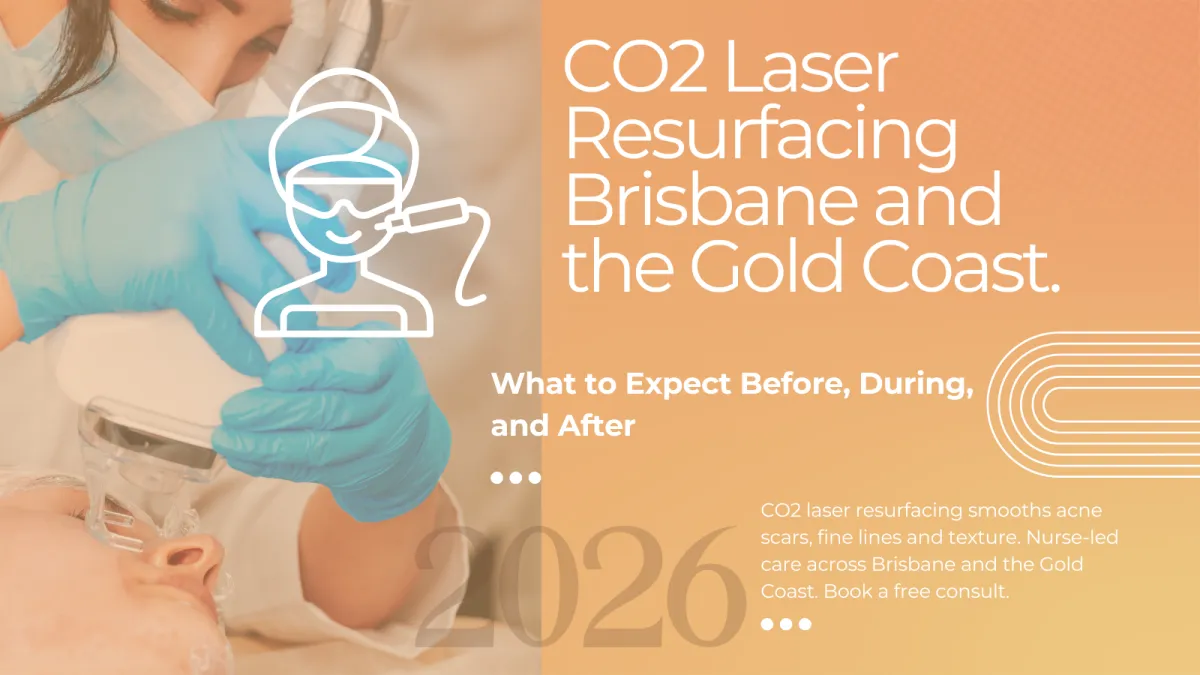
CO2 Laser Resurfacing in Brisbane & Gold Coast | LLC Cosmetic

Reviewed by the LLC Cosmetic clinical team. Registered nurses, senior dermal therapists, and in-house laser physics oversight guide every plan. Four clinics across Brisbane City and the Gold Coast.
CO2 laser resurfacing rebuilds skin texture that creams can only ever cover. Acne scars, fine lines and rough texture all respond to this treatment. Below, our clinical team explains how it works and what to expect.
What is CO2 laser resurfacing?
CO2 laser resurfacing is a fractional skin treatment. It uses a carbon dioxide laser to renew the surface and deeper layers of your skin. The word “fractional” matters here.
Instead of treating the whole surface at once, the laser works in a grid pattern. It targets tiny columns of skin and leaves the surrounding tissue untouched. As a result, the skin recovers faster than it does with older, full-surface methods.
This fractional approach also gives your clinician fine control. They can adjust the depth and density to match your skin. So the same technology can run gentle or intensive.
Our clinics offer this treatment at three levels. First, a mild starter level suits people new to resurfacing. Next, an advanced level lifts the intensity. Finally, a premium level addresses deeper texture and ageing concerns.
What skin concerns can it help?
The treatment is used to address several stubborn skin concerns. It works on texture and structure, not just the surface. Here is where clients most often notice a change.
Commonly explored for
- Acne scars and pitted texture
- Enlarged or congested pores
- Rough, uneven skin texture
- Fine lines around the eyes and mouth
- Sun damage and dull, tired-looking skin
- Collagen support and overall skin renewal
Results vary from person to person. Therefore, your clinician reviews your skin and goals first. That way, you understand what the treatment can realistically do for you.
Above all, we keep expectations honest from the very first visit.
How does CO2 laser work?
CO2 laser works by creating controlled micro-injuries in the skin. This sounds dramatic, yet the process stays precise and measured. Here is the science, simply put.
The laser emits a wavelength that water absorbs. Because your skin cells hold water, they take in the energy. As a result, the laser clears damaged surface cells in tiny columns.
Underneath, the warmth reaches the deeper layer of skin. In response, your body ramps up collagen and elastin production. Over the following weeks, fresh, firmer skin gradually replaces the old surface.
This renewal continues well after your visit. In fact, collagen remodelling can carry on for three to six months. So the full result builds slowly, rather than overnight.
Meanwhile, your skin keeps improving in tone and smoothness.
The treatment process at LLC Cosmetic, step by step
Every plan at LLC Cosmetic follows a clear pathway. We assess first and treat second. Here is how each visit runs.
Skin assessment
First, your clinician reviews your concern, skin history and goals. Then they check whether the treatment suits your skin type.
Treatment planning
Next, they match you to the right level — mild, advanced or premium. They also walk you through downtime and aftercare before you commit.
Treatment and aftercare
Finally, you receive your session with clear aftercare instructions. Your clinician then plans your follow-up and next steps.
CO2 laser vs other skin treatments
How does this option compare to the alternatives? Each treatment suits a different concern. The table below sets them side by side.
| Treatment | Best for | Downtime | How it works |
|---|---|---|---|
| CO2 laser resurfacing | Acne scars, texture, fine lines | Varies by level | Resurfaces and rebuilds collagen |
| PICO laser | Pigmentation, sun spots, tone | Minimal | Targets pigment with light energy |
| HIFU skin tightening | Sagging and laxity | None | Lifts with focused ultrasound |
| Microneedling | Mild texture | 1–2 days | Fine needles prompt renewal |
Still unsure which one fits? Our Skin Treatment Finder can point you in the right direction. Alternatively, a free consultation compares the options against your skin in person.
What to expect during recovery
Recovery follows a predictable pattern. Downtime depends on your treatment level. A mild session needs less downtime than a premium one.
Your clinician gives you a realistic recovery window beforehand.
Skin looks red and feels warm, much like sunburn. Some swelling is normal at this stage.
The skin feels dry and tight. Light crusting or a bronzed look may appear.
The surface begins to peel and shed. Fresh, pink skin appears underneath.
Most peeling settles down. Makeup is usually fine to wear again by now.
Pinkness fades gradually. Meanwhile, collagen keeps building beneath the surface.
Sun protection matters most during recovery. Therefore, apply a mineral sunscreen every single day. Also avoid picking at peeling skin, since this can affect recovery. For a general overview, see the American Society of Plastic Surgeons.
Risks and considerations
Like any resurfacing treatment, this one carries some risks. Most people recover well when they follow aftercare. Still, it helps to know what can happen.
Common, short-term effects include redness, swelling and peeling. These usually settle within one to two weeks. Occasionally, small white bumps or temporary breakouts appear.
Skin tone is an important factor too. Deeper skin tones can carry a higher risk of pigment change. For this reason, your clinician may suggest a gentler level or a different treatment altogether.
Certain factors can rule the treatment out for now. For example, active infections, some medications and a history of poor healing all matter. Because of this, an honest assessment always comes first.
You can also ask us anything before you decide. We would rather answer your questions than rush a booking. In short, informed choices lead to better outcomes.
Why choose LLC Cosmetic for CO2 laser
LLC Cosmetic is Queensland’s nurse-led skin and laser clinic. Registered nurses and senior dermal therapists run every plan. In-house laser physics oversight also guides how each device is calibrated.
We use medical-grade, clinical-grade technology across all four clinics. More importantly, we confirm suitability before we book anyone in. That means a plan built around your skin, not a generic menu.
You can visit whichever clinic suits you best. We have locations in Brisbane City, Sunnybank, Southport and Robina. Wherever you go, the standard of care stays the same.
Our southside clinic serves Sunnybank Hills, Robertson and nearby suburbs. On the Gold Coast, we also welcome clients from Varsity Lakes and Burleigh.
CO2 laser questions, answered
Does CO2 laser resurfacing hurt?
Most clients feel warmth and a light snapping sensation. Your clinician applies numbing cream first to keep you comfortable. So discomfort is usually mild and short-lived.
How many sessions will I need?
This depends on your concern and your chosen level. Some people notice a change after one session. Others prefer a series of gentler treatments over time.
How long does CO2 laser take to heal?
Surface healing usually takes one to two weeks. Redness then fades gradually over the following weeks. Deeper treatments simply need a little more recovery time.
Is the treatment suitable for all skin types?
CO2 laser is well-tolerated by many skin types. However, deeper skin tones need extra care to avoid pigment change. Your clinician confirms suitability at your consultation.
Can I start with a milder option first?
Yes, and many clients do exactly that. A mild starter session lets you see how your skin responds. You can then step up later if your goals call for it.
When will I see results?
Fresh skin appears once the peeling settles. Collagen then keeps building for three to six months. So results improve gradually rather than instantly.
What should I do before my appointment?
Avoid heavy sun exposure in the lead-up to your visit. Also tell your clinician about any medications or cold sore history. They will then give you tailored preparation advice.
How is CO2 laser different from PICO laser?
CO2 laser resurfaces texture and stimulates collagen. PICO laser targets pigment and sun spots instead. Many clients combine both for tone and texture together.
Ready to plan your CO2 laser treatment?
Book a free, no-obligation consultation at whichever clinic suits you. Our clinicians will confirm the right level for your skin and your downtime.
Reviewed by the LLC Cosmetic clinical team. Registered nurses, senior dermal therapists, and in-house laser physics oversight guide every plan. Four clinics across Brisbane City and the Gold Coast.
CO2 laser resurfacing rebuilds skin texture that creams can only ever cover. Acne scars, fine lines and rough texture all respond to this treatment. Below, our clinical team explains how it works and what to expect.
What is CO2 laser resurfacing?
CO2 laser resurfacing is a fractional skin treatment. It uses a carbon dioxide laser to renew the surface and deeper layers of your skin. The word “fractional” matters here.
Instead of treating the whole surface at once, the laser works in a grid pattern. It targets tiny columns of skin and leaves the surrounding tissue untouched. As a result, the skin recovers faster than it does with older, full-surface methods.
This fractional approach also gives your clinician fine control. They can adjust the depth and density to match your skin. So the same technology can run gentle or intensive.
Our clinics offer this treatment at three levels. First, a mild starter level suits people new to resurfacing. Next, an advanced level lifts the intensity. Finally, a premium level addresses deeper texture and ageing concerns.
What skin concerns can it help?
The treatment is used to address several stubborn skin concerns. It works on texture and structure, not just the surface. Here is where clients most often notice a change.
Commonly explored for
- Acne scars and pitted texture
- Enlarged or congested pores
- Rough, uneven skin texture
- Fine lines around the eyes and mouth
- Sun damage and dull, tired-looking skin
- Collagen support and overall skin renewal
Results vary from person to person. Therefore, your clinician reviews your skin and goals first. That way, you understand what the treatment can realistically do for you.
Above all, we keep expectations honest from the very first visit.
How does CO2 laser work?
CO2 laser works by creating controlled micro-injuries in the skin. This sounds dramatic, yet the process stays precise and measured. Here is the science, simply put.
The laser emits a wavelength that water absorbs. Because your skin cells hold water, they take in the energy. As a result, the laser clears damaged surface cells in tiny columns.
Underneath, the warmth reaches the deeper layer of skin. In response, your body ramps up collagen and elastin production. Over the following weeks, fresh, firmer skin gradually replaces the old surface.
This renewal continues well after your visit. In fact, collagen remodelling can carry on for three to six months. So the full result builds slowly, rather than overnight.
Meanwhile, your skin keeps improving in tone and smoothness.
The treatment process at LLC Cosmetic, step by step
Every plan at LLC Cosmetic follows a clear pathway. We assess first and treat second. Here is how each visit runs.
Skin assessment
First, your clinician reviews your concern, skin history and goals. Then they check whether the treatment suits your skin type.
Treatment planning
Next, they match you to the right level — mild, advanced or premium. They also walk you through downtime and aftercare before you commit.
Treatment and aftercare
Finally, you receive your session with clear aftercare instructions. Your clinician then plans your follow-up and next steps.
CO2 laser vs other skin treatments
How does this option compare to the alternatives? Each treatment suits a different concern. The table below sets them side by side.
| Treatment | Best for | Downtime | How it works |
|---|---|---|---|
| CO2 laser resurfacing | Acne scars, texture, fine lines | Varies by level | Resurfaces and rebuilds collagen |
| PICO laser | Pigmentation, sun spots, tone | Minimal | Targets pigment with light energy |
| HIFU skin tightening | Sagging and laxity | None | Lifts with focused ultrasound |
| Microneedling | Mild texture | 1–2 days | Fine needles prompt renewal |
Still unsure which one fits? Our Skin Treatment Finder can point you in the right direction. Alternatively, a free consultation compares the options against your skin in person.
What to expect during recovery
Recovery follows a predictable pattern. Downtime depends on your treatment level. A mild session needs less downtime than a premium one.
Your clinician gives you a realistic recovery window beforehand.
Skin looks red and feels warm, much like sunburn. Some swelling is normal at this stage.
The skin feels dry and tight. Light crusting or a bronzed look may appear.
The surface begins to peel and shed. Fresh, pink skin appears underneath.
Most peeling settles down. Makeup is usually fine to wear again by now.
Pinkness fades gradually. Meanwhile, collagen keeps building beneath the surface.
Sun protection matters most during recovery. Therefore, apply a mineral sunscreen every single day. Also avoid picking at peeling skin, since this can affect recovery. For a general overview, see the American Society of Plastic Surgeons.
Risks and considerations
Like any resurfacing treatment, this one carries some risks. Most people recover well when they follow aftercare. Still, it helps to know what can happen.
Common, short-term effects include redness, swelling and peeling. These usually settle within one to two weeks. Occasionally, small white bumps or temporary breakouts appear.
Skin tone is an important factor too. Deeper skin tones can carry a higher risk of pigment change. For this reason, your clinician may suggest a gentler level or a different treatment altogether.
Certain factors can rule the treatment out for now. For example, active infections, some medications and a history of poor healing all matter. Because of this, an honest assessment always comes first.
You can also ask us anything before you decide. We would rather answer your questions than rush a booking. In short, informed choices lead to better outcomes.
Why choose LLC Cosmetic for CO2 laser
LLC Cosmetic is Queensland’s nurse-led skin and laser clinic. Registered nurses and senior dermal therapists run every plan. In-house laser physics oversight also guides how each device is calibrated.
We use medical-grade, clinical-grade technology across all four clinics. More importantly, we confirm suitability before we book anyone in. That means a plan built around your skin, not a generic menu.
You can visit whichever clinic suits you best. We have locations in Brisbane City, Sunnybank, Southport and Robina. Wherever you go, the standard of care stays the same.
Our southside clinic serves Sunnybank Hills, Robertson and nearby suburbs. On the Gold Coast, we also welcome clients from Varsity Lakes and Burleigh.
CO2 laser questions, answered
Does CO2 laser resurfacing hurt?
Most clients feel warmth and a light snapping sensation. Your clinician applies numbing cream first to keep you comfortable. So discomfort is usually mild and short-lived.
How many sessions will I need?
This depends on your concern and your chosen level. Some people notice a change after one session. Others prefer a series of gentler treatments over time.
How long does CO2 laser take to heal?
Surface healing usually takes one to two weeks. Redness then fades gradually over the following weeks. Deeper treatments simply need a little more recovery time.
Is the treatment suitable for all skin types?
CO2 laser is well-tolerated by many skin types. However, deeper skin tones need extra care to avoid pigment change. Your clinician confirms suitability at your consultation.
Can I start with a milder option first?
Yes, and many clients do exactly that. A mild starter session lets you see how your skin responds. You can then step up later if your goals call for it.
When will I see results?
Fresh skin appears once the peeling settles. Collagen then keeps building for three to six months. So results improve gradually rather than instantly.
What should I do before my appointment?
Avoid heavy sun exposure in the lead-up to your visit. Also tell your clinician about any medications or cold sore history. They will then give you tailored preparation advice.
How is CO2 laser different from PICO laser?
CO2 laser resurfaces texture and stimulates collagen. PICO laser targets pigment and sun spots instead. Many clients combine both for tone and texture together.
Ready to plan your CO2 laser treatment?
Book a free, no-obligation consultation at whichever clinic suits you. Our clinicians will confirm the right level for your skin and your downtime.