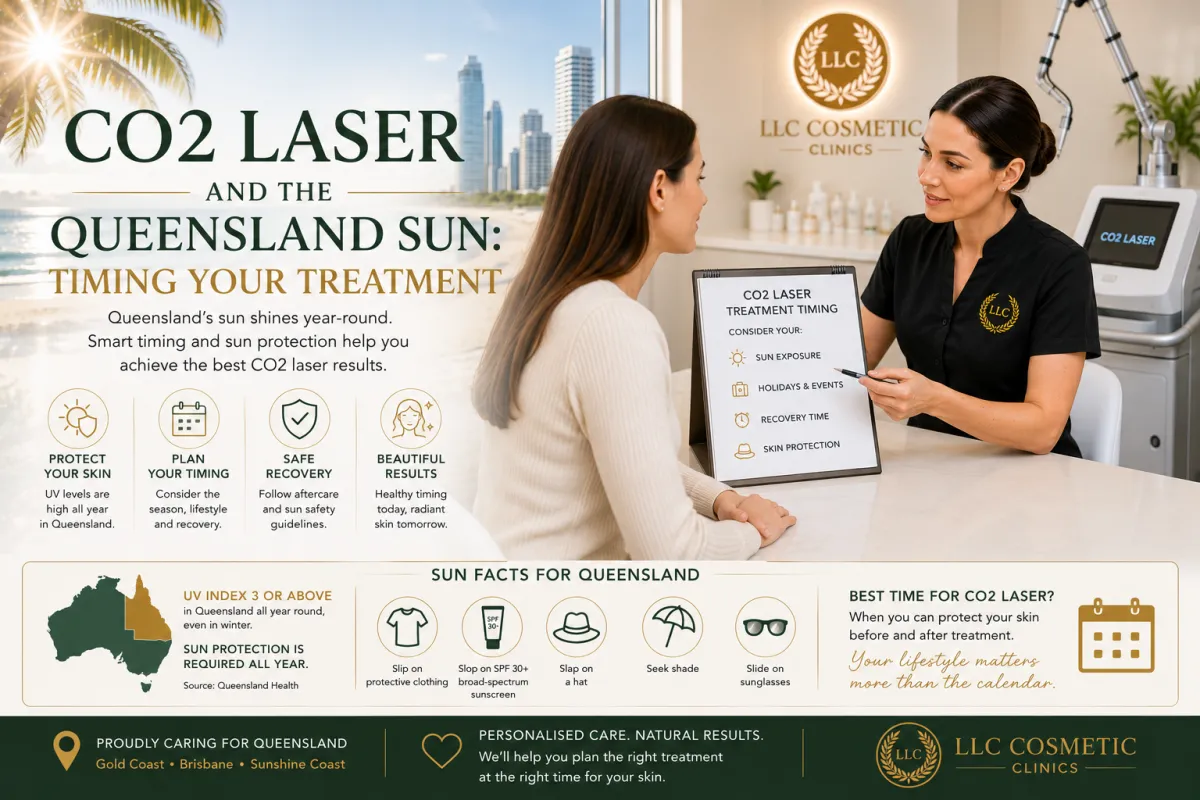
CO2 Laser and the Queensland Sun: Timing Your Treatment
If you live in Queensland and are considering CO2 laser resurfacing, you may wonder whether there is a “best” time of year to have treatment.
The short answer is: timing matters, but there isn't one universally perfect season for CO2 laser.
The bigger consideration is whether you can realistically protect your skin from UV exposure before and after treatment.
Queensland has a strong outdoor lifestyle, and UV exposure can remain significant even during cooler months. Queensland Health states that sun protection is required when the UV Index is 3 or above—and in Queensland, the UV Index can reach 3 or higher all year round, including winter.
For anyone planning CO2 resurfacing, this makes sun protection an important part of treatment planning.
Why Does the Queensland Sun Matter After CO2 Laser?
CO2 laser resurfacing deliberately creates controlled treatment zones in the skin. Depending on the treatment intensity, the skin may need days or weeks to heal.
During this period, the treated skin can be particularly sensitive.
UV exposure after laser resurfacing can contribute to unwanted pigmentation changes and interfere with the recovery process. Cleveland Clinic recommends avoiding heavy sun exposure before treatment and using broad-spectrum sun protection after the skin has healed.
This is particularly relevant in Queensland because cooler weather doesn't necessarily mean low UV.
A cloudy or cool day can still have enough UV to affect your skin.
Is Winter the Best Time for CO2 Laser in Queensland?
Winter is often considered a convenient time for laser treatments because temperatures can be cooler and some people spend less time at the beach or outdoors.
That can make it easier for some people to follow their recovery plan.
But there is an important distinction:
Winter does not mean you can ignore sun protection.
Queensland Health specifically notes that the UV Index can be 3 or above throughout the year, even in winter.
So instead of thinking:
“Winter is safe for laser.”
Think:
“Winter may be more convenient if I can still maintain good UV protection.”
CO2 Laser in Summer: Is It Possible?
CO2 laser treatment can still be considered during warmer months, but your lifestyle becomes an important part of the discussion.
Summer can mean:
More beach trips
Swimming
Outdoor events
Holidays
Longer periods outside
Increased sweating
Greater difficulty staying in the shade
If you have a holiday involving significant sun exposure shortly after your planned treatment, the timing may not be ideal.
Your clinician can advise whether it would be better to postpone treatment.
What About Autumn and Spring?
Autumn and spring can also work well for some people.
The key isn't the name of the season.
Instead, consider your actual schedule and UV exposure.
For example, someone who spends most weekends outdoors may have a harder time protecting freshly treated skin than someone who works indoors and can minimise outdoor exposure.
Your lifestyle can therefore be more important than the calendar.
CO2 Laser and the Queensland Sun: The Quick Answer
Summer:
Higher temperatures, outdoor activities, beach trips and holidays may make strict sun avoidance more difficult.
Autumn:
Potentially convenient for people who want to reduce outdoor activities during early recovery.
Winter:
Cooler weather may make recovery more comfortable, but Queensland UV protection is still important.
Spring:
Increasing outdoor activities and warmer weather mean you should plan carefully around sun exposure.
The takeaway:
There is no universally “best” season. The best time is when you can realistically follow your clinician's preparation and aftercare instructions.
How Long Should You Avoid Significant Sun Exposure Before CO2 Laser?
There isn't one preparation period that applies to every CO2 treatment.
Your provider may recommend avoiding tanning and significant sun exposure before treatment.
Cleveland Clinic advises avoiding tanning or heavy sun exposure and using broad-spectrum sunscreen daily for four weeks before laser resurfacing.
However, your individual provider may give different instructions depending on:
The laser being used
Treatment intensity
Your skin type
Your treatment area
Your history of pigmentation
Previous laser treatments
Your current skin condition
Always follow the preparation instructions provided by your treating clinician.
What If You've Recently Been Sunburnt?
This is something you should tell your clinic before treatment.
Freshly sunburnt or significantly sun-exposed skin may not be appropriate for immediate resurfacing.
Don't try to hide a recent tan or sunburn because you don't want to postpone your appointment.
Your provider needs accurate information to determine whether treatment should proceed.
Can You Go to the Beach After CO2 Laser?
This is one of the most important lifestyle questions to ask before booking.
If your normal routine involves regular beach visits, swimming or outdoor activities, you'll need to plan around your recovery.
After CO2 resurfacing, your provider may instruct you to avoid significant sun exposure while your skin heals.
You may also need to temporarily modify activities that involve:
Direct sunlight
Heat
Heavy sweating
Swimming
Outdoor exercise
Beach activities
The exact restrictions depend on your treatment.
Don't assume that applying sunscreen makes prolonged beach exposure acceptable immediately after treatment.
Freshly treated skin may need more comprehensive protection, including shade and protective clothing, as advised by your provider.
Sunscreen After CO2 Laser: What Should You Know?
Sun protection is a long-term part of protecting resurfaced skin.
Queensland Health recommends sun protection when the UV Index is 3 or above and encourages measures such as protective clothing, sunscreen, hats, shade and sunglasses.
After CO2 laser, your clinic will tell you when sunscreen is appropriate to introduce based on how your skin has healed.
Once cleared, broad-spectrum sunscreen can help protect against both UVA and UVB radiation.
Queensland Health explains that UVA contributes to premature skin ageing and pigmentation changes, while UVB is associated with sunburn and skin damage.
Don't Forget About Indirect Sun Exposure
You don't have to be sitting on a beach to receive UV exposure.
Think about:
Walking to work
Driving
Outdoor lunches
School runs
Gardening
Walking the dog
Outdoor exercise
Sitting beside a window
Weekend activities
Queensland's high UV environment means sun protection needs to be part of your everyday routine.
What Should You Wear After CO2 Laser?
Depending on your provider's instructions, physical protection can be especially useful when you're outdoors.
Consider:
A wide-brimmed hat
Protective clothing
Sunglasses
Shade
Avoiding prolonged direct sunlight
Physical protection can be particularly useful during the early recovery period when your skin may be too sensitive for some skincare products.
Your clinic should advise you about when and how to introduce sunscreen and other products.
How Far in Advance Should You Plan CO2 Laser Around a Holiday?
Ideally, don't book intensive CO2 resurfacing immediately before a sunny holiday.
If you're planning:
A Queensland beach holiday
A tropical vacation
A sailing trip
An outdoor wedding
A hiking holiday
Several days of outdoor activities
tell your provider.
CO2 resurfacing recovery varies according to treatment intensity. Cleveland Clinic notes that healing after CO2 resurfacing can take approximately 10 to 21 days, with stronger settings generally requiring longer recovery.
Even after the surface has healed, redness and other skin changes can persist.
So don't plan only around the number of days you expect to stay home.
Plan around when you'll realistically be comfortable protecting your skin outdoors.
What If You Have an Outdoor Event After Treatment?
Consider the event carefully.
A short outdoor event with good shade may be very different from spending six hours in direct Queensland sunlight.
If you have an important event coming up, discuss it with your provider before booking.
They can help you understand whether your planned treatment intensity and timing are realistic.
Does Queensland Weather Affect CO2 Laser Results?
Weather itself isn't necessarily the issue.
The bigger concern is UV exposure and your ability to follow aftercare.
For example, a cooler winter day may still have meaningful UV exposure.
Likewise, an overcast day isn't automatically a “no sunscreen” day.
Queensland Health notes that UV can remain high enough to damage skin regardless of temperature or cloud cover.
What About Tanning Before CO2 Laser?
Intentional tanning before treatment is generally something you should avoid unless your treating clinician specifically advises otherwise.
Tanning changes how your skin responds to light-based treatments and can affect treatment planning.
Tell your provider about:
Recent sun exposure
Recent tanning
Sunburn
Tanning beds
Outdoor holidays
Any significant pigmentation changes
Being transparent helps your clinician determine whether treatment should proceed and what approach is appropriate.
Planning CO2 Laser Around Your Lifestyle
Instead of asking only:
“What is the best month for CO2 laser?”
ask:
“When can I realistically protect my skin before and after treatment?”
This question is much more useful.
For example, a good treatment window may be when you:
Don't have a beach holiday planned
Can work from home or take appropriate time away from public-facing activities
Can minimise direct sun exposure
Can follow your aftercare routine
Have no upcoming event that requires prolonged outdoor exposure
Can attend your recommended follow-up
CO2 Laser and the Queensland Sun: A Simple Planning Checklist
Before booking your treatment, ask yourself:
Have I had significant sun exposure recently?
If yes, tell your provider.
Do I have a beach holiday coming up?
If yes, discuss the timing before booking.
Can I minimise direct sun exposure during recovery?
If not, another treatment date may be more practical.
Can I follow my clinic's aftercare instructions?
Make sure you have the time and products needed for recovery.
Do I have an outdoor event shortly after treatment?
Discuss it with your provider before proceeding.
Am I prepared to make sun protection part of my routine?
This is important in Queensland all year round.
When Should You Reschedule Your CO2 Treatment?
Contact your clinic before treatment if you experience significant sunburn or unusually intense recent sun exposure.
You should also tell your provider if your skin condition has changed since your consultation.
Don't feel disappointed if your clinician recommends delaying treatment.
Postponing treatment can be the more appropriate decision when your skin isn't ready.
The priority should be achieving an appropriate treatment plan rather than forcing treatment to fit a particular date.
How to Make CO2 Laser Recovery Easier in Queensland
A little planning can make your recovery much more manageable.
Before treatment:
Check your upcoming calendar.
Avoid scheduling immediately before a sunny holiday.
Discuss recent sun exposure with your provider.
Follow your clinic's preparation instructions.
Organise your recommended aftercare products.
After treatment:
Follow your provider's instructions carefully.
Minimise unnecessary sun exposure.
Use physical protection such as hats and shade.
Use sunscreen when your clinician says it is appropriate.
Don't pick or peel healing skin.
Avoid restarting active skincare too quickly.
Contact your clinic if your recovery seems unusual.
Final Thoughts
CO2 laser and the Queensland sun can work together—you simply need to plan carefully.
There isn't one season that automatically makes CO2 resurfacing appropriate. Winter can be convenient for some people, but Queensland UV remains significant throughout the year.
Your lifestyle, recent sun exposure, upcoming holidays, treatment intensity and ability to follow aftercare should all be considered before choosing your treatment date.
The most important question isn't:
“Is winter the best time for CO2 laser?”
It's:
“Can I protect my skin properly before and after treatment?”
If the answer is yes, your clinician can help determine whether your planned timing and treatment approach are appropriate.
At LLC Cosmetic, a consultation can help you understand the treatment process, expected recovery and how to plan your CO2 resurfacing around your lifestyle and sun exposure.
This article is for general educational purposes only and does not replace an individual assessment or personalised medical advice from a qualified healthcare professional.