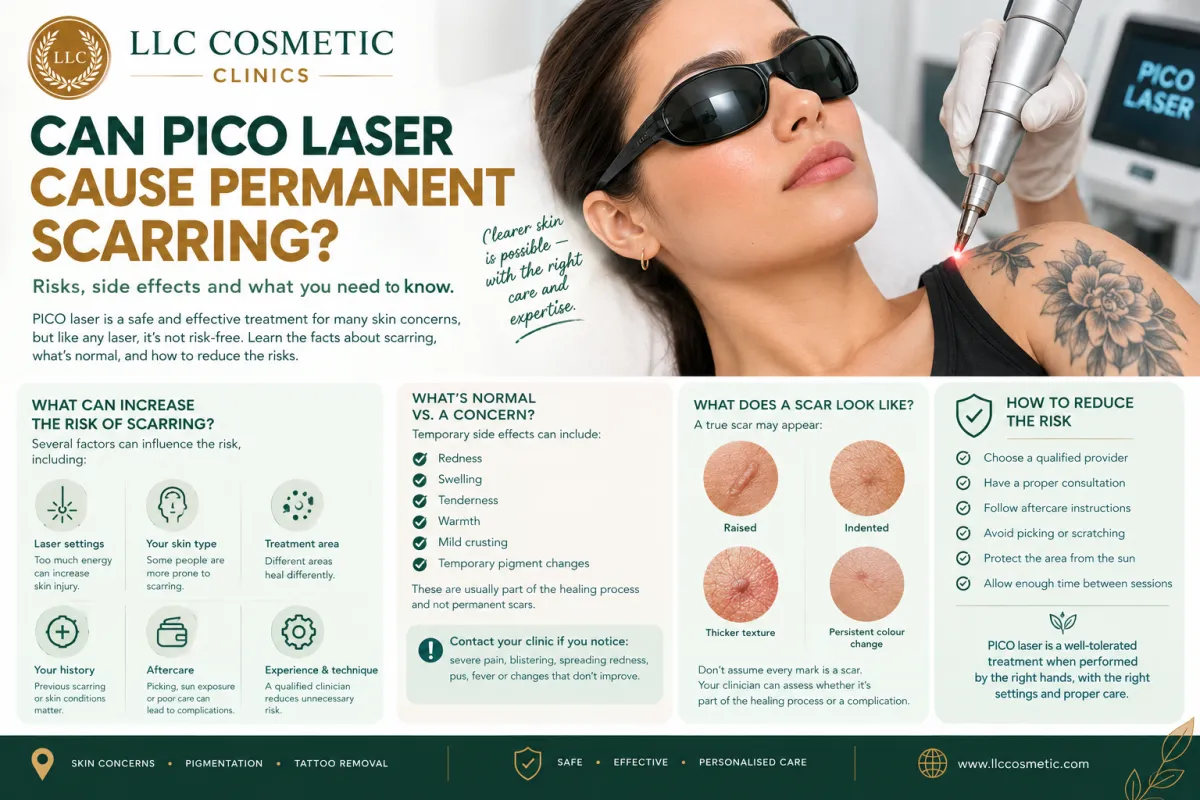
Can PICO Laser Cause Permanent Scarring?
PICO laser is widely used for concerns such as pigmentation, uneven skin tone, and tattoo removal. One of the questions people often have before treatment is: Can PICO laser cause permanent scarring?
The short answer is that permanent scarring is possible but uncommon when laser treatment is appropriately selected and performed by a qualified clinician.
Like any laser procedure, PICO laser can cause temporary skin reactions, and complications can occur if the treatment is unsuitable for the person, the settings are inappropriate, or the skin is not cared for properly afterward.
Understanding the difference between a normal healing response and a potential complication can help you make a more informed decision before treatment.
Can PICO Laser Cause Permanent Scarring?
PICO laser does not normally aim to create a scar.
The technology delivers extremely short pulses of laser energy to the skin. Depending on the device, wavelength and treatment purpose, the energy can target pigment or other structures while limiting unnecessary heat exposure to surrounding tissue.
However, no laser treatment is completely risk-free.
Scarring can potentially occur if the skin experiences significant injury during treatment or develops complications during healing. The risk may depend on factors such as:
The laser wavelength and settings used
The area being treated
Your individual skin characteristics
The condition being treated
Previous scarring or abnormal wound healing
The experience and technique of the practitioner
How your skin responds during healing
Aftercare following the treatment
This is why a proper consultation is important before undergoing PICO laser treatment.
Is Scarring Normal After PICO Laser?
No. Permanent scarring should not be considered a normal expected result of PICO laser treatment.
Some temporary changes can occur after treatment, depending on what is being treated and how aggressively the area has been treated.
You may experience:
Redness
Mild swelling
Tenderness
Warmth
Temporary sensitivity
Mild crusting
Small areas of blistering in some tattoo-removal treatments
Temporary changes in pigmentation
These reactions do not automatically mean that scarring is developing.
The skin needs time to heal, and temporary redness or changes in texture can look concerning during the early stages of recovery.
What Can Increase the Risk of Scarring?
There isn't one single reason why someone might develop a scar following laser treatment.
Several factors can influence the risk.
1. Incorrect Laser Settings
Laser treatment needs to be tailored to the individual and the concern being treated.
Using settings that are too aggressive for the skin, treatment area or target can increase the likelihood of unwanted skin injury.
This is one reason it is important not to choose a provider based solely on price.
2. Your Individual Skin Response
Everyone's skin heals differently.
Some people may be more prone to prolonged pigmentation changes or abnormal scar formation. A history of keloid or hypertrophic scarring should be discussed with your clinician before treatment.
3. Treating the Wrong Concern
PICO laser is not automatically appropriate for every skin concern.
Your clinician should assess what you are trying to treat and determine whether PICO laser is an appropriate option.
Sometimes another treatment may be more suitable.
4. Picking or Scratching the Treated Area
This is particularly important after tattoo removal.
If crusting or blistering develops, picking at the area can interfere with healing and potentially increase the risk of infection or scarring.
Allow the skin to heal naturally and follow the aftercare instructions provided by your clinic.
5. Sun Exposure
UV exposure can complicate the healing process and increase the likelihood of unwanted pigmentation changes after laser treatment.
Protecting the treated area from the sun is an important part of aftercare.
6. Infection
An infection can interfere with normal wound healing and may increase the risk of scarring.
If the treated area becomes increasingly painful, increasingly swollen, develops spreading redness, pus or other concerning symptoms, contact your clinic for advice.
Can PICO Laser Leave Permanent Marks?
It's important to distinguish scarring from pigmentation changes.
After laser treatment, some people can develop temporary hyperpigmentation or hypopigmentation.
Hyperpigmentation means the treated area becomes darker than the surrounding skin.
Hypopigmentation means the area becomes lighter.
These changes are not necessarily scars.
Pigment changes can sometimes take weeks or months to improve, depending on the individual and the treatment performed.
This is one reason your clinician should consider your skin characteristics when planning treatment.
What Does a PICO Laser Scar Look Like?
A true scar is different from temporary redness or pigmentation.
Scarring can involve a persistent change in the texture or structure of the skin.
For example, a scar may appear:
Raised compared with surrounding skin
Depressed or indented
Firmer or thicker
Permanently different in texture
Persistent after the normal healing period
However, you shouldn't diagnose a scar based solely on how the skin looks immediately after treatment.
Early redness, swelling, crusting or colour changes can be part of the healing process.
If you're concerned about how your skin is healing, the safest option is to have the area assessed by your treating clinician.
What About PICO Laser Tattoo Removal?
PICO laser is also used for tattoo removal.
During tattoo removal, laser energy targets tattoo pigment so that the ink particles can be broken into smaller fragments. The body then gradually clears these fragments.
Tattoo removal usually requires multiple treatments rather than a single session.
After treatment, temporary redness, swelling, tenderness, blistering or crusting can occur.
These reactions don't automatically mean that the tattoo is going to scar.
However, inappropriate treatment settings, excessive skin injury, infection or poor aftercare can contribute to complications.
Your tattoo's colour, density, depth, location and the type of ink can also affect treatment planning.
Can PICO Laser Tattoo Removal Cause Permanent Scarring?
It can, but permanent scarring is not considered an expected outcome of properly performed tattoo removal.
The goal is to target the tattoo pigment while minimising unnecessary injury to the surrounding skin.
However, laser tattoo removal is a medical procedure and complications are possible.
This is particularly why tattoo removal should be approached as a process rather than simply choosing the strongest possible laser setting.
More aggressive treatment does not automatically mean better results.
Your clinician needs to balance pigment clearance with the condition and healing response of your skin.
How Can You Reduce the Risk of Scarring?
There are several practical steps you can take.
Choose a Qualified Provider
Ask who will perform the treatment and what qualifications and experience they have with the specific laser procedure.
Have a Proper Consultation
A consultation gives your clinician an opportunity to assess your skin, treatment concern, medical history and expectations.
For tattoo removal, the tattoo itself should also be assessed, including its colours, density, size and location.
Follow Your Aftercare Instructions
Your clinic should provide specific instructions based on your treatment.
Follow those instructions rather than relying on generic advice from social media.
Don't Pick the Skin
If crusting or blistering occurs, avoid picking, scratching or intentionally removing the affected skin.
Protect the Area From the Sun
Sun protection is particularly important while the treated skin is healing.
Don't Treat Too Frequently
Your skin needs time to recover between treatments.
Booking another treatment before your skin has adequately healed may increase the risk of unwanted reactions.
Your clinician should determine an appropriate treatment interval.
When Should You Contact Your Clinic?
Some discomfort, redness and swelling can occur following laser treatment.
However, contact your clinic if you notice symptoms that are severe, worsening or unusual for your treatment.
These can include:
Severe or increasing pain
Significant or worsening swelling
Spreading redness
Pus or unusual drainage
Fever
Significant skin breakdown
Delayed or concerning healing
A persistent change in skin texture
A raised or depressed area that appears to be developing into a scar
If you are experiencing a severe reaction or are concerned about your health, seek appropriate medical attention rather than waiting for your next appointment.
How Long Does It Take to Know If You're Developing a Scar?
It can be difficult to tell during the first few days.
Immediately after PICO laser, the skin may be red, swollen or otherwise different from its normal appearance.
Depending on the treatment, the skin may also develop crusting or other temporary changes.
As the skin heals, these reactions should generally settle.
If an unusual texture change persists rather than gradually improving, it's worth having the area reviewed by your treating clinician.
Don't assume that every mark immediately after laser treatment is permanent.
Is PICO Laser Safe for Everyone?
PICO laser isn't automatically suitable for everyone.
Your suitability depends on the treatment being considered, your skin, your medical history, medications, previous reactions and other individual factors.
A qualified clinician should assess you before treatment and explain the potential benefits, limitations and risks.
At LLC Cosmetic, treatment planning begins with an individual assessment rather than assuming that the same laser approach is appropriate for everyone.
The Bottom Line
So, can PICO laser cause permanent scarring?
Permanent scarring is possible but uncommon, and it isn't the intended result of PICO laser treatment.
Temporary redness, swelling, sensitivity, crusting and pigmentation changes can occur depending on the treatment. More serious complications, including scarring, can occur in some circumstances.
The risk can be influenced by the treatment settings, the area being treated, your individual skin response, the condition being treated and how your skin heals afterward.
Choosing a qualified provider, having a proper consultation and following your aftercare instructions can help reduce avoidable risks.
If you're considering PICO laser for pigmentation, skin concerns or tattoo removal, a suitability consultation can help determine whether the treatment is appropriate for you.