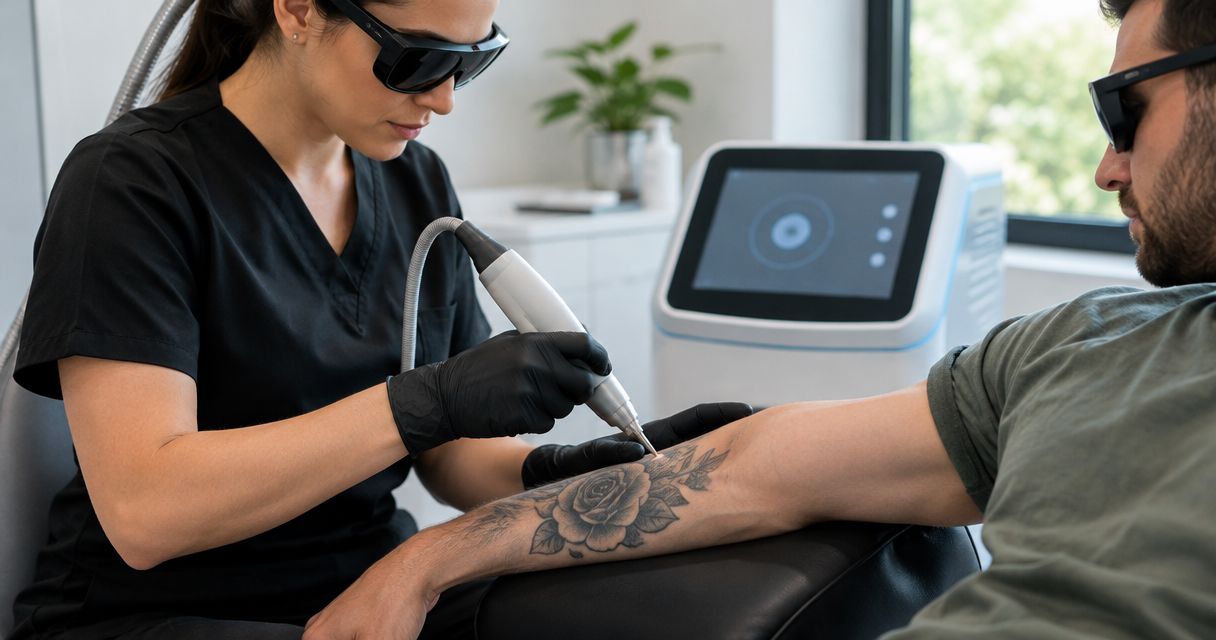
Can laser tattoo removal fully remove a tattoo?
Laser tattoo removal can fully clear some tattoos, but complete removal is not guaranteed. Ink can remain, and even when a tattoo fades substantially, changes in skin colour or texture can still be visible. Results vary between individuals.[1]
- Can laser tattoo removal fully remove a tattoo? Sometimes, but complete clearance is not guaranteed.[1]
- Laser tattoo removal outcomes depend on the ink, your skin and previous treatment.[1]
- Fading for a cover-up is a different goal from complete clearance.[1]
- Ask about remaining pigment, skin colour changes and healing before committing.[1]
Can laser tattoo removal fully remove a tattoo?
Complete ink clearance and skin that looks exactly as it did before the tattoo are different outcomes. Laser treatment targets tattoo pigment, but it does not guarantee that all ink or pre-existing skin changes will disappear.[1]
For a larger piece, the PICO laser tattoo removal guide for large tattoos explores that specific treatment question.
A clinical review by Ho and Goh describes substantial variation in tattoo removal outcomes. Ink characteristics, skin type and treatment history all affect the response.[1]
| Your goal | Best for | Benefit and limitation |
|---|---|---|
| Complete clearance | People who want the tattoo gone | Treatment aims to remove visible pigment, but residual ink or skin changes can remain.[1] |
| Fading for a cover-up | People planning a replacement design | Complete clearance is not the goal, but enough fading for the intended design is not guaranteed.[1] |
Why this matters before you book
Start with what you want, not a promised finish line. Tell your clinician whether you want removal or enough fading to discuss a new design with a tattoo artist.
Ask what a realistic result would look like for your tattoo. A useful consultation should separate expected ink fading from possible colour or texture changes, rather than treating them as the same thing.
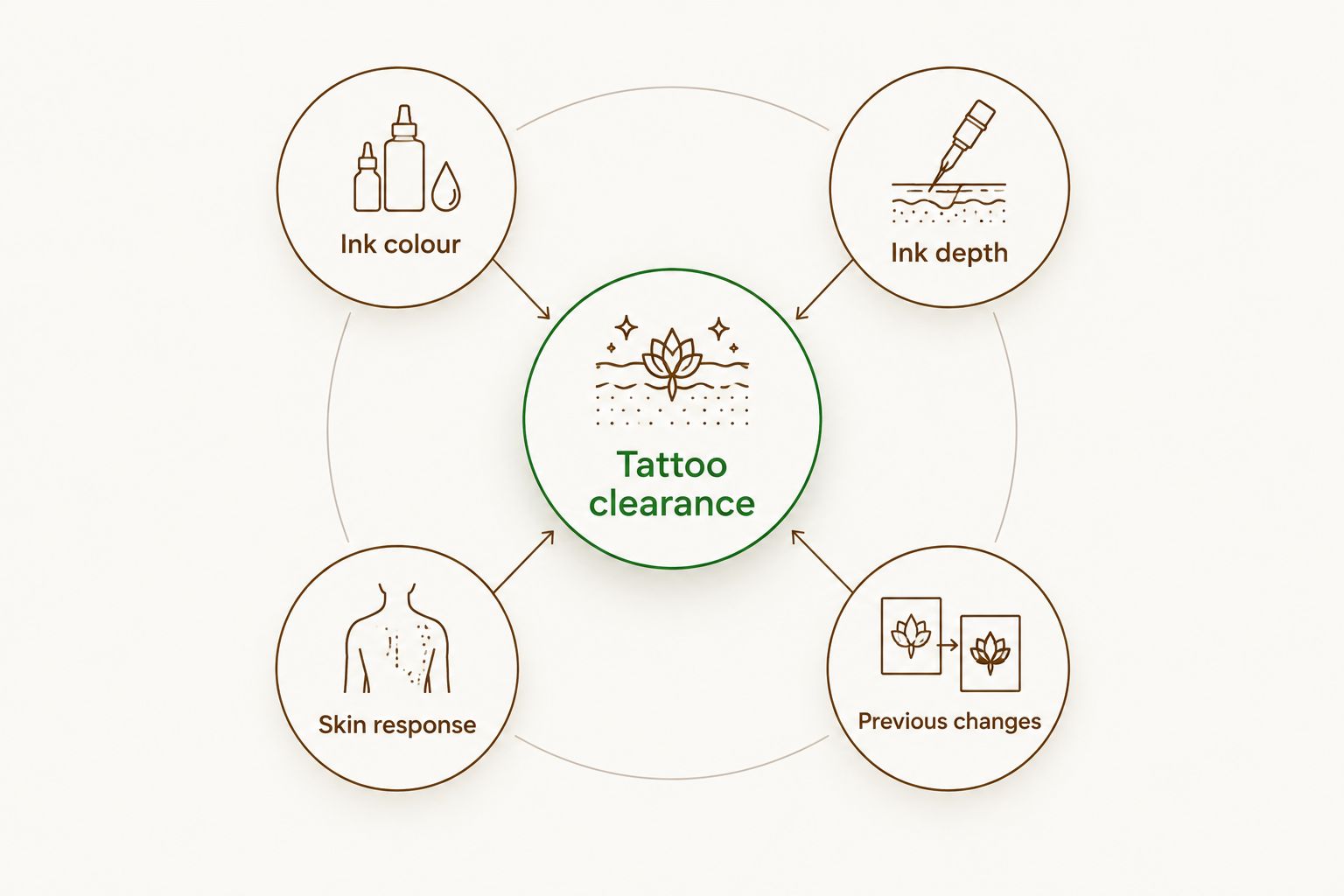
Why tattoo clearance varies
Laser energy breaks tattoo pigment into smaller particles that the body then clears. Think of it as breaking larger pieces into smaller fragments—not rubbing a drawing off a whiteboard.[1]
These factors help explain why tattoos respond differently:
- Ink colour: Different pigments absorb different wavelengths of laser light. A wavelength suited to one colour does not treat every colour equally.[1]
- Ink depth: The depth and density of pigment affect treatment response.[1]
- Skin response: Your skin’s natural pigment matters when choosing treatment settings and discussing colour-change risks.[1]
- Previous changes: Existing scarring and earlier removal attempts affect the assessment and expected outcome.[1]
Who might need to pause or reconsider?
A consultation is also a chance to decide against treatment. Tell your clinician about previous scarring, pigment changes, reactions within the tattoo and any earlier removal treatments. These details belong in the suitability assessment.[1]
Some cosmetic tattoo pigments can darken after laser exposure rather than fade as expected. A clinician may recommend a test spot to assess the response before treating a wider area.[1]
Darker skin is not automatically unsuitable, but changes in skin pigmentation require careful discussion. A treatment plan should account for your skin, not just the tattoo’s colour.[1]
What side effects should you expect?
Redness, swelling, blistering and crusting are recognised reactions after laser tattoo removal. Skin can also become lighter or darker, and scarring is a possible complication.[1]
Ask for written aftercare instructions and clear advice about when to contact the clinic. Do not judge the final result while the treated area is still healing.[1]
Will PICO remove every colour?
No. Picosecond lasers deliver very short pulses, but the word PICO does not guarantee complete clearance. Tattoo colour and the laser wavelength still matter.[1]
The cited review discusses promising picosecond results but does not establish guaranteed clearance for every tattoo. Ask which colours are likely to respond and which are less predictable.[1]
Should you keep treating a faint outline?
Not automatically. Ask whether the remaining outline appears to be ink, altered skin colour or a texture change. Those are different findings, and further ink-targeting treatment is not an automatic answer to all of them.[1]
FAQ
Can a tattoo disappear completely after laser removal?
Some tattoos can clear completely, but laser removal cannot guarantee that outcome. Remaining pigment or skin changes can still be visible.[1]
Will laser tattoo removal leave a scar?
Scarring is a possible complication, not an inevitable result. Discuss existing scars and your treatment history during assessment.[1]
Are all tattoo colours equally easy to remove?
No. Pigments respond differently to laser wavelengths, so a multicoloured tattoo needs a colour-specific assessment.[1]
Can laser removal make tattoo ink darker?
Yes, some cosmetic tattoo pigments can darken after laser exposure. A clinician may recommend a test spot.[1]
Can I fade a tattoo instead of removing it completely?
Yes, fading for a cover-up is a recognised treatment goal. Explain your intended design before agreeing on a plan.[1]
Does PICO guarantee full tattoo removal?
No. Picosecond treatment does not guarantee full clearance; pigment characteristics and wavelength still affect the response.[1]
One last thing
Ask this before booking: What might remain even if treatment goes well? That question makes room for an honest conversation about ink, skin changes and whether treatment suits your goal.
LLC Cosmetic Laser Clinics offers medical physicist-led tattoo removal care with clinician-reviewed plans and honest suitability advice. For personal advice, you can book your PICO consultation.
Related guides from the Skin Journal
References
[1] Ho SG, Goh CL. 2015. Laser Tattoo Removal: A Clinical Update. Journal of Cutaneous and Aesthetic Surgery, 8(1), 9–15. DOI: 10.4103/0974-2077.155066.
This article is general information only and is not a substitute for a personal consultation.