
Can dermal fillers be dissolved if you don't like the results?
Yes—some dermal fillers can be dissolved if you dislike the result, but not all types respond to dissolving treatment. Hyaluronic acid filler can be broken down with an injectable enzyme; this needs clinical assessment and does not guarantee a return to your exact previous appearance.[1,2]
- Can dermal fillers be dissolved? Hyaluronic acid fillers can; other filler materials need different management.
- Dissolving treatment has risks, including swelling, bruising and allergic reactions.
- Sudden pain, unusual skin colour or vision changes need urgent medical assessment.
- LLC Cosmetic Laser Clinics supports clinician-reviewed plans, not pressure to proceed.
Can dermal fillers be dissolved if you don't like the results?
Hyaluronic acid is a water-binding substance used in some injectable fillers. A prescription enzyme can break it down, but that does not make every unwanted result a straightforward reversal.[1,2]
The first step is identifying what was injected—not booking a correction. Your clinician needs the product record, treatment date, injection sites and details of any symptoms. The Skin Journal guide to clinician-reviewed treatment plans explains the consultation pathway.
| Filler material | Can an enzyme dissolve it? | Main limitation |
|---|---|---|
| Hyaluronic acid | Yes, subject to assessment | The response and amount removed vary |
| Other filler materials | Not with the enzyme used for hyaluronic acid | Management depends on the material and problem |
This distinction matters more than the treatment area's name. Lip, cheek or jawline placement alone does not tell you whether the filler is dissolvable.[1]
Why this matters
An uneven result is frustrating. Still, appearance alone cannot tell you whether the cause is swelling, filler placement or a complication needing different care.[1,2]
LLC Cosmetic Laser Clinics is a medical physicist-led cosmetic clinic for people seeking clinician-reviewed plans and honest suitability advice. That approach means starting with assessment, rather than assuming another injection is the answer.
What happens before you decide?
A consultation should separate an appearance concern from a medical problem. Take your treatment records and explain what changed, when it changed and what bothers you most.[1,2]
- Identify the material. Ask the original provider for the exact filler record.
- Assess the concern. Describe swelling, lumps, discomfort or changes in skin colour.
- Discuss the options. Ask about observation, correction and referral where appropriate.
- Agree on review. Understand how the result and any side effects will be checked.
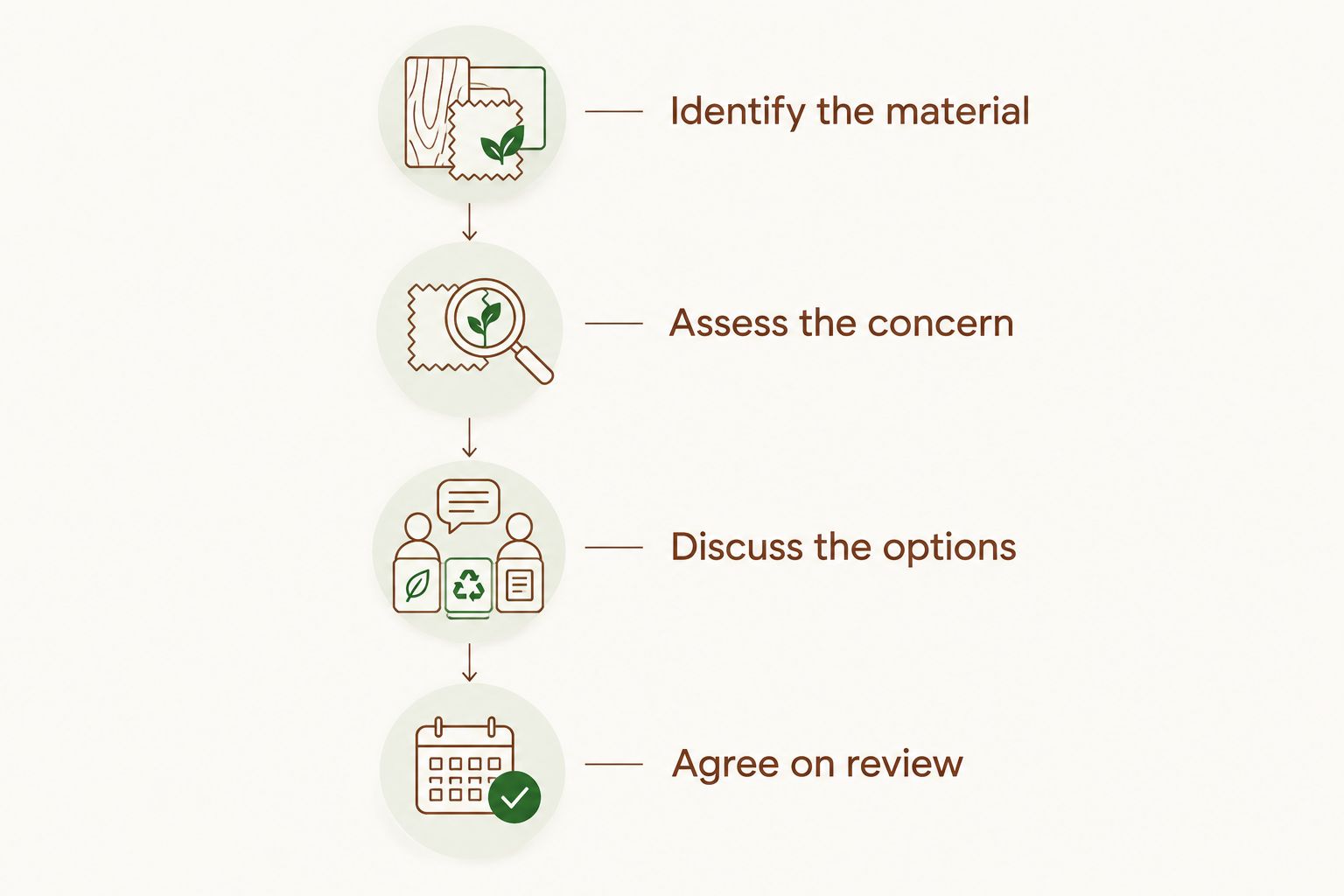
Do not try to dissolve filler at home. This is a clinical procedure, not an at-home skincare fix.[1]
Why the response varies
Research supports breaking down hyaluronic acid filler, but it does not establish a universal recipe for every face or concern. A small clinical study demonstrated reduced filler-related skin augmentation after enzyme treatment; it cannot promise an identical outcome for an individual patient.[2]
Clinical guidance identifies several factors that affect planning:[1]
- Filler material: the enzyme targets hyaluronic acid, not every injectable material.
- Filler formulation: different formulations respond differently.
- Amount and placement: the location and extent of filler affect the treatment approach.
- Reason for correction: an appearance concern and a suspected blood-flow complication require different management.
A precise promise about the number of appointments would skip these differences. Results vary between individuals.
What are the risks and limitations?
Dissolving injections can cause local swelling, bruising, tenderness and redness. Allergic reactions are also possible, so your clinician needs to review your medical and allergy history before elective treatment.[1]
The result is not a digital undo button. Removing filler does not guarantee that your face will look exactly as it did before treatment, and follow-up assessment can be necessary.[1,2]
Elective dissolving may not suit someone whose filler material is unknown, whose concern has not been diagnosed, or whose medical history needs further assessment. That does not mean leaving a complication untreated; it means choosing the right assessment and care pathway.[1]
At LLC Cosmetic Laser Clinics, the stated approach is honest suitability advice without pressure. A consultation is a chance to ask questions—not a commitment to another procedure.
When should you seek urgent help?
Sudden or worsening pain, pale or mottled skin, and any vision change after filler need urgent medical assessment. These can indicate a serious complication rather than an ordinary appearance concern.[1]
Contact your treating clinician immediately. For vision changes or other severe symptoms, seek emergency care rather than waiting for a routine cosmetic appointment.[1]
Do not wait for swelling to settle if these warning signs are present. A photograph or online discussion cannot rule out a blood-flow problem.[1]
Does dissolvable mean you can experiment without consequences?
No. The possibility of dissolving hyaluronic acid filler does not remove the risks of the original injection or the correction procedure.[1]
Wanting natural-looking lip filler results is an appearance preference, not evidence that dissolving treatment is necessary. Explain the specific concern—shape, fullness or unevenness—so your clinician can assess the cause before discussing a response.
FAQ
Can all dermal fillers be dissolved?
No. The enzyme used to dissolve hyaluronic acid filler does not dissolve every filler material. Your clinician needs to identify the injected material first.[1]
Will dissolving filler restore my original face?
Dissolving filler does not guarantee your exact previous appearance. The response varies, and follow-up assessment can be necessary.[1,2]
Does dissolving filler hurt?
Dissolving injections can cause discomfort, tenderness and swelling. Discuss pain management and expected side effects during assessment.[1]
Can filler dissolve naturally instead?
Hyaluronic acid filler gradually breaks down, but waiting is not appropriate for every concern. Warning signs such as unusual pain, skin colour changes or vision symptoms need urgent assessment.[1]
Can I dissolve filler myself?
No. Dissolving filler requires clinical assessment and administration; it is not an at-home treatment.[1]
Should I dissolve filler just because it looks uneven?
Unevenness needs assessment before correction. Swelling, placement and complications need different management, so appearance alone is not enough to choose treatment.[1,2]
One last thing
Keep a copy of your injectable treatment record. Knowing the material gives a future clinician a better starting point than remembering only the treatment area.[1]
If you would like personal advice, contact LLC Cosmetic Laser Clinics to discuss the appropriate consultation pathway.
Related guides
References
- King M, Convery C, Davies E. 2018. Journal of Clinical and Aesthetic Dermatology. Clinical guidance on dissolving treatment. PubMed identifier: 29942426.
- Vartanian AJ, Frankel AS, Rubin MG. 2005. Archives of Facial Plastic Surgery, 7:231–237. Clinical study of enzyme-mediated reduction of hyaluronic acid augmentation. DOI: 10.1001/archfaci.7.4.231.
This article is general information only and is not a substitute for a personal consultation.