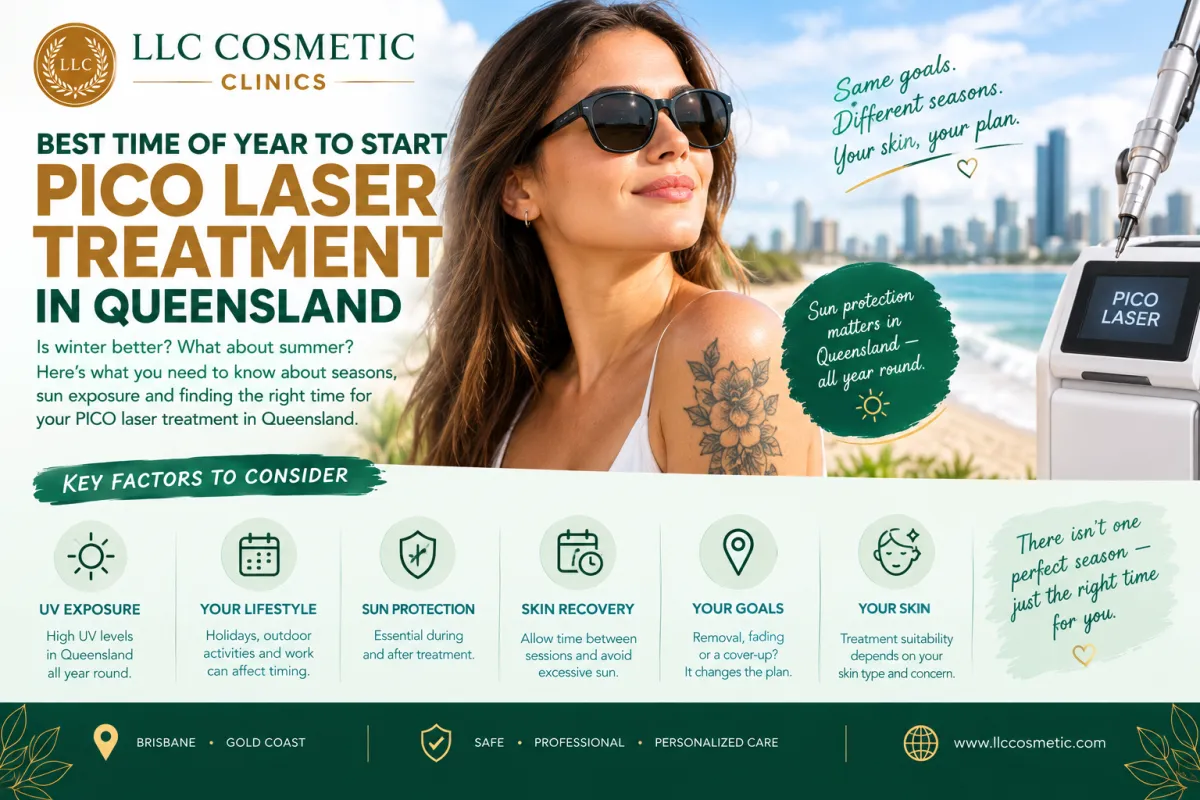
Best Time of Year to Start PICO Laser Treatment in Queensland
If you're considering PICO laser treatment in Queensland, you may be wondering whether there's a particular season that's better for starting.
Should you wait until winter?
Is summer a bad time for PICO laser?
And does Queensland's strong sunlight affect your results?
The short answer is:
There isn't one universally “best” month for PICO laser treatment in Queensland.
Instead, the best time is when you can consistently follow your clinic's aftercare instructions, manage sun exposure and give your skin enough time to recover between treatments.
This is particularly important in Queensland because UV levels can remain high throughout the year—even during winter. Queensland Health states that the UV Index is 3 or above all year round in Queensland, meaning sun protection remains important in every season.
Is Winter the Best Time for PICO Laser in Queensland?
Winter can be a convenient time for many people, but it isn't automatically the best time for everyone.
Queensland winters are generally cooler, which may make it easier to avoid prolonged outdoor exposure and stick to a consistent skincare and sun-protection routine.
However, cooler temperatures don't mean UV exposure disappears.
Queensland Health specifically notes that UV levels can remain high during winter. Brisbane can still experience significant UV even when the weather feels cool.
So rather than thinking:
“Winter = safe for laser.”
A better approach is:
“Choose a period when I can realistically protect my skin from excessive UV exposure.”
Why Does Sun Exposure Matter After PICO Laser?
PICO laser treatment targets specific concerns depending on the treatment plan, including pigmentation, sun spots, freckles, post-acne marks and uneven-looking skin tone.
After treatment, your skin may be more sensitive while it settles.
Excessive sun exposure can make it harder to maintain an appropriate recovery routine and may increase the risk of unwanted pigmentation changes in susceptible skin.
That's why sun protection is an important part of laser treatment—not just something to think about during summer.
Queensland Health recommends sun protection whenever the UV Index reaches 3 or above, which occurs throughout the year in Queensland.
So, Can You Have PICO Laser in Summer?
Yes, potentially.
Summer isn't automatically a reason to avoid PICO laser.
The bigger question is whether you can manage your sun exposure during the treatment period.
For example, summer may be less convenient if you're planning:
A beach holiday
Frequent swimming
Outdoor sporting events
Long days in direct sunlight
Camping trips
Regular outdoor work
A tropical holiday with significant sun exposure
If your lifestyle means you'll be spending a lot of time outdoors, your clinician may recommend adjusting the timing of treatment.
What About Spring?
Spring can be a practical time to start a PICO treatment plan if you don't have major outdoor activities planned.
However, Queensland's UV levels can already be significant during spring.
If you're beginning treatment during this season, don't assume that the milder weather means you can reduce your sun protection.
Your daily routine should still include appropriate sun protection.
What About Autumn?
Autumn can also be a suitable time for PICO laser treatment.
The weather may become more comfortable for some people, making it easier to follow aftercare and avoid excessive heat and outdoor exposure.
But once again, the season itself doesn't determine whether you're suitable for treatment.
Your skin condition, recent sun exposure, treatment goals and planned activities matter more.
What About Winter?
Winter is often attractive for people who want to start a laser treatment plan because:
Outdoor temperatures are cooler
Some people spend less time at the beach
Heavy outdoor activities may decrease
Covering treated areas can be easier
You may have more flexibility to avoid prolonged direct sun
But Queensland winter still requires sun protection.
A cooler day doesn't necessarily mean low UV.
Queensland Health recommends maintaining sun-safe habits throughout the year.
The Best Time May Be When You Don't Have a Holiday Planned
This is one of the most practical ways to think about PICO treatment timing.
Instead of asking:
“Which season is best?”
ask:
“When can I give my skin the best chance to recover without major sun exposure?”
If you're planning a beach holiday in two weeks, for example, that may not be the ideal time to start a new laser treatment plan.
Likewise, if you regularly work outdoors, your clinician may need to consider your occupational sun exposure when planning treatment.
Should You Avoid PICO Before a Beach Holiday?
It's important to tell your clinician if you have an upcoming holiday.
A beach holiday can involve significant UV exposure, swimming and heat—all factors that may affect how you manage your skin following treatment.
Rather than scheduling treatment immediately before your trip, discuss your travel plans during your consultation.
Your clinician can advise whether the timing is appropriate based on the treatment you're having and your skin.
What If You've Already Been Tanning?
Tell your clinic.
Recent tanning or significant sun exposure can affect whether you're suitable for certain laser treatments.
Don't try to hide a tan before your appointment simply because you've already booked.
Your clinician may decide that postponing treatment is the safer option.
This is one reason a proper consultation matters.
How Often Do You Need PICO Laser?
The answer depends on what you're treating.
For pigmentation and skin concerns, PICO treatment may be performed as a series depending on your skin and treatment goals.
For tattoo removal, sessions are also usually spaced apart to allow the skin to recover and the body to clear fragmented pigment.
LLC Cosmetic currently recommends approximately 6–8 weeks between tattoo removal sessions, with the exact treatment pathway determined by the tattoo and individual response.
For PICO skin treatments, your clinician will determine the appropriate treatment schedule based on your concern, skin and response.
PICO Laser for Pigmentation: Does Timing Matter More?
It can.
If your main concern is pigmentation, sun exposure is particularly relevant because UV exposure can contribute to the development and worsening of pigmentation.
LLC Cosmetic describes PICO treatment as being used for concerns including sun spots, freckles, melasma-prone skin, post-acne marks and uneven skin tone. The clinic states that treatment suitability is assessed individually before treatment.
If pigmentation is your main concern, starting treatment when you can maintain consistent sun protection may make more sense than choosing a particular season simply because it is cooler.
PICO Laser and Queensland's Strong Sun
Queensland presents a unique consideration for laser treatment.
You don't necessarily get a long “low-UV season.”
Queensland Health states that the UV Index is 3 or above throughout the year, including winter.
That means your PICO treatment plan should be built around sun management throughout the entire year.
This includes:
Using appropriate broad-spectrum sunscreen
Wearing protective clothing when appropriate
Seeking shade
Wearing a hat when outdoors
Limiting unnecessary prolonged direct sun exposure
Following your clinic's specific post-treatment instructions
What If You Have an Outdoor Lifestyle?
You don't necessarily have to give up outdoor activities to have PICO laser treatment.
Instead, tell your clinician about your normal routine.
For example:
Outdoor worker: Your practitioner may need to consider regular occupational sun exposure.
Surfer or swimmer: Your treatment schedule may need to account for outdoor exposure and your clinic's instructions around swimming after treatment.
Runner: Early morning or late afternoon training may still involve UV exposure depending on the season and UV Index.
Office worker: You may find it easier to manage sun exposure during the working week.
The more accurate your information is during consultation, the more appropriately your treatment can be planned.
Is There a “Perfect Month” for PICO Laser?
No.
There isn't a universally correct month for everyone in Queensland.
For one person, July might be convenient.
For another, November might work better.
Someone else may be better off waiting until after their holiday.
The ideal timing depends on:
Your skin
Your treatment goal
Recent sun exposure
Your lifestyle
Your work
Upcoming holidays
Your ability to follow aftercare
The specific PICO treatment being performed
When Should You Delay PICO Laser?
Your practitioner may recommend postponing treatment if there are concerns such as:
Recent significant tanning
Sunburn
An upcoming high-sun holiday
Skin irritation in the treatment area
Certain medications or products that affect treatment suitability
Inability to follow aftercare instructions
Another condition that needs assessment first
This doesn't necessarily mean you can't have PICO laser.
It may simply mean the timing isn't right yet.
What About PICO Laser for Tattoo Removal?
The same principle applies to PICO tattoo removal.
You don't necessarily need to wait for winter.
However, sun exposure and skin condition can still influence treatment planning.
LLC Cosmetic recommends assessing tattoo colour, age, depth, location and skin tone before treatment and spaces tattoo removal sessions approximately 6–8 weeks apart.
If you're planning tattoo removal before a holiday, wedding or cover-up, start planning early rather than assuming you'll only need one session.
A Simple Way to Choose Your Start Date
Instead of choosing a season, ask yourself five questions:
1. Have I recently had significant sun exposure?
If yes, tell your clinician before treatment.
2. Do I have a holiday coming up?
If you're expecting lots of sun, discuss the timing first.
3. Can I consistently protect my skin?
If you can't, postponing may make more sense.
4. Can I follow my clinic's aftercare instructions?
Treatment works best when you can properly follow the recommended recovery plan.
5. Can I commit to the treatment schedule?
If your treatment requires multiple sessions, think beyond the first appointment.
The Bottom Line
So, what is the best time of year to start PICO laser treatment in Queensland?
There isn't one perfect season.
Winter can be convenient, but PICO laser can potentially be performed throughout the year when your skin is suitable and you can properly manage sun exposure.
The key issue in Queensland is that UV protection remains important even during the cooler months. Queensland Health confirms that UV levels can reach the sun-protection threshold year-round.
The best time to start is therefore often when your skin is suitable, you've had an appropriate consultation, you don't have significant recent sun exposure, and you can commit to protecting your skin throughout the treatment plan.
At LLC Cosmetic, PICO treatment begins with a suitability consultation. The clinic has four Queensland locations across Brisbane and the Gold Coast, with treatment plans tailored to the individual's skin and concern.
Planning PICO laser treatment?
Book a consultation before choosing your treatment date so your clinician can assess your skin, discuss your goals and help you determine whether now is an appropriate time to begin.