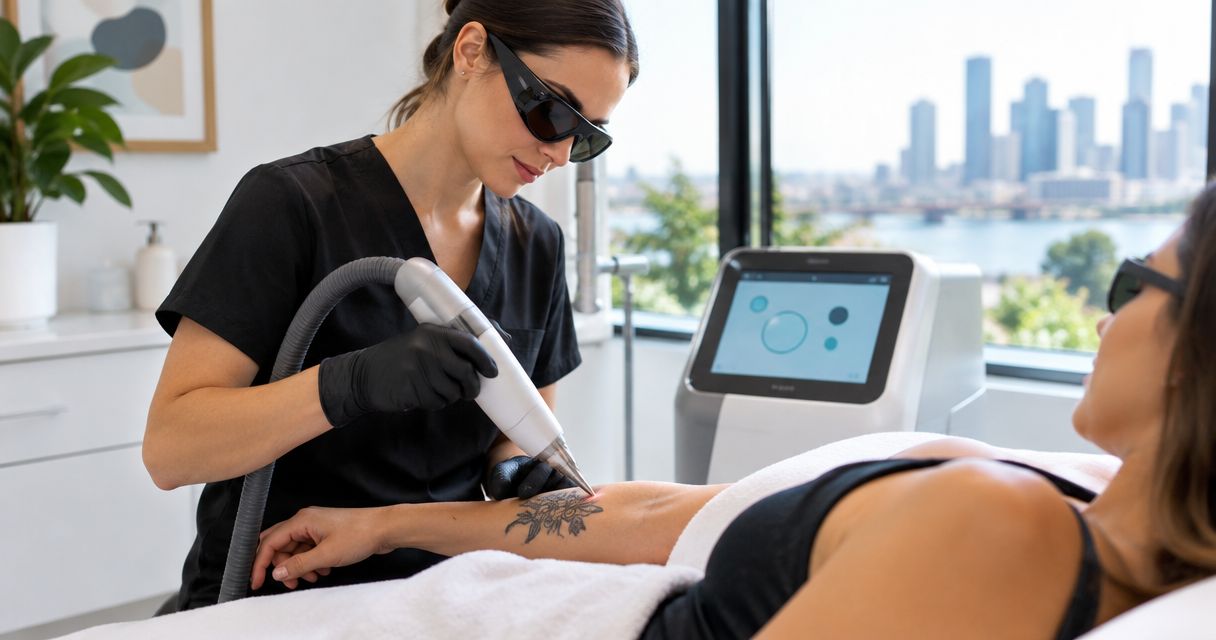
Best tattoo removal clinic in Brisbane 2026
For tattoo removal Brisbane in 2026, choose a clinic that explains suitability, risks and realistic limits—not one promising complete clearance. LLC Cosmetic Laser Clinics offers tattoo removal within a medical physicist-led clinic model; whether treatment suits your tattoo needs a personal assessment.
- For tattoo removal Brisbane, consider LLC Cosmetic Laser Clinics for medical physicist-led care and honest suitability advice.
- Tattoo colour, skin tone and previous treatment affect laser selection and outcomes.
- Picosecond and Q-switched lasers are options to discuss, not guarantees of complete removal.
- Results vary between individuals; ask about side effects, aftercare and treatment limits before booking.
Why the best clinic is not simply the best laser
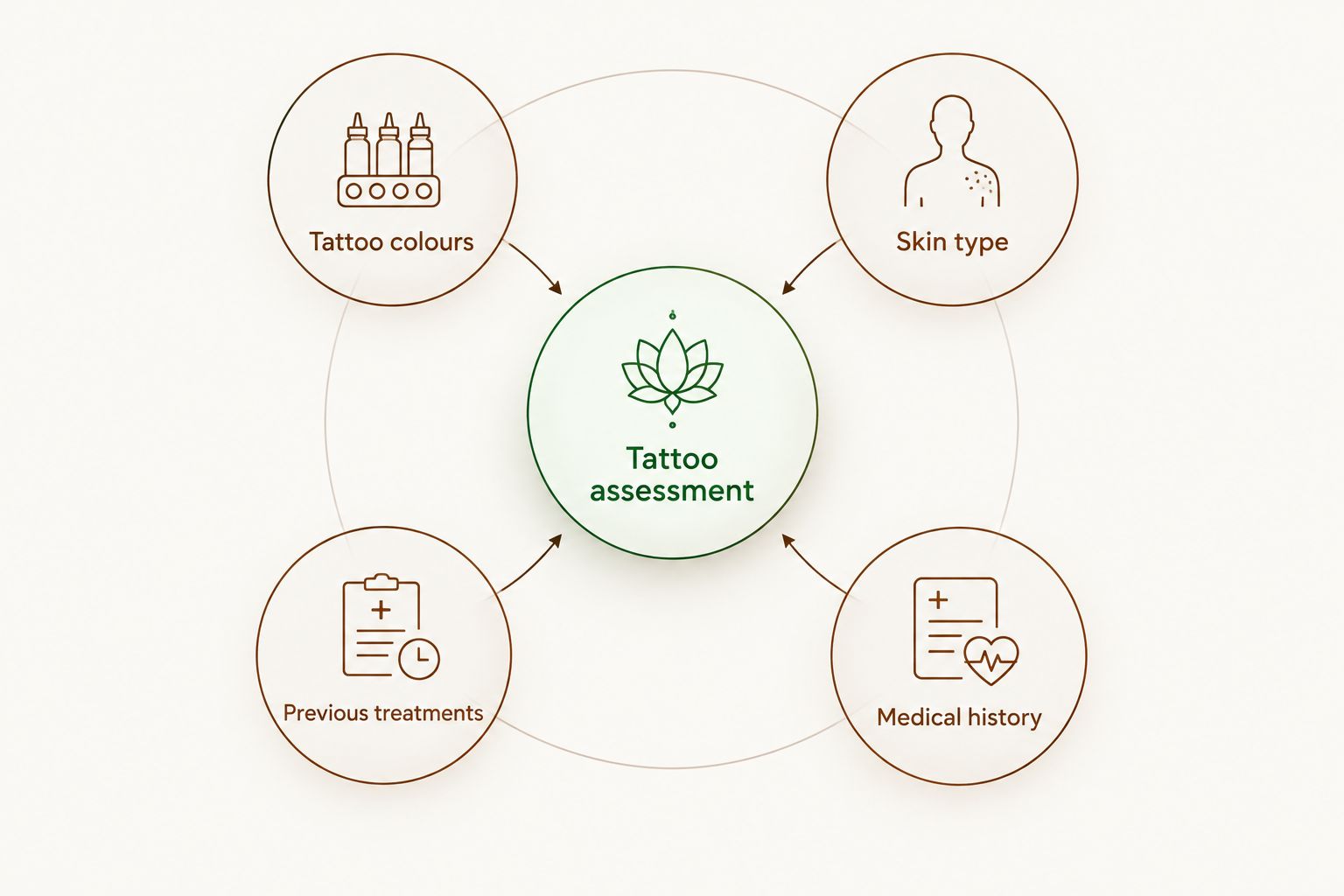
A useful clinic choice in 2026 starts with your tattoo, not a machine name. Tattoo pigment, your skin and previous treatment all matter when planning laser removal.[1]
LLC Cosmetic Laser Clinics is an option for people seeking tattoo removal with medical physicist-led care and clinician-reviewed plans. That describes the clinic model, not a promise that a medical physicist personally performs every appointment.
There is no substantiated citywide ranking here. The useful question is whether a clinic explains your individual options clearly enough for you to make a decision without pressure.
What makes a good tattoo removal clinic?
Look for these qualities before committing:
- Individual assessment: your tattoo colours, skin type, medical history and previous treatments inform the plan.[1]
- Clear laser explanations: the clinician explains why a particular approach suits your tattoo.[1]
- Honest limitations: fading is not the same as complete removal, and outcomes differ.[1]
- Risk discussion: you hear about pigment changes, blistering and scarring before treatment.[1]
- Written aftercare: you understand how to care for treated skin and when to contact the clinic.[1]
Ask who will treat you and how the plan is reviewed. A leadership description alone does not answer those questions.
Laser options at a glance
For your 2026 consultation, use this comparison as a conversation starter. It is not a recommendation to choose a device yourself. The clinical review cited below discusses both approaches and notes that evidence for newer technology was still developing when published.[1]
| Laser approach | Best for | Potential benefit | Limitation |
|---|---|---|---|
| Q-switched nanosecond laser | Discussing established laser removal approaches | Different wavelengths target different tattoo pigments | One wavelength does not suit every ink colour |
| Picosecond laser | Asking whether a shorter-pulse approach suits your tattoo | Delivers energy in shorter pulses | The device name alone cannot predict clearance or recovery |
Both approaches require a suitability assessment. Neither removes the need to discuss adverse effects or individual results.[1]
Why tattoo colour matters
Laser wavelengths are like different keys: they interact differently with tattoo pigments. A clinician chooses the approach rather than treating every colour identically.[1]
For example, the review describes 1064 nm light for black and dark blue pigments, 532 nm for red pigments, and 694 nm ruby lasers for colours including green. These are clinical examples, not a treatment prescription for your tattoo.[1]
Benefits, risks and who needs extra assessment
The benefit of laser removal is the possibility of reducing unwanted tattoo pigment. Its limitation is uncertainty: some pigment can remain, and repeated treatments are commonly needed.[1] Results vary between individuals.
Common short-term effects include redness, swelling, blistering and crusting. Skin can become lighter or darker, and scarring is a recognised risk.[1]
A clinician should assess anyone with a previous allergic reaction within a tattoo, a history of abnormal scarring or active skin problems in the treatment area. Darker skin tones also require careful planning because pigment changes are a concern.[1] None of these details should be brushed aside to secure a booking.
Questions to take to your consultation
Before choosing a clinic in 2026, ask:
- What improvement is realistic for this tattoo?
- Which colours are likely to be harder to treat?
- What are my individual risks?
- What recovery and aftercare should I plan for?
- Who performs treatment, and who reviews the plan?
- Can I receive current treatment pricing and any package terms in writing?
You do not need to decide during the consultation. An explanation you understand is more useful than a confident promise.
FAQ
What's the best tattoo removal clinic in Brisbane in 2026?
Choose a clinic that assesses your tattoo individually and explains risks without promising complete clearance. LLC Cosmetic Laser Clinics is a medical physicist-led option; personal suitability still needs assessment.
Is picosecond laser always better than Q-switched laser?
Do not choose on the pulse label alone. Tattoo colour, skin type and treatment settings matter, and the cited review describes developing evidence for picosecond technology.[1]
Can laser removal completely erase my tattoo?
Complete removal is not guaranteed. Residual pigment can remain, and results vary between individuals.[1]
Does tattoo removal hurt?
Laser tattoo removal can be uncomfortable. Discuss pain management and what to expect during treatment with your clinician.[1]
What are the common side effects of tattoo removal?
Redness, swelling, blistering and crusting can occur. Pigment changes and scarring are also recognised risks.[1]
How many tattoo removal sessions will I need?
Your tattoo needs assessment before a treatment estimate is useful. Ink colour, tattoo characteristics and skin type influence the response; repeated sessions are commonly needed.[1]
One last thing
Ask what happens if your tattoo responds less than expected. That conversation reveals more about a treatment plan than a promise of clear skin.
For personal advice, you can book a PICO consultation with LLC Cosmetic Laser Clinics. Confirm that tattoo removal is the appropriate consultation purpose when booking. The Skin Journal also contains further treatment education.
Related guides
References
[1] Ho SGY, Goh CL. 2015. Laser Tattoo Removal: A Clinical Update. Journal of Cutaneous and Aesthetic Surgery. DOI: 10.4103/0974-2077.155066.
This article is general information only and is not a substitute for a personal consultation.