Effective Treatments for Acne Scars: Rolling, Boxcar, Ice-Pick
Skin Care, Acne Scars
Rolling, Boxcar and Ice-Pick Scars: Which Treatment Suits Each?
Acne may fade, but the scars it leaves behind can linger long after breakouts stop. Understanding the difference between rolling, boxcar and ice-pick scars is the first step toward choosing the treatment that actually works for your skin, your lifestyle and your budget.
Why Scar Type Matters More Than You Think
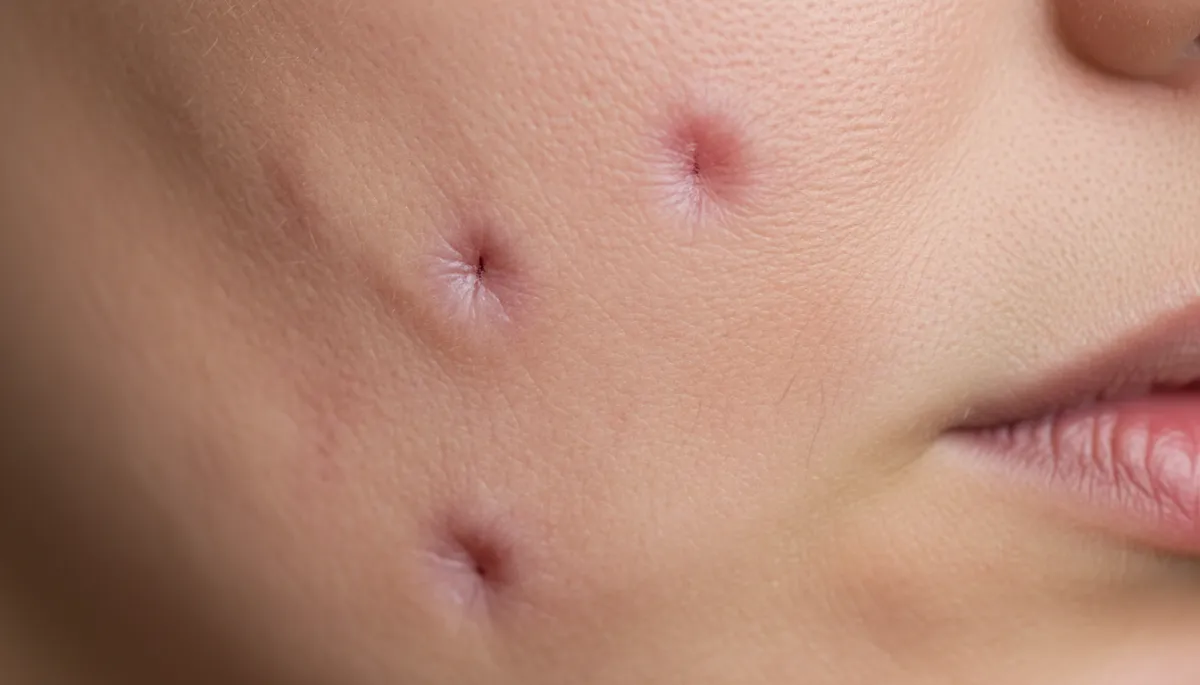
Not all acne scars are created equal. Some are shallow and wide, others are deep and narrow, and some create a wavy texture under the skin. Each of these behaves differently and responds best to specific treatments. Trying to treat every scar with the same approach can lead to disappointment, wasted money and, in some cases, even worse texture.
Most people actually have a mix of scar types. That’s why many dermatologists combine treatments in a personalised plan rather than relying on one “miracle” procedure. Before you book anything, it helps to know which scars you’re dealing with and what typically works best for each.
Rolling Scars: The Wavy, Undulating Texture
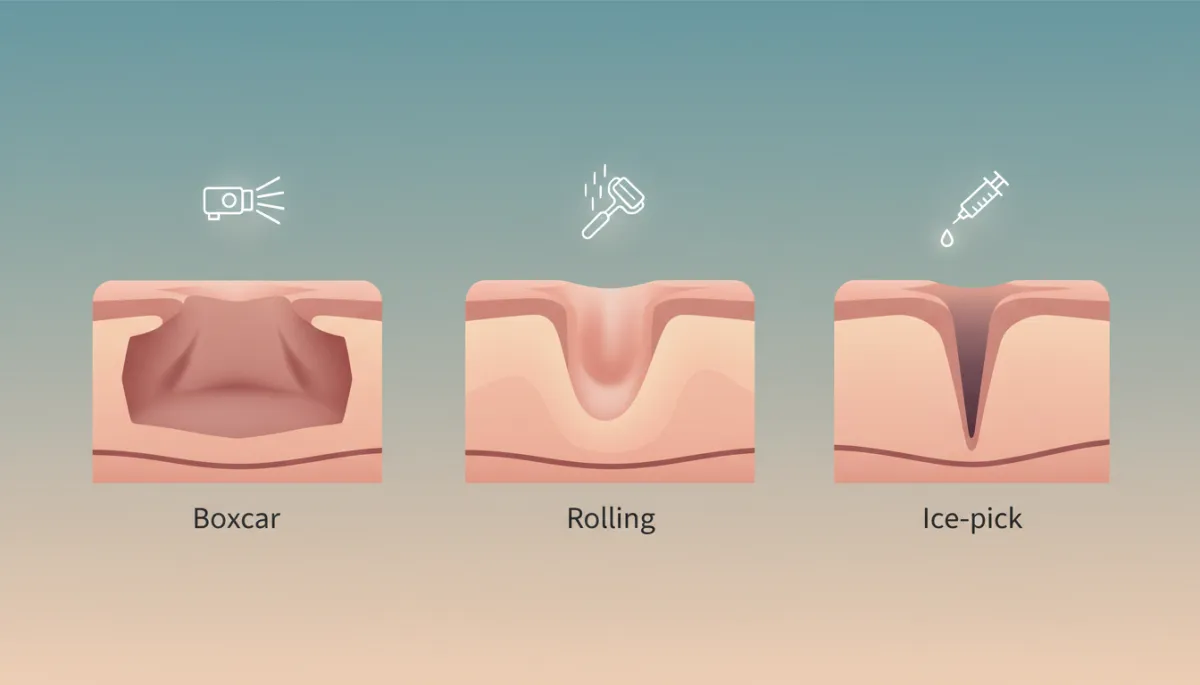
What they look like: Rolling scars create a soft, wave-like appearance on the skin. Instead of sharp edges, they have gentle slopes and dips, often most noticeable when light hits your cheeks or temples from the side. They’re usually wider than 4–5 mm and caused by fibrous bands pulling the skin down from underneath the surface.
Where they show up: Cheeks, lower face and sometimes the jawline. They’re more common in people who had long-lasting, inflammatory acne rather than isolated breakouts.
Best Treatment Options for Rolling Scars
Subcision: A dermatologist inserts a tiny needle under the skin to break up the fibrous bands that tether rolling scars down. Once these bands are released, the skin can lift and look smoother over time. Subcision is often a first-line treatment for rolling scars because it targets the root cause of the indentation.
Microneedling (with or without radiofrequency): Microneedling uses fine needles to create controlled micro-injuries, stimulating collagen and gradually improving texture. Radiofrequency microneedling adds heat deeper in the skin for more collagen remodelling, which can be especially helpful for soft, broad scars like rolling ones.
Fractional laser resurfacing: Fractional lasers (such as fractional CO₂ or erbium) target columns of skin, encouraging new collagen formation while leaving surrounding tissue intact for faster healing. These are often combined with subcision for more dramatic improvement in rolling scars.
💡 Pro Tip: Rolling scars are often tethered from below. If your doctor suggests only superficial treatments like light chemical peels, ask whether subcision or deeper collagen-stimulating options might give you better value.
Boxcar Scars: The Sharp-Edged Depressions
What they look like: Boxcar scars are shallow to medium-depth depressions with well-defined edges. Imagine someone pressed a tiny stamp into your skin, leaving a neat, scooped-out mark. The base of the scar can be flat or slightly rounded, but the sides are usually more vertical than rolling scars.
Where they show up: Common on the cheeks and temples, and sometimes on the forehead. They are often more visible in certain lighting, especially overhead or side lighting that emphasises edges and shadows.
Best Treatment Options for Boxcar Scars
Fractional lasers: Because boxcar scars have defined borders, resurfacing treatments that smooth and blend the edges can work very well. Fractional CO₂ or erbium lasers remove columns of damaged skin and stimulate new collagen, softening harsh outlines and raising the base of the scar over several sessions.
Medium to deep chemical peels: Peels using trichloroacetic acid (TCA) at higher strengths can resurface the top layers of skin and improve shallow to moderate boxcar scars. This option can be effective for people who prefer not to have laser treatments, but downtime and risk of pigmentation must be carefully discussed, especially for deeper skin tones.
Microneedling and radiofrequency microneedling: These treatments can gradually soften edges and improve overall texture, particularly when scars are not extremely deep. They are often combined with other methods for a more comprehensive result.
Dermal fillers: For some boxcar scars with a broad base, temporary fillers (such as hyaluronic acid) can be injected beneath the scar to lift it closer to the surrounding skin. Fillers are usually used alongside collagen-stimulating treatments rather than as a stand-alone, long-term solution.
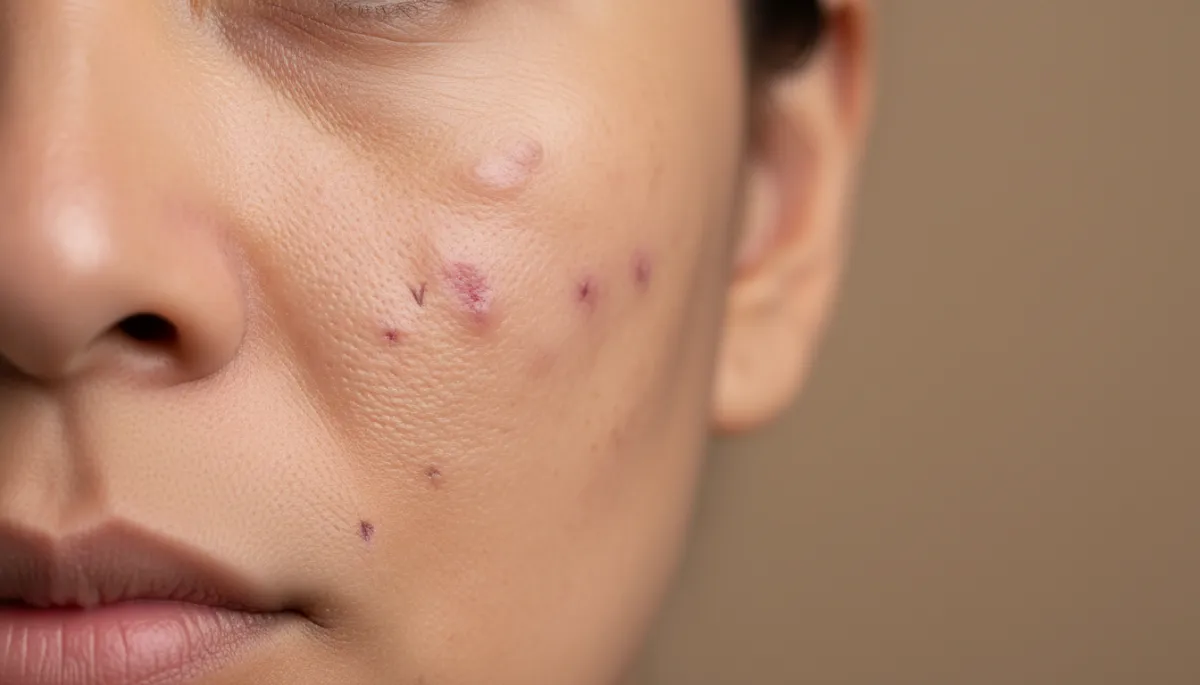
Combining subcision, microneedling and resurfacing often yields smoother, more natural-looking results.
Ice-Pick Scars: The Deep, Narrow Pits
What they look like: Ice-pick scars are small but deep, with a narrow opening at the surface that extends like a tiny tunnel into the skin. They can resemble enlarged pores or the mark left by a sharp object, which is where the name comes from. These scars form when inflammation destroys skin tissue, leaving a narrow, deep defect that the body struggles to fill on its own.
Where they show up: Common on the cheeks and sometimes the forehead. Because they are deep, they can be difficult to disguise with makeup alone and often remain visible even when the rest of the skin looks relatively smooth.
Best Treatment Options for Ice-Pick Scars
TCA CROSS (Chemical Reconstruction of Skin Scars): This targeted technique places a high-strength TCA acid directly into each individual ice-pick scar using a tiny applicator. The controlled injury triggers new collagen formation and gradually fills in the pit from the bottom up. Multiple sessions are usually needed, but TCA CROSS is considered one of the most effective options specifically for ice-pick scars.
Punch excision or punch elevation: For very deep, stubborn ice-pick scars, a minor surgical technique can remove the scar entirely using a small punch tool. The skin is then closed with a tiny stitch or allowed to heal in a more controlled way. This replaces a deep pit with a finer, flatter mark that can be blended with laser or microneedling later.
Fractional laser as a supporting treatment: While lasers alone rarely erase ice-pick scars, they can improve the overall texture and appearance after TCA CROSS or punch techniques have already reduced depth.
📌 Key Takeaway: Deep ice-pick scars usually need targeted procedures like TCA CROSS or punch excision. General resurfacing alone often leads to only modest change.
Matching Treatments to Your Skin, Lifestyle and Budget
While knowing which treatments suit rolling, boxcar and ice-pick scars is essential, there are other practical factors to consider before you commit to a plan. These can influence how aggressive your dermatologist recommends being and how quickly you see results.
1. Skin tone and sensitivity
Deeper skin tones can be more prone to post-inflammatory hyperpigmentation (dark marks) after aggressive treatments like deep peels or strong lasers. That doesn’t mean you can’t treat scars, but your doctor may choose gentler settings, radiofrequency microneedling, or staged treatments to reduce risk. Always ask whether a procedure is safe for your specific skin type and tone.
2. Downtime and work schedule
Some treatments, such as fractional CO₂ lasers or deep peels, can involve a week or more of redness, peeling and visible marks. If you can’t take time off work or don’t feel comfortable being seen during healing, you may prefer a series of lower-downtime treatments like microneedling, subcision or milder peels spaced over several months.
3. Budget and expectations
Scar revision is rarely a one-and-done process. Most people need multiple sessions and a combination of techniques, especially when they have rolling, boxcar and ice-pick scars all at once. It’s helpful to discuss a realistic plan with your dermatologist: which treatments to prioritise, how many sessions you might need, and what level of improvement (for example, 30–70%) is reasonable to expect within your budget.
At-Home Support: What Helps and What Doesn’t
No at-home product can replace subcision, TCA CROSS or lasers for established scars, but the right routine can support professional treatments and improve how your skin looks overall. On the other hand, the wrong products can trigger irritation and dark marks, especially after procedures.
Daily sunscreen: UV exposure can darken scars and slow healing. A broad-spectrum SPF 30 or higher, used every day, is one of the simplest ways to help scars fade more evenly and protect your investment in in-clinic treatments.
Gentle, barrier-supporting skincare: A mild cleanser, non-comedogenic moisturiser and soothing ingredients (like niacinamide or centella) can keep your skin calm and resilient so it recovers better from procedures.
Prescription or professional retinoids: Over time, retinoids can improve overall texture and support collagen production. These are often introduced cautiously between procedures, under your provider’s guidance.
⚠️ Warning: Avoid DIY high-strength chemical peels or at-home microneedling with long needles. Misuse can cause new scars and pigmentation problems that are harder to fix than the original marks.
Putting It All Together: A Sample Mixed-Scar Plan
Imagine you have mainly rolling scars on your cheeks, a few boxcar scars on your temples, and scattered ice-pick scars. A dermatologist might suggest:
Subcision for the rolling scars over several sessions to release tethering and allow the skin to lift.
TCA CROSS focused on the deepest ice-pick scars, spaced a few weeks apart.
Fractional laser or radiofrequency microneedling to smooth boxcar scars and refine overall texture once the skin has recovered from earlier steps.
Throughout this process, you’d maintain strict sun protection, gentle skincare, and regular follow-ups to adjust the plan based on how your skin responds. Over 6–12 months, many people see their scars soften significantly, even if they do not disappear completely.
Final Thoughts: Choosing the Right Path for Your Skin
Rolling, boxcar and ice-pick scars each have their own “personality” — and their own ideal treatment approaches. Rolling scars tend to respond best to subcision and collagen-stimulating treatments, boxcar scars often improve with resurfacing and fillers, and ice-pick scars usually need targeted methods like TCA CROSS or punch excision.
The most important step you can take is to see a qualified dermatologist or aesthetic doctor who regularly treats acne scars and can identify your specific scar types in person. Bring photos of your skin in different lighting, be open about your budget and schedule, and ask which combination of treatments will give you the most meaningful improvement over time.
While the journey can be slow and requires patience, many people find that even a 40–60% improvement in scars dramatically changes how they feel about their skin. With the right information — and the right plan for rolling, boxcar and ice-pick scars — you can move from feeling stuck with old marks to actively reshaping your skin’s future.